What Is a Hunter's Moon? A Complete Guide to October's Most Celebrated Full Moon
For skywatchers living in the Northern Hemisphere, early autumn presents a fascinating paradox. While the deepening nights grow longer and theoretically more inviting for stargazing, the seasonal sky can be dominated by a series of spectacular, luminous full moons that wash out fainter celestial objects. Yet for those who prefer moongazing over deep-sky observing, this time of year delivers one of the most storied and culturally significant lunar events in the calendar: the Hunter's Moon.
Occurring in the month of October — and occasionally in November — the Hunter's Moon is far more than just another full moon. It sits at the intersection of astronomy, anthropology, and ancient human tradition, having guided hunters, farmers, and feast-goers for thousands of years across multiple continents. Understanding it requires us to look not only upward at the Moon's orbit, but also inward at the rich tapestry of human history that gives this celestial event its enduring name.
Defining the Hunter's Moon
The Hunter's Moon is traditionally defined as the first full moon to occur after the Harvest Moon, which is itself defined as the full moon closest to the autumnal equinox. In the Northern Hemisphere, the autumnal equinox typically falls on or around September 22nd or 23rd each year, meaning the Harvest Moon usually appears in September. As a result, the Hunter's Moon most commonly graces the October sky — though once approximately every four years, when the Harvest Moon falls in October instead of September, the Hunter's Moon is pushed into November.
The moon is also traditionally referred to as a sanguine moon or "blood moon" — not to be confused with the more modern astronomical use of the term "blood moon," which specifically refers to the reddish hue a full moon takes on during a total lunar eclipse. The sanguine label likely derives from the season of hunting and slaughter associated with autumn preparations for winter, evoking images of the hunt rather than any particular optical characteristic of the Moon itself.
"The Hunter's Moon is not merely an astronomical occurrence — it is a mirror reflecting thousands of years of human adaptation, survival, and celebration, all written in the language of moonlight."
The Science Behind the Hunter's Moon
Orbital Geometry and the Ecliptic
To truly appreciate what makes the Hunter's Moon special, it is essential to understand the underlying orbital mechanics that distinguish it from other full moons. Under normal circumstances, the Moon rises approximately 50 minutes later each successive night as it moves along its orbit around Earth. However, during the Hunter's Moon — as well as the Harvest Moon — this interval is dramatically reduced to roughly 25 to 30 minutes per night in mid-latitude locations, and can be as little as 10–15 minutes at higher latitudes.
This phenomenon is a direct consequence of the geometry between the lunar orbit, the ecliptic (the apparent path of the Sun across the sky), and Earth's horizon at a given latitude. During autumn in the Northern Hemisphere, the angle at which the ecliptic intersects the eastern horizon is at its shallowest. Since the Moon travels roughly along the ecliptic, it moves in a path that is nearly parallel to the horizon during this period. This means that despite the Moon's eastward orbital motion, it appears to rise at nearly the same time each evening for several nights in a row.
The practical result of this geometry is a prolonged period of bright moonlight in the early evening hours — spanning several successive nights rather than just one — providing natural illumination shortly after sunset during the critical post-harvest, pre-winter period. For pre-industrial societies, this was not merely convenient; it could mean the difference between adequately stocking food reserves and facing winter hunger.
Apparent Size, Color, and Brightness
A common misconception is that the Hunter's Moon appears larger or brighter than other full moons. In reality, the Hunter's Moon is not intrinsically bigger or brighter than any other full moon. Its apparent size depends entirely on where the Moon sits along its elliptical orbit — when the Moon is near perigee (its closest point to Earth), it can appear up to 14% larger and 30% brighter, an event popularly dubbed a "Supermoon." Whether the Hunter's Moon coincides with a perigee passage is purely a matter of orbital timing and varies from year to year.
However, observers near the horizon shortly after moonrise may notice that the Hunter's Moon takes on a striking orange or amber hue. This is caused by Rayleigh scattering — the same atmospheric phenomenon responsible for red sunsets. When the Moon is close to the horizon, its light must travel through a much thicker slice of Earth's atmosphere, which preferentially scatters shorter (blue) wavelengths and allows longer (red and orange) wavelengths to reach the observer's eye. This effect is purely atmospheric and temporary; once the Moon rises higher in the sky, it returns to its familiar pale white or yellow appearance.
- Rise time lag: ~25–30 minutes per night (compared to ~50 minutes for most full moons)
- Cause: Shallow angle of the ecliptic with the eastern horizon in autumn
- Apparent color at rise: Orange to amber, due to Rayleigh scattering
- Intrinsic brightness: Comparable to other full moons; no inherent enhancement
- Duration of effect: Enhanced early-evening illumination persists for 2–4 consecutive nights
For a deeper dive into the mechanics of the Moon's orbit and its phases, NASA's Moon exploration hub offers a wealth of scientifically accurate resources.
Cultural and Historical Significance
Indigenous North American Traditions
The name "Hunter's Moon" is widely attributed to the Indigenous peoples of North America, though it is important to note that naming traditions varied considerably among different nations and tribes. The October full moon was regarded as a signal that the hunting season was entering its most critical phase. By this time of year, white-tailed deer and other game animals had spent the summer months feeding on abundant vegetation and had accumulated substantial fat reserves, making them prime targets for hunters who needed to stockpile protein-rich food for the coming winter.
The harvested fields of late September and early October played a crucial tactical role. With crops already reaped and the landscape more open, hunters could easily spot deer, foxes, and other animals venturing into cleared fields to glean fallen grain. The extended moonlit evenings provided by the Hunter's Moon allowed hunting parties to work well into the night, maximizing the brief window of favorable conditions before deep winter set in. This interplay between agriculture, hunting, and celestial timing reflects a sophisticated understanding of natural cycles that sustained communities for generations.
European Traditions and the First Written Record
Parallel traditions existed across northern and western Europe, where the post-harvest period was likewise seen as an optimal time to hunt before winter made prey scarce. However, it is notable that the term "Hunter's Moon" does not appear to have entered widespread European usage until after sustained contact with Indigenous Americans during the colonial period, suggesting the name itself — if not the underlying practice — was adopted from Native American traditions.
The earliest confirmed written record of the phrase "Hunter's Moon" appears in a 1710 edition of The British Apollo, where the Oxford English Dictionary notes the term is attributed to "the country people" — an indication that by the early 18th century, the term had filtered into popular English usage, though it was still regarded as a somewhat rustic or folk expression. Over subsequent centuries, the name would become thoroughly naturalized in the English-speaking world.
The Sharad Purnima: A South Asian Parallel
The cultural celebration of the autumn full moon is not unique to European and North American traditions. In India, the festival of Sharad Purnima (also spelled Sharad Poornima) is celebrated on the full moon day of the Hindu lunar month of Ashvin, which corresponds roughly to September or October. This festival marks the end of the monsoon season and the beginning of the autumn harvest, and is associated with the Hindu deity Krishna as well as the goddess Lakshmi.
Central to Sharad Purnima is the tradition of the Kaumudi celebration — kaumudi being a Sanskrit word meaning "moonlight." Devotees traditionally leave offerings of rice pudding (kheer) outside overnight to be bathed in moonlight, believing the Moon's rays on this particular night carry special rejuvenating or medicinal properties. While this belief is rooted in spiritual tradition rather than modern science, it speaks to a universal human tendency to find profound meaning in the rhythms of the lunar calendar.
The Feast of the Hunter's Moon
The Hunter's Moon has historically been associated not only with hunting but also with feasting and communal celebration. In both the Northern European and Native American traditions, the successful autumn hunt was a time for the community to come together, share provisions, and give thanks before the privations of winter arrived. Some sources suggest that dedicated feast days centered on the Hunter's Moon were observed in parts of western Europe and among certain Native American nations, though these traditions largely faded after the 17th and 18th centuries as industrialization reduced dependence on seasonal hunting.
However, the spirit of the Hunter's Moon feast lives on in a modern setting. The Feast of the Hunters' Moon is a yearly living-history festival held in Lafayette, Indiana, near the site of the historic Fort Ouiatenon — a French fur-trading post established in the early 18th century. The festival, which has been held annually in late September or early October since 1968, recreates the autumn gatherings of French traders and Native American peoples of the region, drawing tens of thousands of visitors each year. It stands as a vivid, tangible connection between the astronomical event overhead and the human stories written beneath it.
The Hunter's Moon in Context: A Year of Named Full Moons
The Hunter's Moon is just one entry in a rich tradition of assigning evocative names to each month's full moon. These names, many of which are drawn from Algonquin-speaking Indigenous traditions as well as European and Colonial American folklore, were popularized in the 20th century in large part through publications like The Old Farmer's Almanac. It is worth noting, however, that different cultures and tribes used different names, and no single authoritative source covers all traditions.
Some of the most widely recognized full moon names throughout the year include:
- Wolf Moon (January) – Named for the howling wolves heard during cold winter nights
- Snow Moon (February) – Reflecting the typically heavy snowfall of mid-winter
- Worm Moon (March) – Marking the return of earthworms as the soil begins to thaw
- Pink Moon (April) – Named for the early spring wildflower Phlox subulata, not the color of the Moon itself
- Strawberry Moon (June) – Coinciding with the brief strawberry harvesting season
- Sturgeon Moon (August) – Named for the large freshwater fish abundant in the Great Lakes region
- Harvest Moon (September/October) – The full moon nearest the autumnal equinox
- Hunter's Moon (October/November) – The focus of this article
- Cold Moon (December) – Evoking the long, frigid nights of early winter
Each of these moons has subtly different observational characteristics due to the changing angle of the ecliptic with respect to the horizon across the seasons — a reminder that the Moon's journey through our sky is never quite the same from one month to the next. For an authoritative and detailed listing of full moon names and their origins, the Farmer's Almanac's full moon calendar is an excellent reference.
Observing the Hunter's Moon
For amateur astronomers and casual skywatchers alike, the Hunter's Moon offers a rewarding observational experience. The best time to observe is at moonrise, when the Moon is at its lowest above the horizon and most dramatically colored by atmospheric scattering. Check a reliable almanac or a dedicated astronomy app for the precise moonrise time for your location, then find a vantage point with a clear, unobstructed view of the eastern horizon.
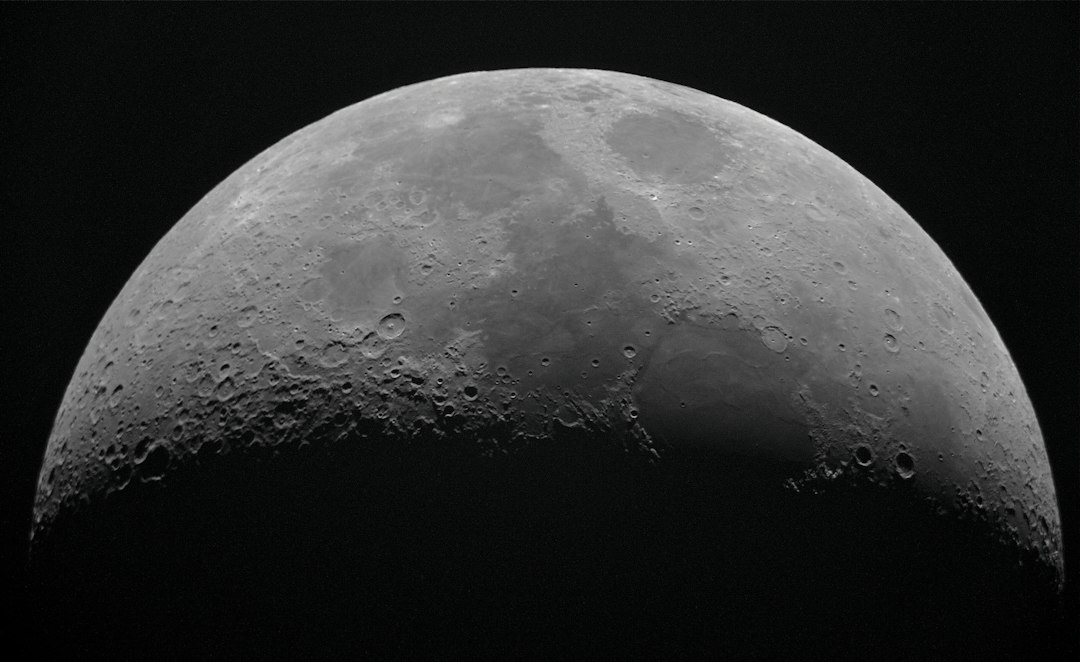
Binoculars or a small telescope will reveal the Moon's cratered surface in stunning detail when it is low in the sky, though atmospheric turbulence near the horizon can cause the image to shimmer. As the Moon rises higher and the atmosphere thins, the view will stabilize and the surface features — including the mare (dark volcanic plains), highland craters, and the vast Tycho impact crater with its prominent ray system — will snap into sharper focus.
For up-to-date lunar phase information and precise observational data, Time and Date's lunar phase calendar provides an excellent resource for skywatchers worldwide. Additional scientific data on lunar orbital mechanics and observation tips can be found through the European Space Agency's dedicated Moon science pages. For those interested in the deeper science of the Moon's formation and geology, NASA's official Moon exploration portal is an indispensable guide.
Key Facts at a Glance
- The Hunter's Moon is the first full moon after the Harvest Moon, typically in October
- It rises only ~25–30 minutes later each night around this period, compared to the usual ~50 minutes
- This extended evening illumination is caused by the shallow angle of the ecliptic with the autumn horizon
- The name is widely traced to Indigenous North American traditions, first recorded in English in 1710
- The Moon's orange color at moonrise is due to Rayleigh scattering, not any special property of the Hunter's Moon
- Parallel traditions exist in India (Sharad Purnima / Kaumudi), Europe, and across many Indigenous cultures
- The modern Feast of the Hunters' Moon festival in Lafayette, Indiana has been held every year since 1968
"The full Moon that rises after the harvest has always carried a special weight for humanity — it is the celestial clock that once told our ancestors precisely when to hunt, when to feast, and when to prepare for the darkness ahead."
From the