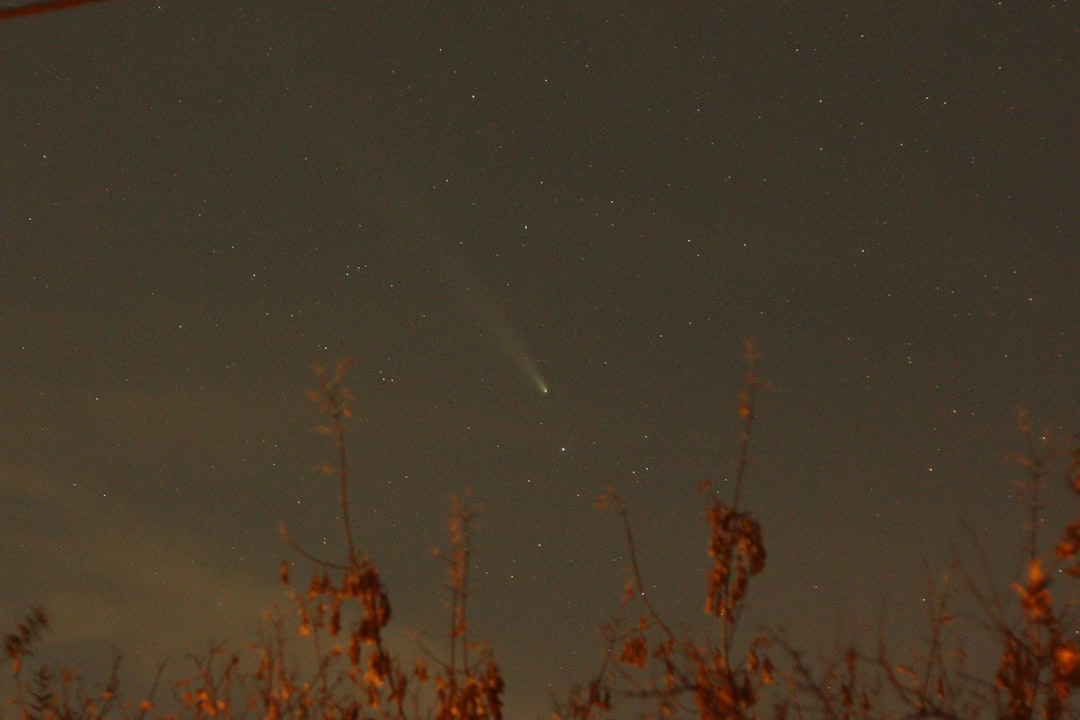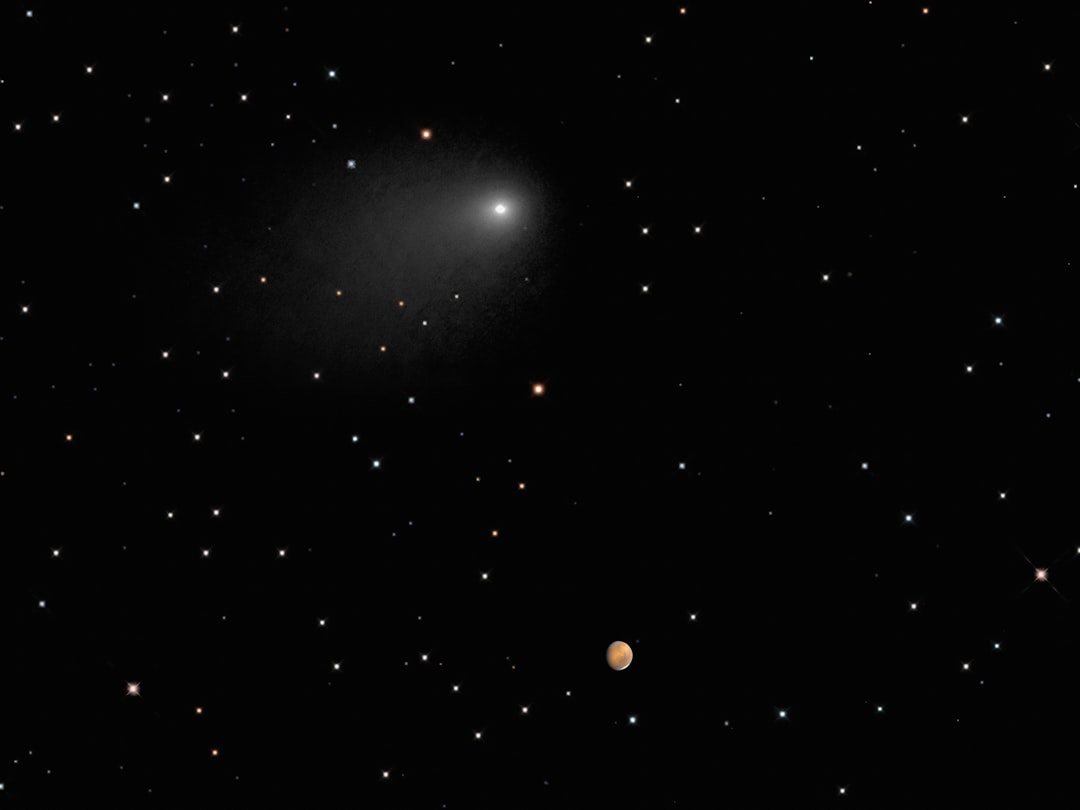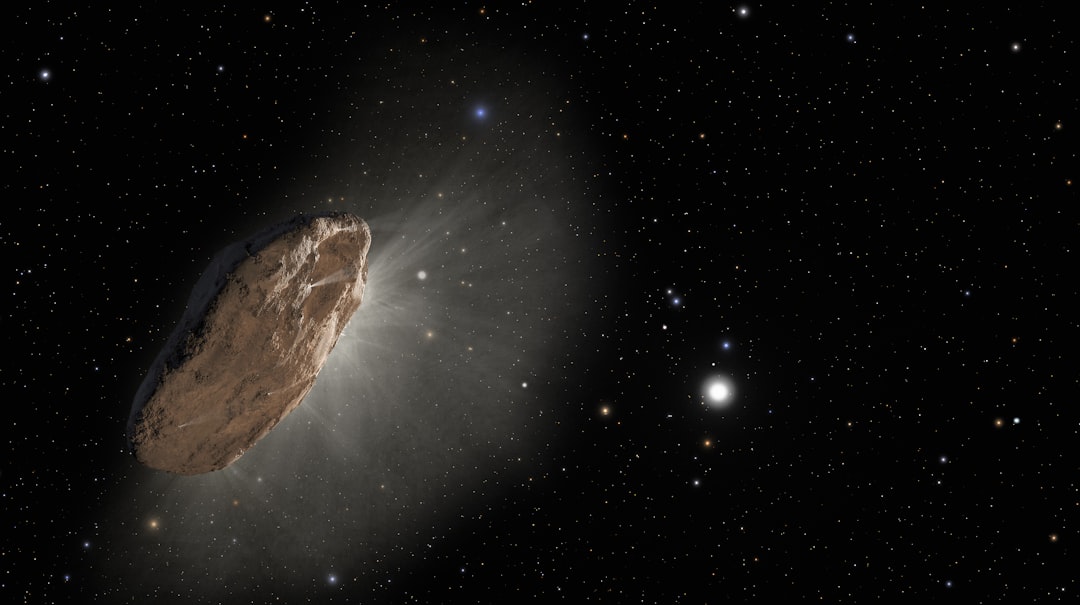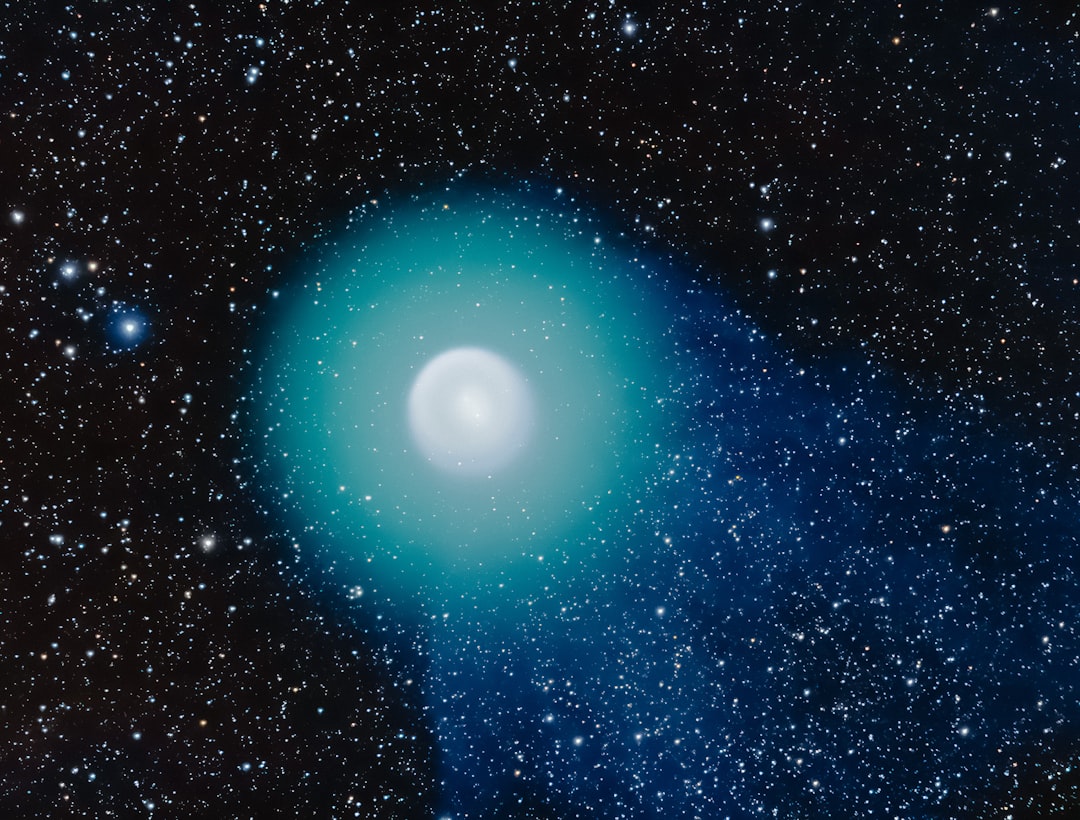
The astronomical community has witnessed an extraordinary shift in our cosmic census over the past decade. After millennia of observing only objects native to our solar system, we've suddenly identified three confirmed interstellar visitors: 'Oumuamua in 2017, comet 2I/Borisov in 2019, and most recently 3I/ATLAS. This dramatic change isn't due to an increase in galactic traffic through our neighborhood—rather, it represents a revolutionary transformation in our observational capabilities. We've finally developed the technological sophistication to detect these extrasolar wanderers that have been silently passing through our cosmic backyard all along.
The sudden appearance of these interstellar objects has sparked intense scientific debate and public fascination. Are we experiencing an unprecedented influx of material from other star systems? Has something changed in the galactic environment? The answer is far more mundane yet equally exciting: we've finally turned on the astronomical equivalent of porch lights, illuminating a phenomenon that was always there but remained invisible to our limited observational tools.
The Evolution of Sky Survey Technology
For the vast majority of human history, our view of the cosmos was severely constrained. Ancient astronomers could observe only the brightest celestial objects—planets visible to the naked eye, prominent stars, and the occasional spectacular comet that would trigger apocalyptic fears across civilizations. Even with the invention of the telescope in the early 17th century, our ability to detect fast-moving, faint objects remained fundamentally limited by both optical technology and observational methodology.
The breakthrough came with the development of automated sky survey systems, particularly the Panoramic Survey Telescope and Rapid Response System (Pan-STARRS) located at Haleakalā Observatory in Hawaii. Unlike traditional telescopes that focus on specific targets, Pan-STARRS operates as a cosmic motion detector, systematically scanning the entire visible sky night after night. This revolutionary approach transforms astronomy from targeted observation to comprehensive surveillance, capturing anything that moves against the background of distant stars.
Pan-STARRS consists of two 1.8-meter telescopes equipped with massive digital cameras containing 1.4 billion pixels. Every night, these instruments photograph approximately three-quarters of the visible sky, creating a dynamic map that reveals asteroids, comets, variable stars, and—as we discovered in 2017—objects from beyond our solar system. The system's power lies not in its ability to see faint objects in a single image, but in its capacity to compare multiple images taken over time, identifying anything that has changed position.
"The discovery of interstellar objects isn't about the universe suddenly sending more visitors our way. It's about humanity finally developing the eyes to see what was always passing through," explains Dr. Robert Weryk, the astronomer who first identified 'Oumuamua in Pan-STARRS data.
The Coming Flood: Vera C. Rubin Observatory's Revolutionary Impact
If Pan-STARRS represents a significant upgrade in our observational capabilities, the Vera C. Rubin Observatory will constitute a quantum leap forward. Currently in its final construction phase in the Chilean Atacama Desert, this facility will fundamentally transform our understanding of the dynamic universe. The observatory's 8.4-meter primary mirror and revolutionary 3.2-gigapixel camera—the largest digital camera ever built for astronomy—will enable it to photograph the entire visible southern sky every few nights.
The Rubin Observatory's Legacy Survey of Space and Time (LSST) will generate approximately 20 terabytes of data each night, creating an unprecedented high-definition movie of cosmic motion. This isn't merely an incremental improvement over existing surveys; it represents a paradigm shift in how we monitor the solar system and beyond. The telescope's combination of large aperture, wide field of view, and rapid cadence will detect objects up to 100 times fainter than current surveys can reliably identify.
The mathematical projections for interstellar object discoveries are staggering. Current estimates suggest that once Rubin becomes fully operational, astronomers expect to detect one interstellar visitor per month—potentially more as detection algorithms improve and our understanding of these objects' characteristics becomes more refined. Over the observatory's planned ten-year primary mission, this could yield a catalog of hundreds of interstellar objects, transforming our sample size from three unique cases to a statistically robust population.
From Anecdotes to Statistics: The Power of Large Datasets
The transition from three known interstellar objects to hundreds will revolutionize our scientific approach to these cosmic wanderers. Currently, researchers face the challenge of trying to understand an entire phenomenon based on three examples—equivalent to attempting to characterize Earth's biodiversity by studying only three organisms. Each of our current interstellar visitors displays unique characteristics that may represent either typical properties of extrasolar material or individual quirks that tell us nothing about the broader population.
With hundreds of detections, astronomers will finally be able to address fundamental questions about the galactic population of interstellar objects:
- Compositional diversity: What materials typically comprise interstellar comets and asteroids? How does their composition compare to solar system objects, and what does this reveal about planet formation in other stellar systems?
- Velocity distribution: What range of speeds characterize these objects? Can we identify distinct populations based on their kinematic properties?
- Origin mapping: Do certain regions of the galaxy or types of stellar systems produce more interstellar debris? Can we trace objects back to their source systems?
- Physical properties: What size distribution, shapes, and structural characteristics are common among interstellar visitors?
- Activity patterns: How many interstellar objects show cometary activity versus remaining inert? What triggers outgassing in objects from other stellar systems?
The Staggering Density of Interstellar Space
The detection rate projected for the Rubin Observatory—approximately one interstellar object per month visible from Earth—has profound implications for understanding the density of material drifting through our galaxy. If we can detect one object monthly while observing only a fraction of the sky and being sensitive to objects only within a limited distance range, the extrapolation to the entire Milky Way is mind-boggling.
Astronomers estimate that at any given moment, approximately 10^15 (one quadrillion) interstellar objects are drifting through our galaxy. This isn't speculative science fiction—it's based on careful calculations involving the volume of space we can survey, our detection sensitivity, the velocities of observed objects, and reasonable assumptions about the size distribution of interstellar material. Research published in The Astrophysical Journal suggests that interstellar objects may actually outnumber solar system objects in some size ranges within the outer regions of planetary systems.
This enormous population represents the accumulated debris of billions of years of planetary system formation and evolution across the galaxy. Every stellar system ejects material during its formation—gravitational interactions between forming planets scatter countless objects into interstellar space. Over cosmic timescales, this process has populated the galaxy with a vast ocean of wandering worlds, ranging from dust-sized particles to potentially planet-sized rogues, all traveling through the interstellar medium on trajectories shaped by their violent ejection billions of years ago.
Comet Interceptor: Preparing for Close Encounters
Detecting interstellar objects from Earth provides valuable data, but the real scientific prize lies in close-up investigation. The European Space Agency's Comet Interceptor mission represents an ingenious solution to a challenging problem: how do you study an object moving at 33 kilometers per second (about 74,000 mph) when you don't know it exists until it's already approaching the inner solar system?
Traditional spacecraft missions require years of planning, construction, and travel time to reach their targets. By the time we detect an incoming interstellar visitor, design a mission, build the spacecraft, and launch it, the object has long since departed. Comet Interceptor solves this problem through a "wait-and-see" approach: the spacecraft will be pre-built and parked at the gravitationally stable Sun-Earth Lagrange Point 2, approximately 1.5 million kilometers from Earth, where it will wait for a suitable target to be identified.
When astronomers detect a pristine comet—whether from the distant Oort Cloud or from interstellar space—making its first passage through the inner solar system, Comet Interceptor will spring into action. The mission consists of three separate spacecraft: a main probe and two smaller sub-probes that will separate to observe the target from multiple angles simultaneously. This multi-point observation strategy will provide unprecedented three-dimensional data about the comet's structure, composition, and interaction with the solar wind.
"Comet Interceptor represents a new paradigm in space exploration—building the mission first and choosing the target later. This approach is essential for studying objects we can't predict," notes Dr. Günther Hasinger, ESA Director of Science.
The Scientific Payload and Expected Discoveries
The Comet Interceptor spacecraft will carry a sophisticated suite of instruments designed to characterize every aspect of its target. Mass spectrometers will analyze the composition of gases and dust particles, revealing the chemical makeup of material from another stellar system. Cameras operating across multiple wavelengths will document the comet's nucleus, coma, and tail structure. Magnetometers and plasma instruments will study how the interstellar visitor interacts with the solar wind—an interaction that may differ significantly from solar system comets due to different surface compositions or internal structures.
Perhaps most excitingly, the mission may help resolve one of the greatest mysteries posed by 'Oumuamua: was it a comet or an asteroid? 'Oumuamua showed no visible cometary activity, yet its trajectory suggested non-gravitational acceleration consistent with outgassing. Close-up observation of a similar object could definitively determine whether some interstellar visitors possess volatile materials that outgas in ways invisible to Earth-based telescopes, or whether other mechanisms explain their behavior.
Implications for Understanding Planetary System Formation
The coming flood of interstellar object detections will provide an entirely new window into planetary system formation and evolution across the galaxy. Every interstellar comet or asteroid represents a sample of material from another stellar system—a free return of extraterrestrial material that requires no interstellar spacecraft to obtain. By studying the composition, structure, and properties of these objects, astronomers can effectively conduct comparative planetology across light-years of space.
Different stellar systems form under varying conditions: different metallicities (the abundance of elements heavier than hydrogen and helium), different stellar masses, different radiation environments, and different dynamical histories. These variations should produce systematic differences in the composition and properties of planetary system debris. With a large sample of interstellar objects, researchers will be able to identify patterns that reveal how planetary formation varies with stellar properties—information that's impossible to obtain through any other means with current technology.
Furthermore, the size distribution and ejection velocities of interstellar objects will constrain models of planetary system dynamics during formation. The process of planet formation is inherently violent, with countless gravitational interactions scattering material throughout the developing system. The population of objects ejected into interstellar space preserves a record of this process, frozen in the properties of the wandering debris now crossing our solar system billions of years after their ejection.
The Dawn of Interstellar Object Science
We stand at the threshold of a new era in astronomy. The detection of 'Oumuamua in 2017 marked humanity's first confirmed observation of an object from another stellar system passing through our own. This discovery, followed by 2I/Borisov and 3I/ATLAS, has opened an entirely new field of study. But these first three detections represent merely the beginning—the proof of concept that interstellar objects are detectable with current technology.
The imminent activation of the Vera C. Rubin Observatory, combined with other next-generation survey instruments and the innovative Comet Interceptor mission, will transform interstellar object science from curiosity-driven case studies to systematic statistical analysis. Within a decade, we'll possess a comprehensive catalog of hundreds of interstellar visitors, each one a messenger carrying information about distant stellar systems and the processes that shaped them billions of years ago.
These cosmic wanderers, once invisible to our instruments and unknown to our science, will become routine subjects of study. The strangers passing through our cosmic neighborhood will become familiar, their properties cataloged, their origins traced, their compositions analyzed. And in understanding these visitors from afar, we'll gain profound insights into the diversity of planetary systems throughout our galaxy and our own solar system's place within that broader context. The lights are now on, and the universe is far more populated with traveling worlds than we ever imagined.