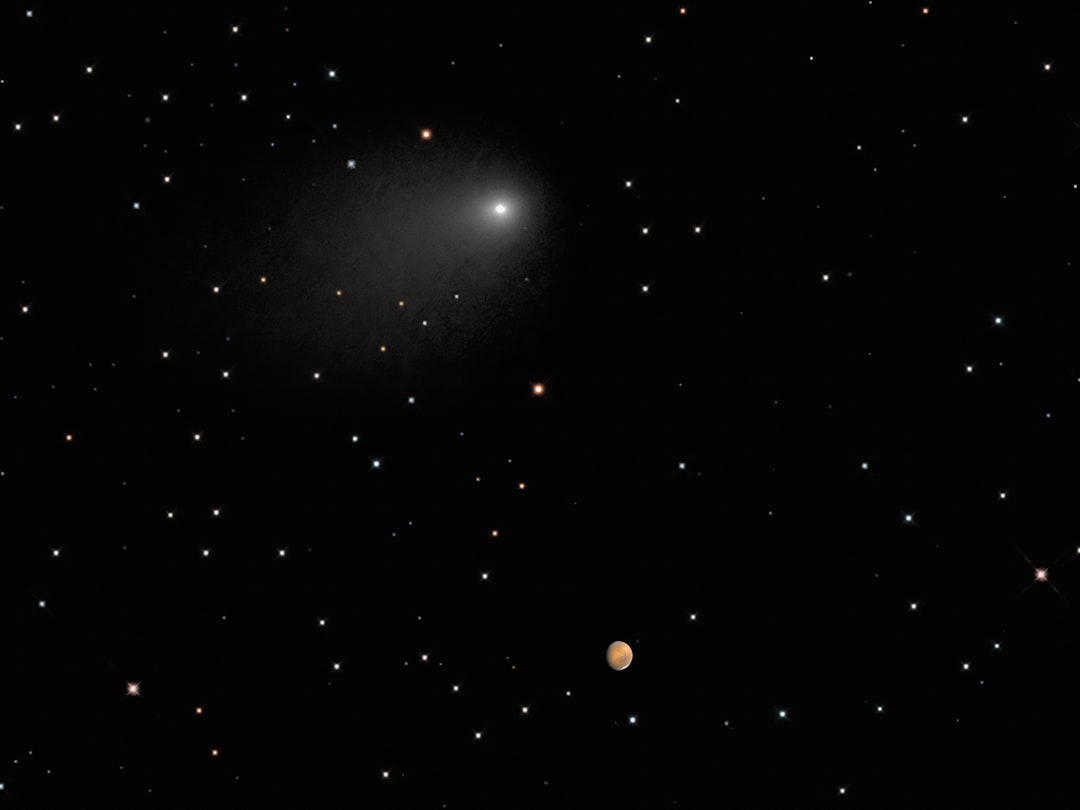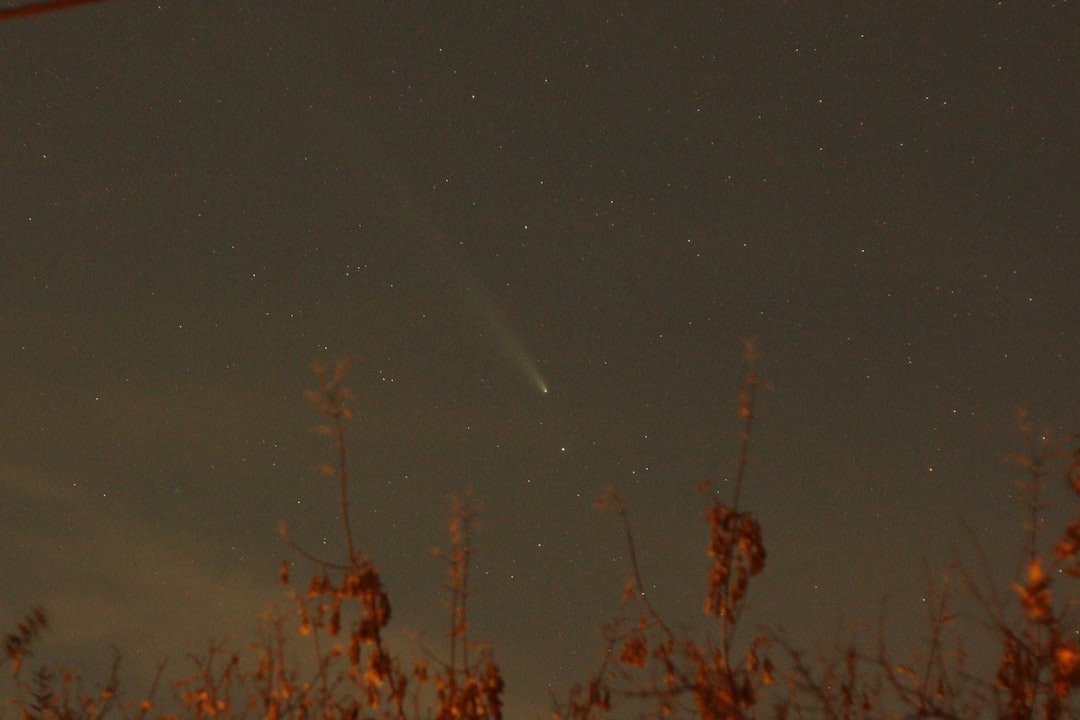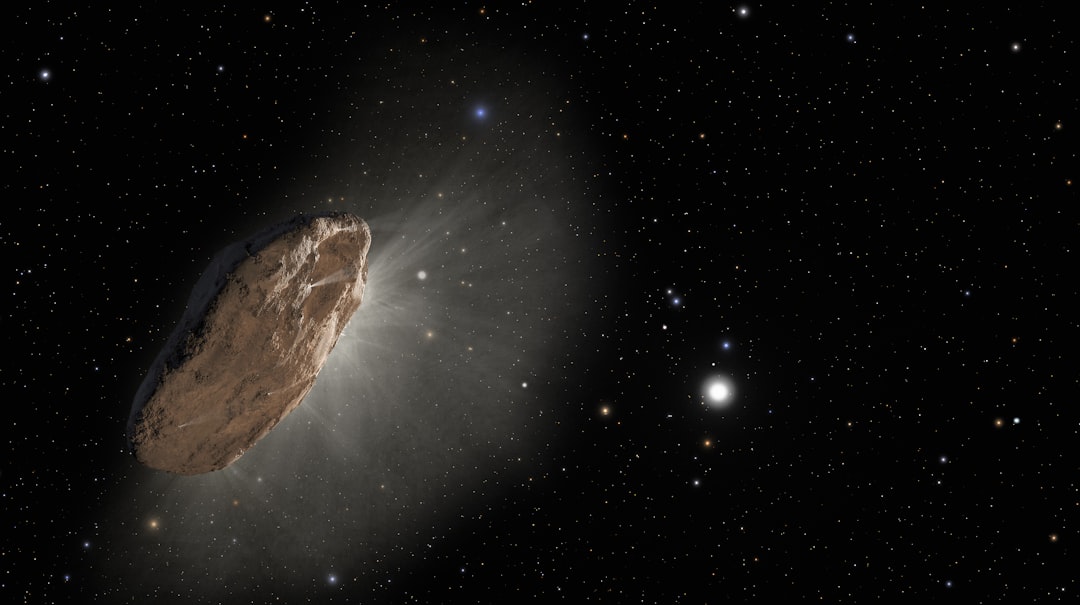
In the third installment of our exploration into the peculiar nature of interstellar visitors, we delve into a fundamental question that challenges our understanding of cometary science: why should we actually expect these cosmic wanderers from beyond our solar system to behave differently? The answer lies not in one single factor, but in a complex interplay of origin, ejection dynamics, and billions of years of divergent evolutionary paths through the cosmos. Following our analysis of 1I/'Oumuamua and subsequent interstellar objects, we now examine why these enigmatic visitors—including 2I/Borisov and the recently discovered 3I/ATLAS—carry signatures that mark them as fundamentally alien to our solar neighborhood.
The peculiarities observed in these interstellar comets aren't mere anomalies or measurement errors—they're exactly what planetary scientists should anticipate when objects formed in entirely different stellar environments make their way into our cosmic backyard. Understanding these differences requires us to trace the life stories of these wanderers from their births in foreign protoplanetary disks through their violent ejections and lonely journeys across the interstellar void.
The Chemical Fingerprints of Alien Birth
Every comet carries within its icy nucleus a chemical archive of its birthplace—a frozen record of the conditions present in its parent protoplanetary disk billions of years ago. Just as no two stars are identical twins, no two planetary systems emerge from precisely the same cosmic recipe. The protoplanetary disk—that swirling, turbulent cloud of gas and dust orbiting a young star—varies dramatically in composition from one system to another, influenced by factors including the star's mass, temperature, and the chemical enrichment of its local interstellar neighborhood.
Consider the fundamental building blocks: the ratios of hydrogen to helium, the abundance of heavier elements (what astronomers collectively term "metals"), and the specific types of dust grains that serve as condensation nuclei for ice formation. A comet forming around a metal-rich star—one born from gas clouds enriched by multiple generations of stellar deaths—will incorporate higher concentrations of elements like iron, nickel, and carbon into its structure. This chemical signature becomes permanently embedded, an indelible accent that persists throughout the object's entire existence.
When 3I/ATLAS exhibited unexpectedly high concentrations of nickel in its coma, this wasn't necessarily evidence of exotic processes or unusual composition—it may simply reflect the metallicity of its parent star system. Research published by the European Southern Observatory has shown that stellar metallicity varies considerably across different regions of galaxies, and comets formed in these diverse environments should naturally reflect those variations.
The Ejection Selection Effect: Not All Comets Are Created Equal
The journey to becoming an interstellar traveler isn't random—it's a violent selection process that favors certain types of comets over others. When a small icy body ventures too close to a gas giant like Jupiter or Saturn, the immense gravitational field can accelerate it to velocities exceeding the system's escape velocity, flinging it into the darkness between stars. Our own Jupiter has been performing this cosmic eviction for approximately 4.5 billion years, and similar processes occur in planetary systems throughout the galaxy.
However, the population of ejected comets doesn't represent a random sampling of all cometary bodies in a given system. Several biases affect which objects get kicked out into interstellar space:
- Proximity bias: Comets that formed or migrated closer to giant planets' orbital zones face higher ejection probabilities, potentially skewing the interstellar population toward objects from specific regions of their parent protoplanetary disks
- Size selection: Smaller objects require less gravitational energy to reach escape velocity, meaning the interstellar comet population may be systematically smaller than the average comet population within stable systems
- Compositional sorting: The location where a comet formed within its protoplanetary disk determines its composition—objects from warmer inner regions differ from those condensed in frigid outer zones, and ejection dynamics may favor one population over another
- Timing effects: Comets ejected during the early, chaotic phase of planetary system formation may differ systematically from those expelled later, after the system stabilized
This selection effect means that when we observe interstellar comets, we're not seeing a representative sample of all comets in the universe—we're seeing the exiles, the outcasts, the objects that happened to be in the wrong place at the wrong time. Understanding this bias is crucial for interpreting what these visitors tell us about planetary system formation and evolution across the galaxy.
Billions of Years in the Cosmic Deep Freeze
Perhaps the most profound difference between interstellar comets and their solar system counterparts lies in their radically different life experiences over billions of years. Consider a typical long-period comet in our own Oort Cloud—that vast, spherical shell of icy bodies extending roughly one light-year from the Sun. Despite being incredibly distant, these objects remain gravitationally bound to our star. They exist in near-absolute darkness, with temperatures hovering just a few degrees above absolute zero, yet they still receive a faint trickle of sunlight—perhaps one ten-millionth the intensity we experience on Earth, but not zero.
An interstellar comet experiences something fundamentally different. After its violent ejection from its home system, it spends millions or billions of years drifting through true interstellar space, completely untethered from any star. During this extended isolation, its only sources of energy are the cosmic microwave background radiation—the faint afterglow of the Big Bang—and occasional bombardment by cosmic rays and interstellar particles.
"The surface evolution of an object spending billions of years in true interstellar space versus one in the Oort Cloud represents fundamentally different physical and chemical pathways. We're talking about different radiation environments, different temperature histories, and different accumulation of interstellar material," explains Dr. Michele Bannister, planetary astronomer at the University of Canterbury.
This divergent evolutionary path manifests in several ways. The surface chemistry of interstellar comets undergoes continuous modification through cosmic ray bombardment, which can break chemical bonds and create new molecular species. Interstellar dust grains—microscopic particles drifting between stars—gradually accumulate on the comet's surface like cosmic snowfall, potentially creating a distinct mantle layer. The extreme cold and absence of solar heating may preserve volatile ices that would have been lost from Oort Cloud objects experiencing periodic solar perturbations.
The High-Speed Encounter: A Different Relationship with the Sun
When an interstellar comet finally encounters another stellar system after its long journey, it arrives with hyperbolic excess velocity—speed beyond what gravitational capture by the new star can account for. This isn't a gentle homecoming; it's a high-speed flyby with profound implications for how we observe and interpret these objects.
3I/ATLAS screamed through our solar system at approximately 33 kilometers per second (about 74,000 miles per hour)—roughly twice the velocity of typical long-period comets. This extraordinary speed fundamentally alters the comet's interaction with solar radiation and the warming process that drives cometary activity. Where a native solar system comet might spend weeks or months gradually warming as it approaches the Sun, an interstellar visitor rushes through the inner solar system on a compressed timeline.
This abbreviated solar encounter explains several puzzling observations. The delayed development of 3I/ATLAS's coma and tail becomes understandable when we consider that the comet spent less time in the temperature zones where volatile ices typically begin sublimating. By the time sufficient warming occurred to trigger significant outgassing, the comet was already racing back toward interstellar space.
The mysterious non-gravitational acceleration observed as 3I/ATLAS departed represents another consequence of this high-speed encounter. Cometary outgassing—the sublimation of ices and release of gas from the nucleus—creates a rocket-like thrust effect that can measurably alter an object's trajectory. For 3I/ATLAS, this outgassing finally kicked into high gear as it was already speeding away from us. Researchers detected the acceleration through precise astrometric measurements, but the gas itself remained too diffuse and distant to observe directly. We saw the effect without seeing the cause—the cosmic equivalent of detecting a boat's wake without seeing the boat itself.
Synthesizing the Strangeness: Why Weird is Normal
When we combine all these factors—different birthplaces, biased ejection mechanisms, billions of years of divergent evolution, and high-speed solar encounters—the peculiarities of interstellar comets transform from mysteries into expectations. The challenge facing astronomers isn't explaining why these objects seem strange; it's developing theoretical frameworks sophisticated enough to predict and interpret the specific ways they differ from solar system natives.
Current research efforts, including surveys by the Vera C. Rubin Observatory scheduled to begin operations soon, aim to detect many more interstellar objects, building a statistical sample large enough to test these predictions. Each new discovery adds another data point, another piece of the puzzle showing us how planetary systems throughout the galaxy form, evolve, and exchange material across the vast distances of interstellar space.
The details matter profoundly in this field—the specific composition ratios, the precise timing of coma development, the exact magnitude of non-gravitational forces. These aren't merely academic minutiae; they're the observational signatures that allow us to reconstruct the life histories of objects that have traveled for millions or billions of years to reach us. In the subtle differences between what we expect and what we observe lies the potential for revolutionary insights into planetary system formation and evolution across the cosmos.
As we continue to refine our detection capabilities and theoretical models, the study of interstellar comets promises to become one of the most exciting frontiers in planetary science—a field where every new discovery potentially rewrites our understanding of how common or rare our own solar system might be, and what diversity of planetary architectures exists throughout our galaxy. The weirdness of these cosmic visitors isn't a problem to be explained away; it's a feature to be celebrated, studied, and used as a window into the incredible variety of worlds beyond our own.