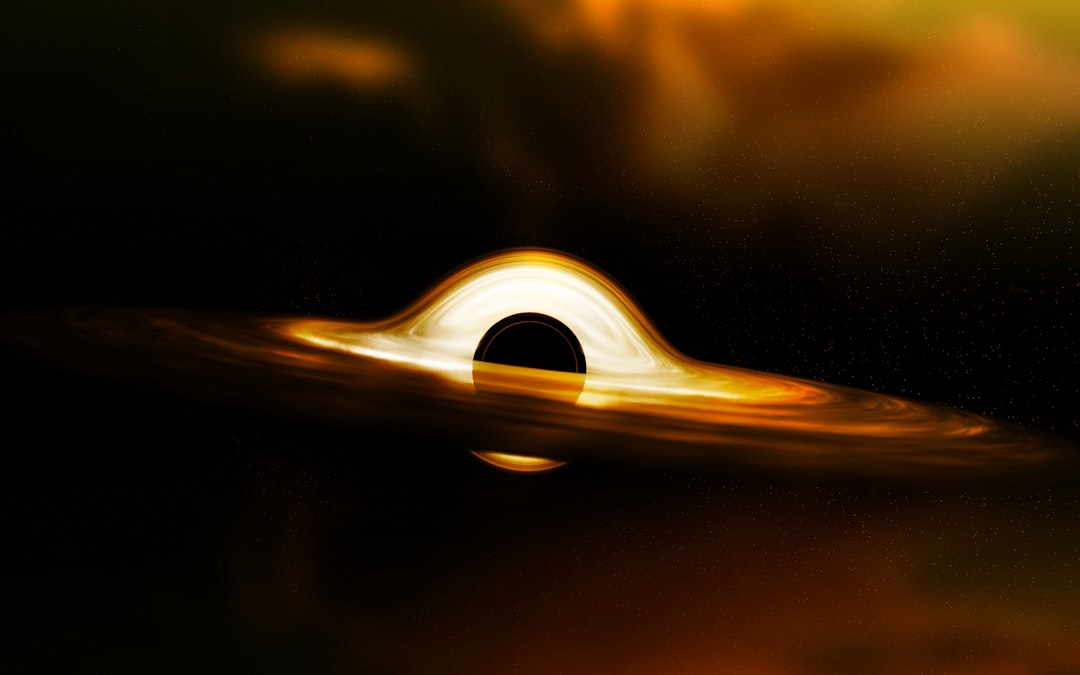
In the vast cosmic laboratory of the early universe, the James Webb Space Telescope has unveiled one of the most perplexing mysteries in modern astronomy—and potentially solved it with a single, extraordinary observation. An enigmatic object designated GLIMPSE-17775 has provided astronomers with the most compelling evidence yet for a phenomenon that sounds like science fiction: black hole stars, cosmic masqueraders that disguise voracious supermassive black holes beneath veils of dense, glowing gas.
This discovery represents far more than identifying a single unusual object. It potentially resolves a cosmological puzzle that has troubled researchers since Webb first opened its infrared eyes to the cosmos, threatening to upend our fundamental understanding of how the universe evolved in its infancy. The implications ripple through multiple fields of astrophysics, from galaxy formation to the growth of supermassive black holes in the early universe.
The Mystery of the Little Red Dots: A Cosmic Conundrum
When the James Webb Space Telescope began its scientific operations in 2022, astronomers anticipated surprises—but nothing quite prepared them for what emerged from the data. Within the first months of observations, Webb's unprecedented infrared sensitivity revealed a puzzling population of objects lurking in the cosmic dawn, approximately 600 million years after the Big Bang. These compact, intensely crimson sources quickly earned an informal but descriptive moniker: "little red dots."
The characteristics of these objects defied easy explanation. They appeared remarkably compact, yet blazed with unexpected luminosity. Their red coloration suggested extreme conditions, but their nature remained stubbornly ambiguous. Were they peculiar galaxies? Unusually dusty star-forming regions? Or something entirely unprecedented? Some exhibited such extraordinary brightness that researchers half-seriously wondered whether they had "broken" our cosmological models—whether the early universe could actually produce such massive, luminous structures so soon after the Big Bang.
According to research published by teams studying these enigmatic sources, the little red dots appeared far too numerous and too bright to fit comfortably within standard models of early galaxy formation. Their very existence posed uncomfortable questions about how quickly massive black holes could grow and how efficiently early galaxies could form stars. The cosmic timeline seemed compressed beyond what theoretical models predicted.
A Perfect Storm of Observational Fortune
Enter GLIMPSE-17775, an object that proved to be in precisely the right place at precisely the right time. A research team led by Vasily Kokorev at the University of Texas at Austin targeted this particular little red dot for an unprecedented observational campaign, and nature itself conspired to make their observations extraordinary.
The first stroke of fortune: GLIMPSE-17775 happened to be positioned behind Abell S1063, a massive galaxy cluster whose immense gravitational field acts as a cosmic magnifying glass. This phenomenon, known as gravitational lensing, was predicted by Einstein's general relativity and has become one of astronomy's most powerful observational tools. The cluster's gravity warps spacetime itself, bending and amplifying the light from background objects.
The second advantage: Webb's exquisite sensitivity and stability allowed the team to conduct an extraordinarily deep observation, staring at GLIMPSE-17775 for a full 30 hours of telescope time. Combined with the gravitational magnification—which effectively stretched that observing time to the equivalent of 80 hours—the result was the deepest, most detailed spectrum ever obtained from one of these mysterious objects.
Spectroscopy: Reading the Universe's Chemical Fingerprints
A spectrum is far more than simply splitting light into a rainbow of colors. When astronomers disperse light through a spectrograph, they reveal a pattern of bright emission lines and dark absorption lines—each corresponding to specific atomic transitions in specific elements under specific physical conditions. These spectral lines serve as a chemical and physical fingerprint, revealing not just what an object is made of, but also its temperature, density, velocity, and the nature of the processes occurring within it.
From GLIMPSE-17775, Webb's NIRSpec instrument extracted more than forty separate spectral lines—the richest dataset ever obtained from such an object. This spectral treasure trove included multiple ionization states of various elements, each telling part of the story about the extreme environment producing this light.
Decoding the Black Hole Star Phenomenon
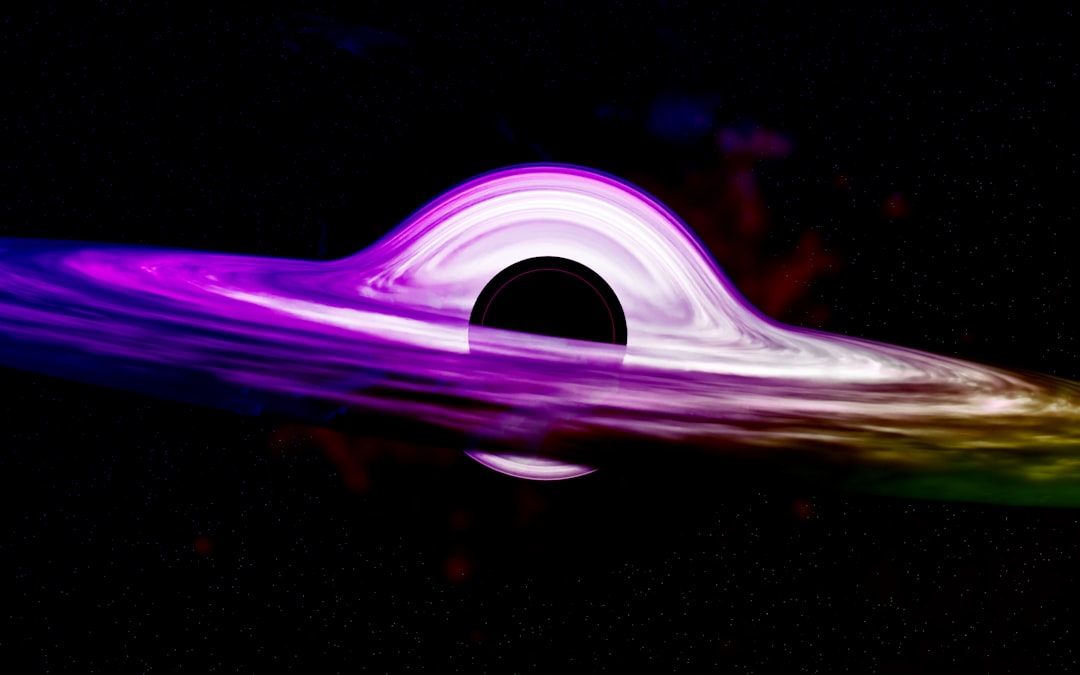
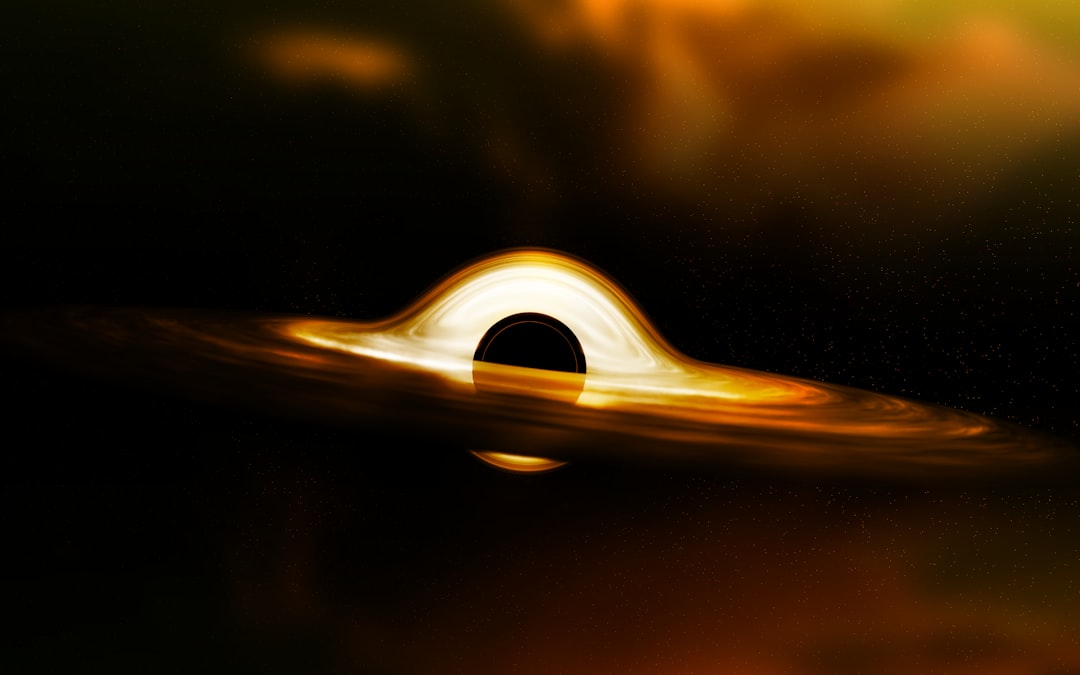
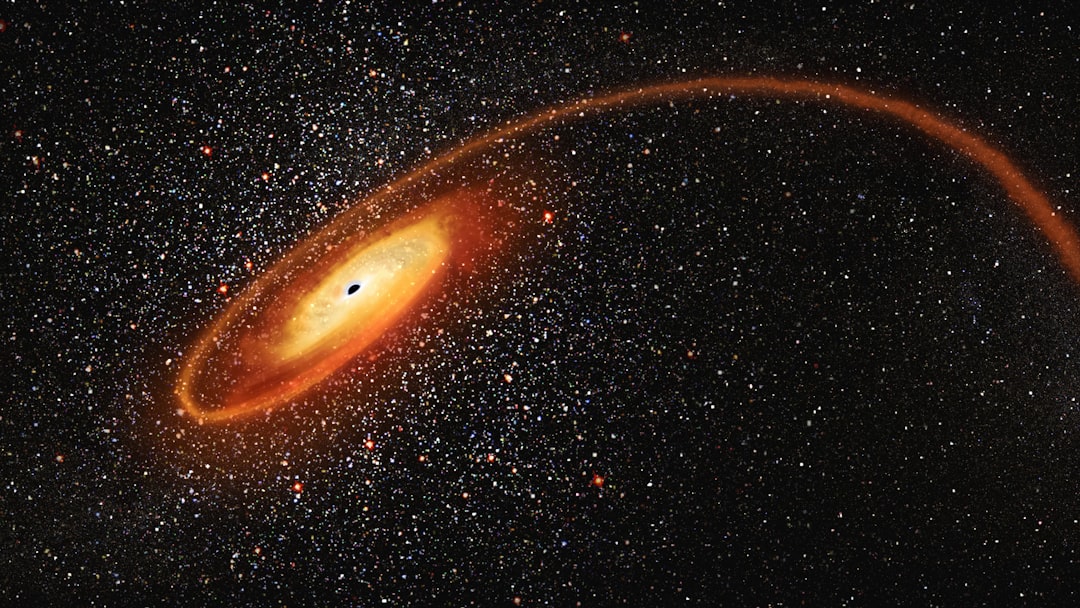
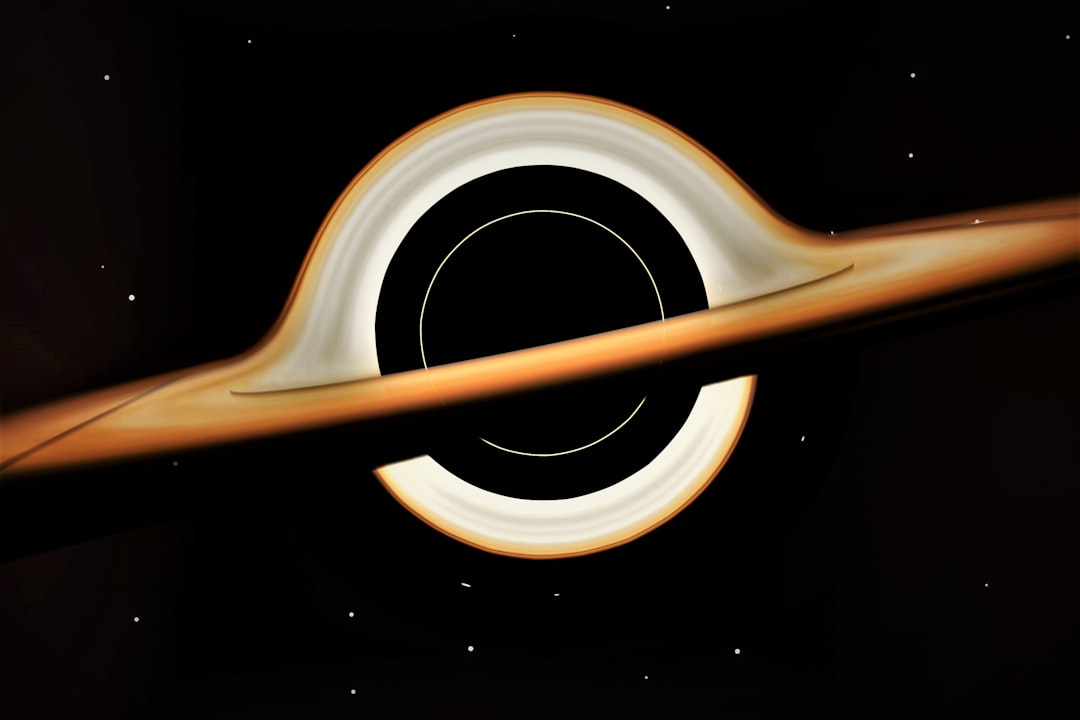
Despite its evocative name, a "black hole star" bears no resemblance to an actual star. Instead, imagine a supermassive black hole in the midst of a feeding frenzy, accreting gas at prodigious rates. As material spirals inward toward the event horizon, gravitational energy converts to heat and radiation, creating one of the universe's most energetic phenomena: an active galactic nucleus, or AGN.
But here's where the black hole star scenario diverges from a typical AGN. In this model, the central engine sits embedded within an extraordinarily thick, dense cocoon of gas and dust. This shroud is so optically thick that it completely absorbs the fierce ultraviolet and X-ray radiation streaming from the accretion disk. The absorbed energy heats the surrounding material, which then re-radiates that energy at longer, infrared wavelengths—producing the characteristic red appearance that gave these objects their nickname.
"What we're seeing is essentially a black hole in disguise," explains Dr. Kokorev. "The shroud of dense gas acts like a cosmic costume, transforming the harsh, high-energy signature of an accreting black hole into something that appears much gentler and more star-like from our distant vantage point."
The spectroscopic evidence supporting this interpretation is compelling and multi-faceted. The spectrum reveals what astronomers call an "iron forest"—sixteen separate emission lines from various ionization states of iron. Iron lines are particularly diagnostic of conditions near black holes because iron atoms require extreme energies to strip away multiple electrons, creating the highly ionized states observed.
The Telltale Signatures in the Spectrum
Beyond the iron forest, the spectrum of GLIMPSE-17775 contains several other smoking guns pointing toward the black hole star interpretation:
- Electron Scattering Broadening: Many of the spectral lines show characteristic broadening caused by Compton scattering in dense, hot gas—a signature of the extreme environment near an accreting black hole surrounded by thick material
- Helium Emission Features: The presence and strength of helium lines indicate gas heated to temperatures of tens of thousands of degrees, consistent with reprocessing of hard radiation from a central source
- Line Ratios: The relative strengths of various emission lines allow astronomers to constrain the density, temperature, and ionization state of the gas, all pointing toward a compact, heavily obscured AGN
- X-ray Weakness: Crucially, these objects appear remarkably faint in X-rays despite their optical/infrared brightness—exactly what the black hole star model predicts, since the dense shroud absorbs the X-rays before they can escape
Resolving the Cosmological Crisis
The black hole star interpretation does more than simply identify what these objects are—it resolves what had threatened to become a genuine cosmological crisis. When little red dots were first discovered, their apparent properties suggested they might be extremely massive galaxies or contain impossibly large black holes for their cosmic age. This created tension with our understanding of structure formation in the early universe.
Standard cosmological models, refined through decades of observations from missions like the Planck satellite, predict how quickly matter can collapse to form galaxies and how rapidly black holes can grow through accretion. The little red dots seemed to violate these constraints, suggesting either our models were fundamentally flawed or we were missing something crucial about early universe physics.
The black hole star model elegantly sidesteps this problem. These objects aren't actually as massive or as mature as they first appeared—they're simply heavily obscured, which makes them appear redder and changes their apparent properties. The supermassive black holes at their centers can be smaller than initially feared, and their host galaxies need not be as developed. As Kokorev noted in the research announcement, "everything fits and nothing is broken"—a satisfying resolution to what had seemed an intractable puzzle.
The Power Source Question and Future Investigations
While the black hole star model successfully explains the observational properties of GLIMPSE-17775 and its siblings, fundamental questions remain. Chief among them: what powers these engines? How do supermassive black holes grow so rapidly in the early universe, and what creates the dense shrouds that obscure them?
Several theoretical possibilities exist. The black holes might be the descendants of Population III stars—the first generation of stars in the universe, which could have been far more massive than typical stars today and could have left behind substantial black hole remnants. Alternatively, they might form through direct collapse of massive gas clouds, bypassing the stellar phase entirely. Understanding which mechanism dominates has profound implications for our picture of cosmic evolution.
The research team is optimistic that answers are within reach. Advanced observations with Webb, combined with data from X-ray observatories like NASA's Chandra X-ray Observatory, should allow astronomers to probe the central engines more directly. Kokorev estimates that within one to two years, the community may have definitive answers about what truly powers these enigmatic objects.
Broader Implications for Astrophysics
The discovery and characterization of black hole stars carries implications that extend far beyond solving the little red dots mystery. These objects provide a new window into the co-evolution of galaxies and their central black holes, one of the most important questions in modern astrophysics. They may represent a crucial transitional phase in galaxy evolution, a period when rapid black hole growth occurs hidden beneath obscuring material.
Furthermore, understanding these objects helps calibrate our cosmic census of black holes across time. If a significant fraction of early AGN are heavily obscured, previous surveys may have systematically undercounted them, leading to incomplete pictures of black hole demographics and growth rates. The black hole star phenomenon suggests the early universe may have been even richer in active black holes than previously recognized—they were simply hiding in plain sight.
The Road Ahead: Webb's Continuing Revolution
The GLIMPSE-17775 observation represents just one example of how the James Webb Space Telescope is revolutionizing our understanding of the early universe. With its unprecedented infrared sensitivity and spectroscopic capabilities, Webb is uniquely suited to studying these heavily obscured objects that would remain invisible or ambiguous to other observatories.
Future observations will target additional little red dots, building a statistical sample that can reveal whether GLIMPSE-17775 is typical or exceptional. Researchers are also planning multi-wavelength campaigns, combining Webb's infrared data with X-ray observations and radio measurements to build complete pictures of these complex systems. The European Space Agency's Euclid mission, designed to map the large-scale structure of the universe, will help identify additional candidates for detailed study.
As Webb continues its mission, discoveries like GLIMPSE-17775 remind us that the universe still holds surprises. What initially appeared as a cosmological crisis—objects too bright and too numerous for the early universe—has transformed into a window on previously hidden physics. The little red dots are no longer quite so mysterious, but the questions they raise about black hole growth, galaxy evolution, and the nature of the early universe ensure that astronomers will be studying them intensively for years to come.
In the end, GLIMPSE-17775 exemplifies the scientific process at its best: a puzzling observation, careful analysis, and a solution that not only explains the immediate mystery but also illuminates broader questions about how our universe evolved from its fiery birth to the rich cosmic ecosystem we observe today. The black holes may be in disguise, but Webb's piercing infrared vision has finally seen through their costume.