UCF Researchers Are Developing Cutting-Edge Tools to Help Find Habitable Planets
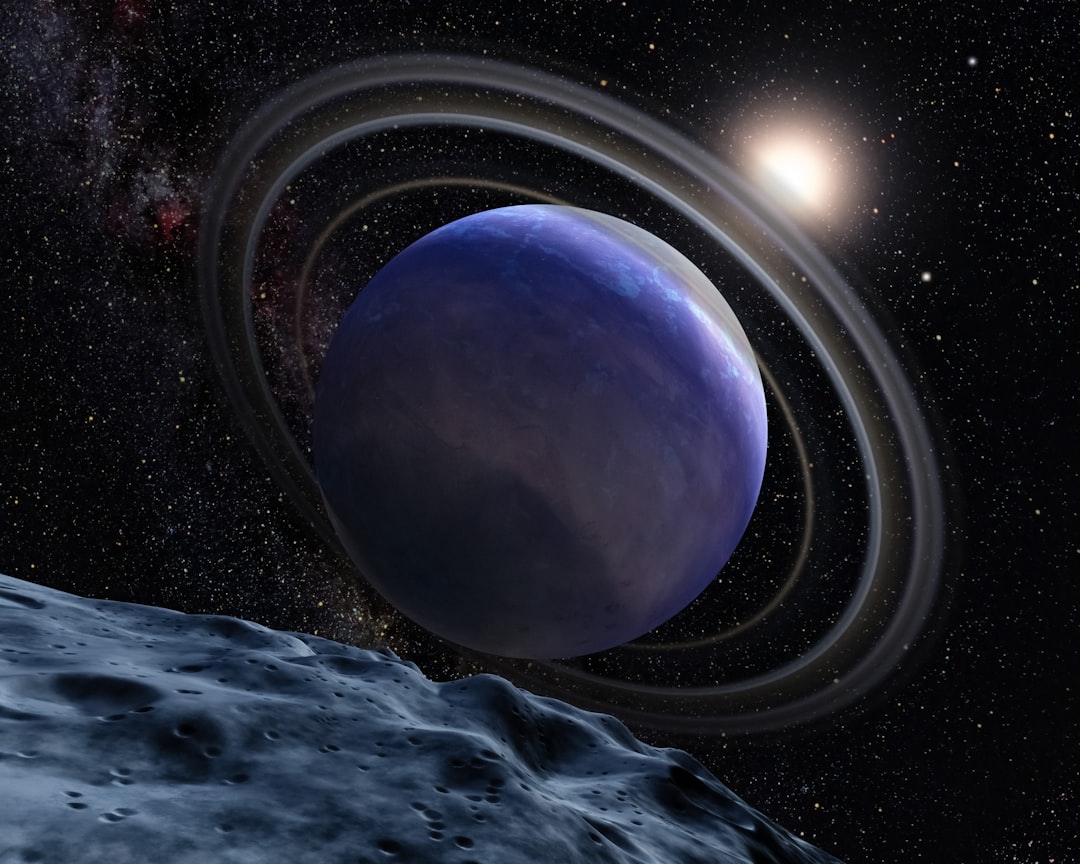
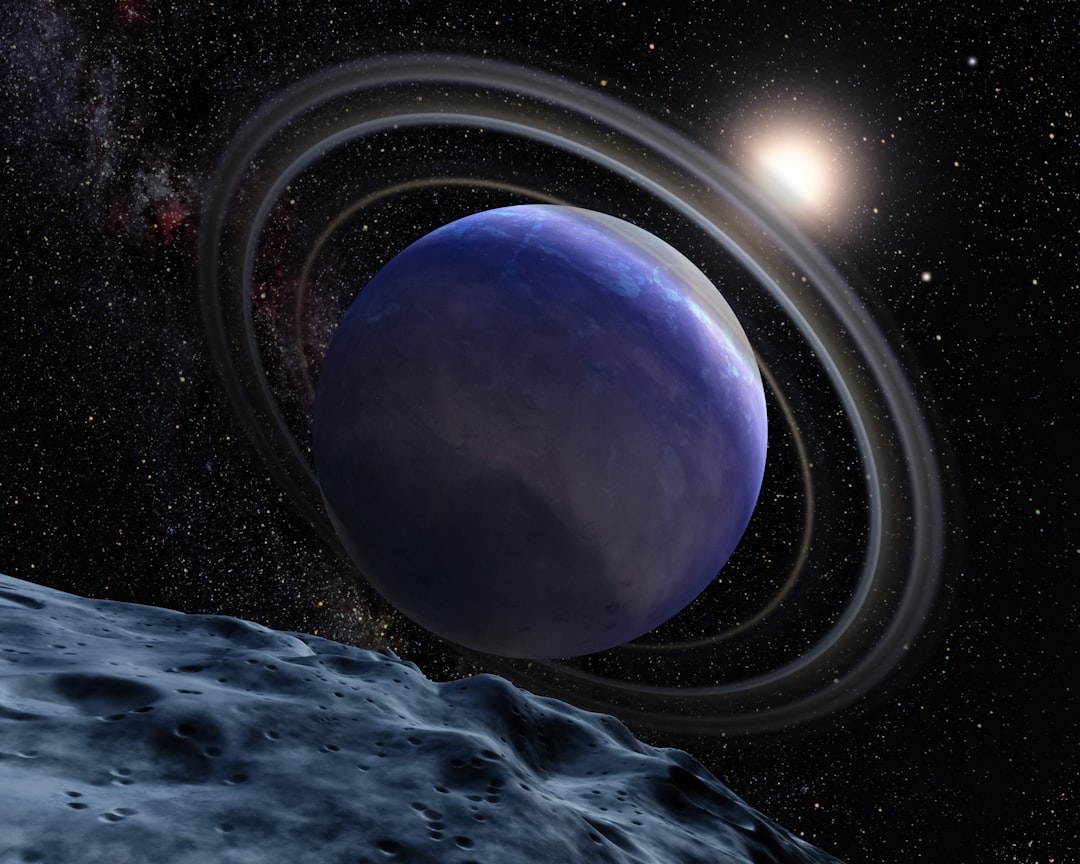
The search for life beyond Earth is entering a transformative new era. NASA's Habitable Worlds Observatory (HWO), slated for launch sometime in the 2040s, is poised to become the most powerful exoplanet-hunting space telescope ever conceived. This large infrared/optical/ultraviolet space telescope will be the first observatory specifically designed to search for rocky planets orbiting within their parent stars' circumstellar habitable zones (HZs) — the regions where liquid water could theoretically exist on a planet's surface — and to characterize their atmospheres in extraordinary detail. Beyond its exoplanet mission, its powerful suite of instruments will also enable cutting-edge astrophysics research to address some of the greatest cosmological mysteries astronomers face today, from the nature of dark energy to the formation of the first galaxies.
Yet building such an observatory is far easier said than done. To carry out its ambitious objectives, the HWO will require exceptional stability and precision, particularly in measuring and controlling the wavefront of light as it propagates through the telescope and its coronagraph system. Even the tiniest optical imperfections — far smaller than the width of a human hair — can render faint planetary signals undetectable against the overwhelming glare of their host stars. Researchers at the Center for Research and Education in Optics and Lasers (CREOL) at the University of Central Florida (UCF) are rising to meet exactly this challenge, developing revolutionary photonic technology to help the HWO and other next-generation telescopes detect potentially habitable planets.
The PEEPSS Project: A Multi-Institutional Push Toward Direct Imaging
The UCF effort is part of a broader, NASA-funded initiative known as the Photonics-Enabled Exoplanet Spectroscopic System (PEEPSS) — a three-year project focused on building and testing prototype systems to help astronomers directly observe planets that would otherwise be hopelessly obscured by the light of their parent stars. The project brings together a formidable coalition of institutions, including UC Santa Cruz, the University of Sydney, and the Space Telescope Science Institute (STScI), the organization responsible for operating the Hubble and James Webb Space Telescopes.
Direct imaging of exoplanets represents one of the most technically demanding frontiers in modern astronomy. Unlike indirect methods such as the transit method — used so successfully by missions like NASA's Kepler Space Telescope — direct imaging requires resolving and isolating light that has actually reflected off a planet's surface or atmosphere. This is an immense challenge, as light reflected by a planet is typically several orders of magnitude dimmer than the light emitted by its host star. Recovering that signal demands a near-perfect optical system and extraordinarily sophisticated signal processing.
"If they're in the habitable zone, that means they are orbiting close to their host star, and that host star is typically going to be 10 billion times brighter than the planet. And you can say, 'Well, that's only a part in a million.' Guess what? A part in a million means it's still 10,000 times brighter than your exoplanet. You're doomed." — Professor Stephen Eikenberry, Principal Investigator, PEEPSS
At UCF, Professor Stephen Eikenberry, the principal investigator of PEEPSS, leads a team of graduate students and researchers whose deep expertise in fiber optics and photonics helped establish the collaboration and secure NASA funding. His candid analogy underscores just how extreme the contrast problem truly is — and why a fundamentally new approach to light collection and wavefront sensing is necessary.
The Starlight Problem: Why Coronagraphs Alone Are Not Enough
To address the blinding glare of host stars, astronomers have long relied on coronagraphs — specialized telescope instruments originally inspired by solar coronagraphs used to study the Sun's outer atmosphere. A coronagraph works by using a precisely shaped mask to block a star's direct light, allowing the far dimmer reflected light from orbiting planets to reach the telescope's detectors. The concept is elegant in principle, but fiendishly difficult to implement at the performance levels required for detecting Earth-like planets around Sun-like stars.
The core problem lies in the microscopic imperfections that are an unavoidable reality of any physical optical system. Even nanometer-scale surface irregularities in a mirror or lens can scatter starlight into regions of the focal plane where planetary signals should appear, creating what astronomers call a "speckle noise" background that can completely overwhelm a planet's signal. These imperfections become even more problematic over time as the telescope's structure subtly flexes and shifts in the thermal environment of space. Traditional wavefront sensing systems can partially compensate for these distortions, but they often miss a critical category of errors known as "non-common-path aberrations" — optical imperfections that occur after light has passed through the beamsplitter that feeds the wavefront sensor, meaning they are effectively invisible to conventional correction systems.
- A Sun-like star can be up to 10 billion times brighter than an orbiting Earth-like planet in reflected light.
- Even with a coronagraph, residual starlight leakage can be thousands of times brighter than the target planet signal.
- Non-common-path aberrations are a leading source of uncorrected optical error in current high-contrast imaging systems.
- Achieving the contrast ratios needed for HWO will require wavefront stability measured in picometers — trillionths of a meter.
Photonic Lanterns: A Game-Changing Technology
The PEEPSS system's secret weapon is an emerging device known as a photonic lantern. Originally developed for applications in telecommunications and fiber-optic sensing, a photonic lantern is a tapered waveguide structure that seamlessly transitions incoming light from a single multimode optical fiber — which can carry many light modes simultaneously — into an array of individual single-mode fibers, each carrying just one optical mode. This elegant device allows researchers to decompose incoming light into its constituent spatial modes, recovering not only information about the brightness of the incoming signal, but also critically the phase information carried by the light waves themselves — information that most conventional imaging detectors discard entirely.
This recovered phase information is the key to a revolutionary new approach called "quantum-inspired imaging." Drawing on mathematical frameworks originally developed in the field of quantum optics, this technique exploits the wave-like behavior of light to dramatically improve image resolution and enable more effective filtering of residual starlight. By analyzing the statistical correlations between different spatial modes of the incoming light field, quantum-inspired imaging can, in principle, extract planetary signals that would be completely buried in noise for any conventional detector. The technique represents a conceptual leap beyond simply blocking starlight — it uses the fundamental physics of light itself as an analytical tool.
"Imagine you're in a house and you want the entire house to be perfectly clean. You can see people walking into the bedroom, but you can't actually see inside the bedroom itself. That's the non-common path. Traditional detectors wipe that information out. Photonic lanterns allow us to recover it." — Professor Stephen Eikenberry
Another key innovation in the PEEPSS architecture is where the wavefront sensing takes place. Rather than measuring wavefront errors upstream of the coronagraph — as most current systems do — the PEEPSS system performs its wavefront sensing directly at the telescope's focal plane, precisely where scientific imaging occurs. This focal-plane wavefront sensing approach allows the system to detect and correct optical errors that arise anywhere in the complete optical pathway, including those critical non-common-path aberrations that conventional systems cannot see. By monitoring the full optical pathway across the entire focal plane simultaneously, researchers hope PEEPSS will give future observatories the precision they need to detect genuinely Earth-like planets.
From Lab to Telescope: Early Tests and Future Prospects
The PEEPSS technology is not merely theoretical. Some versions of the photonic lantern wavefront sensing system have already been deployed and tested on operational telescopes in Hawaii, through collaborative efforts with the Air Force Research Laboratory (AFRL) and international research partners. These early tests are critical for validating the technology under real-world observing conditions, where atmospheric turbulence, thermal gradients, and mechanical vibrations all conspire to degrade optical performance. The results so far are encouraging, and the team is working to mature the technology toward the performance levels that the HWO will ultimately require.
The broader context for this work is a golden age of exoplanet science. Since the first confirmed detection of a planet orbiting a Sun-like star in 1995, astronomers have catalogued thousands of exoplanets using telescopes like Kepler and the Transiting Exoplanet Survey Satellite (TESS). The James Webb Space Telescope (JWST) has begun probing the atmospheres of some of these worlds with unprecedented sensitivity, detecting molecules like carbon dioxide and water vapor. Yet JWST was not designed for the kind of high-contrast direct imaging that would allow astronomers to study a true Earth analog. That is precisely the mission PEEPSS is helping to enable.
If the PEEPSS technology achieves its goals and is successfully integrated into the HWO, the implications for astrobiology and our understanding of our place in the universe would be profound. Astronomers could, for the first time, directly analyze the atmospheres of rocky planets in habitable zones — searching for biosignature gases such as oxygen, ozone, methane, and nitrous oxide that, in the right combinations, could be strong indicators of biological activity. The mere detection of an Earth-like atmosphere on a planet in a habitable zone, even without definitive proof of life, would be one of the most consequential scientific results in human history.
"If we can identify habitable worlds around other stars and show they possess conditions where Earth-like life could survive, that's already revolutionary. If we discover actual evidence of life, then we're talking about one of the greatest scientific discoveries in human history. We are one mission away. We'll look up and know." — Professor Stephen Eikenberry
Key Takeaways
- NASA's Habitable Worlds Observatory, planned for the 2040s, will be the first telescope designed specifically to characterize the atmospheres of Earth-like planets in habitable zones.
- UCF's PEEPSS project is developing photonic lantern technology to perform focal-plane wavefront sensing, correcting optical errors that conventional systems cannot detect.
- Photonic lanterns decompose incoming starlight into individual optical modes, recovering phase information that enables more powerful signal processing techniques.
- The quantum-inspired imaging technique uses the wave properties of light to improve contrast and filter out residual starlight at unprecedented levels.
- Early hardware tests in Hawaii are demonstrating the feasibility of the approach, with more advanced prototypes in development.
- Successful deployment of PEEPSS-derived technology could enable direct detection of biosignature gases in exoplanet atmospheres — potentially revealing the first evidence of life beyond Earth.
The road to answering humanity's oldest question — Are we alone? — runs directly through the optics laboratories of institutions like UCF's CREOL and the collaborative network of scientists they have assembled. With each photonic innovation, that answer draws measurably closer. For further reading on the science of habitable worlds and the technologies that will seek them out, visit the NASA Exoplanet Exploration Program and the ESA/Hubble Science Hub.