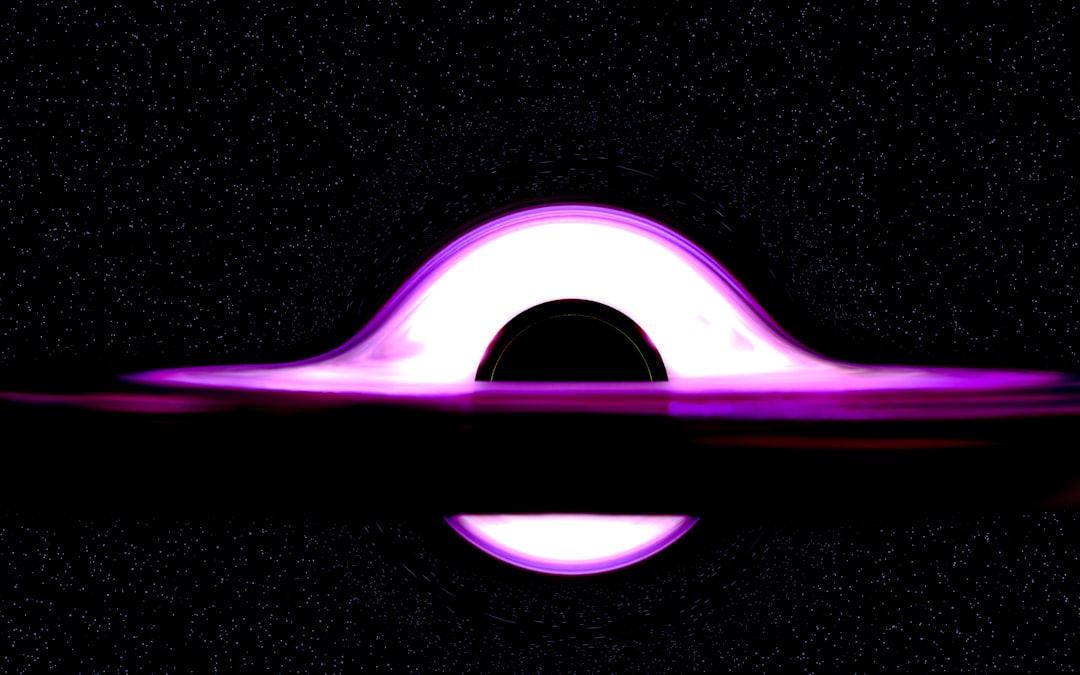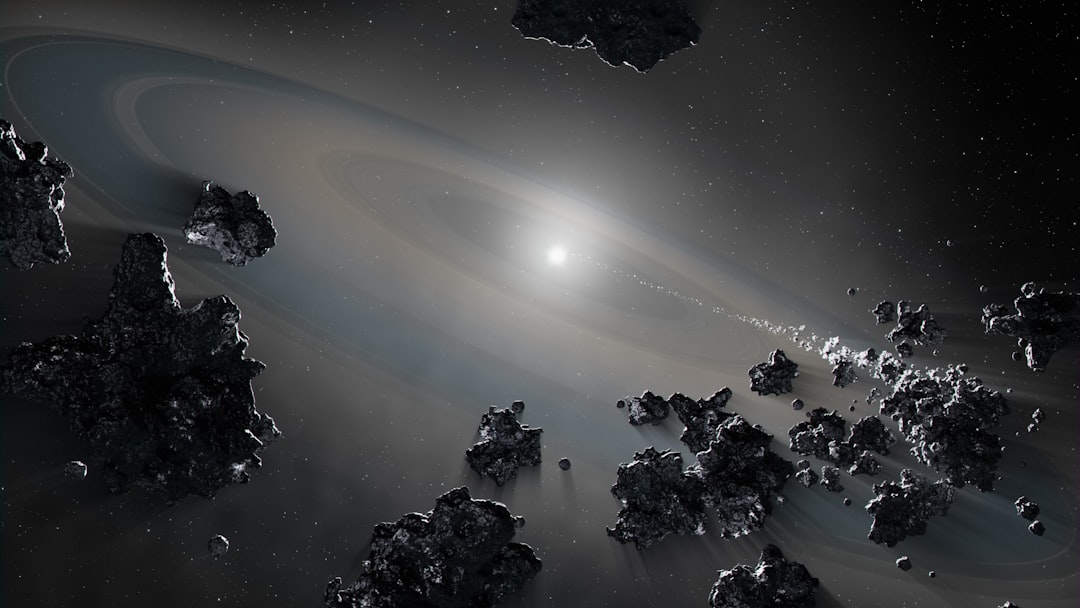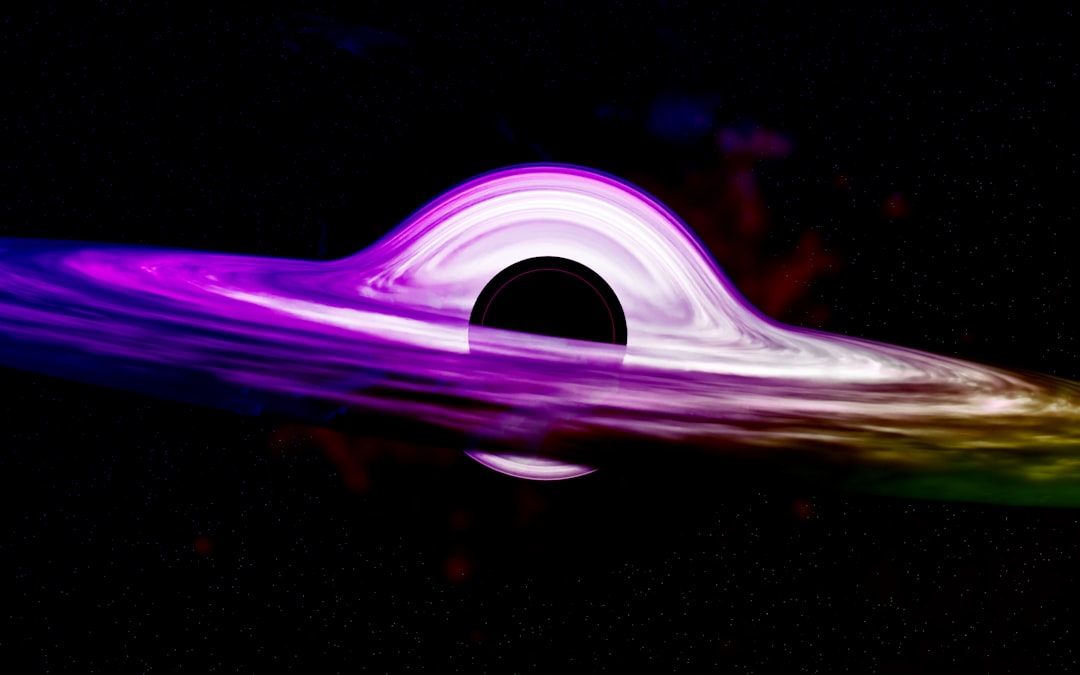
In September 2015, humanity achieved one of its most remarkable scientific milestones: the first direct detection of gravitational waves—ripples in the very fabric of spacetime that Albert Einstein predicted a century earlier. This breakthrough didn't just confirm Einstein's theory of general relativity; it fundamentally transformed how we observe and understand the cosmos. Unlike traditional astronomy, which relies on capturing electromagnetic radiation like visible light, radio waves, or X-rays, gravitational wave astronomy allows us to "hear" the universe through the violent collisions and mergers of massive cosmic objects. Now, nearly a decade and hundreds of detections later, these cosmic ripples are revealing an intriguing mystery: a conspicuous absence of black holes within a specific mass range, a phenomenon scientists call the Forbidden Gap.
Recent groundbreaking research published in Nature may have finally cracked the code behind this puzzling void in the black hole mass spectrum. Led by Dr. Hui Tong from the School of Physics and Astronomy at Monash University in Australia, the study titled "Evidence of the pair-instability gap from black-hole masses" provides compelling evidence that a spectacular type of stellar explosion—the pair-instability supernova—is responsible for creating this cosmic exclusion zone. The findings not only validate decades-old theoretical predictions but also reveal unexpected complexities in how black holes form and grow through successive mergers across cosmic time.
The Gravitational Wave Revolution: A New Census of the Cosmos
When the Laser Interferometer Gravitational-Wave Observatory (LIGO) made its historic first detection in 2015, capturing the merger of two black holes approximately 1.3 billion light-years away, it marked the beginning of an entirely new era in observational astronomy. Since that pivotal moment, gravitational wave detectors—including LIGO's two facilities in the United States and the Virgo detector in Italy—have recorded hundreds of these cosmic events. Each detection provides invaluable data about the masses, spins, and distances of the merging objects, effectively creating a comprehensive census of black hole populations throughout the universe.
This census has revealed patterns that both confirm and challenge our understanding of stellar evolution. According to well-established astrophysical theory, when massive stars—those with initial masses between approximately 50 and 130 times the mass of our Sun (solar masses)—exhaust their nuclear fuel, they should undergo gravitational collapse and form black holes. Logic would dictate that we should detect black holes across this entire mass spectrum. However, the gravitational wave data tells a strikingly different story: stellar-mass black holes exceeding approximately 45 solar masses are extraordinarily rare. This scarcity defines what researchers call the Forbidden Gap, and understanding its origin has become one of the most pressing questions in modern astrophysics.
Inside the Inferno: The Physics of Pair-Instability Supernovae
To comprehend why certain black holes seem forbidden from existence, we must journey into the extreme environments within the cores of the most massive stars in the universe. Throughout most of a star's life, it exists in a delicate equilibrium—a cosmic balancing act between two fundamental forces. The outward pressure generated by thermonuclear fusion in the star's core counteracts the relentless inward pull of gravity. For stars like our Sun, this balance can persist for billions of years. However, in stars with masses exceeding about 130 solar masses, something extraordinary and catastrophic occurs.
Within these stellar behemoths, core temperatures soar to billions of degrees—so extreme that the high-energy gamma-ray photons produced by nuclear reactions possess enough energy to spontaneously create matter. Specifically, when these gamma rays collide with atomic nuclei, they can transform into particle-antiparticle pairs: electrons and their antimatter counterparts, positrons. This process, known as pair production, has a profound and destabilizing effect on the star's internal structure.
"Stellar theory predicts a forbidden range of black-hole masses between approximately 50 to 130 solar masses due to pair-instability supernovae, but evidence for such a gap in the mass distribution from gravitational-wave astronomy has proved elusive until now," the research team explains in their Nature publication.
The creation of electron-positron pairs essentially drains energy from the radiation field that supports the star against gravitational collapse. As this radiation pressure suddenly decreases, the star's core begins to contract rapidly. This contraction heats the core even further, triggering runaway thermonuclear reactions of unprecedented violence. Unlike typical supernovae that leave behind a neutron star or black hole remnant, a pair-instability supernova completely obliterates the star in an explosion so powerful that absolutely nothing remains—not even a black hole. The star is utterly vaporized, its material scattered across space, leaving no compact object behind to mark its former existence.
The Mass Range Where Stars Vanish Completely
Theoretical models indicate that stars with initial masses between approximately 130 and 250 solar masses are susceptible to this total destruction. Stars below this range can collapse into black holes before pair-instability takes hold, while stars above this range have cores so massive that they collapse directly into black holes despite the pair-production process. This creates a specific window—the Forbidden Gap—where black holes simply should not form through normal stellar evolution. The new gravitational wave census provides the first robust observational confirmation of this theoretical prediction, representing a triumph of both theoretical astrophysics and observational astronomy.
The Mystery of Gap-Crossing Black Holes
If the story ended with pair-instability supernovae preventing black hole formation in a specific mass range, astrophysicists would have a neat, satisfying explanation for the Forbidden Gap. However, the universe rarely offers such simple answers. The gravitational wave data reveals that while black holes in the gap are indeed rare, they are not entirely absent. A small but significant population of black holes with masses in the supposedly forbidden range has been detected, presenting researchers with a new puzzle: How did these gap-crossing black holes come to exist?
The answer lies in the complex dynamics of binary black hole systems and the phenomenon of hierarchical mergers. Dr. Tong's team discovered a crucial asymmetry in the mass distribution: "While the gap is not present in the distribution of primary masses m₁—the more massive of the two black holes in a binary system—it appears unambiguously in the distribution of secondary masses m₂, where m₂ ≤ m₁." This pattern suggests that many of the primary black holes detected in the Forbidden Gap did not form directly from stellar collapse but instead represent the products of previous black hole mergers.
Hierarchical Mergers: Building Bigger Black Holes
In dense stellar environments such as globular clusters or the cores of active galaxies, black holes can encounter each other multiple times over cosmic history. When two black holes merge, they create a single, more massive black hole that can subsequently merge with yet another black hole. Through this process of hierarchical mergers, black holes can grow beyond the masses that would normally be forbidden by pair-instability physics. The spin characteristics of these black holes provide crucial evidence for this scenario: black holes in the Forbidden Gap tend to rotate more rapidly than those below the gap, a signature consistent with merger-formed black holes rather than those born directly from stellar collapse.
This discovery adds a new layer of complexity to our understanding of black hole populations and suggests that astrophysical models must account not only for direct stellar collapse but also for the evolutionary pathways through which black holes grow via successive mergers. Research from NASA's Chandra X-ray Observatory and other facilities has identified several candidate environments where such hierarchical mergers might occur with sufficient frequency to populate the Forbidden Gap.
Key Implications and Findings
- Confirmation of Pair-Instability Theory: The gravitational wave census provides the first direct observational evidence for the pair-instability supernova mechanism, validating theoretical predictions made decades ago about the fate of the most massive stars in the universe.
- Hierarchical Merger Pathways: The presence of rapidly spinning black holes in the Forbidden Gap indicates that a sub-population of black holes grows through successive mergers rather than direct stellar collapse, revealing previously unknown complexity in black hole evolution.
- Mass Distribution Asymmetry: The clear detection of the gap in secondary black hole masses but not in primary masses provides strong evidence for two distinct formation channels: direct collapse for smaller black holes and merger-driven growth for those in the forbidden range.
- Spin-Mass Correlation: The transition in spin characteristics at the edge of the Forbidden Gap offers a new diagnostic tool for distinguishing between black holes formed through different mechanisms, opening new avenues for population studies.
- Environmental Factors: The existence of gap-crossing black holes suggests that dense stellar environments capable of facilitating multiple merger events play a crucial role in shaping the observed black hole mass spectrum.
Future Directions: Next-Generation Gravitational Wave Astronomy
While Dr. Tong's research represents a major breakthrough in understanding the Forbidden Gap, it simultaneously raises new questions that will drive the next generation of gravitational wave research. How common are pair-instability supernovae in the modern universe? How efficiently do black holes grow through hierarchical mergers in different environments? What fraction of the black hole population has experienced multiple merger events? These questions require both larger samples of gravitational wave detections and more sensitive instruments capable of detecting weaker signals from greater distances.
The future of gravitational wave astronomy looks exceptionally promising. Planned upgrades to existing detectors will significantly enhance their sensitivity, while new facilities like the proposed Laser Interferometer Space Antenna (LISA)—a space-based gravitational wave observatory—will open entirely new windows on the universe. LISA will be sensitive to gravitational waves from supermassive black hole mergers and other sources inaccessible to ground-based detectors, potentially revealing whether hierarchical merger processes operate across all scales of black hole masses.
Additionally, the upcoming Einstein Telescope in Europe and Cosmic Explorer in the United States promise to increase detection rates by factors of ten or more, providing the statistical power needed to probe rare populations and subtle effects in the black hole mass spectrum. These next-generation instruments will not only detect more events but will also measure black hole properties with unprecedented precision, allowing researchers to test theoretical models with exquisite detail.
The Broader Cosmic Context
The discovery of the Forbidden Gap and its partial population by merger-formed black holes connects to broader questions about cosmic evolution and the lifecycle of matter in the universe. Understanding which stars explode as pair-instability supernovae and which collapse into black holes affects our models of chemical enrichment in galaxies—the process by which heavy elements created in stellar cores are distributed throughout space to form new generations of stars and planets. Pair-instability supernovae, with their complete destruction of massive stars, represent a particularly efficient mechanism for dispersing these elements.
Moreover, the hierarchical merger process revealed by this research suggests that black holes in dense stellar environments may grow much more efficiently than previously thought, with implications for understanding the formation of intermediate-mass black holes—mysterious objects with masses between stellar-mass and supermassive black holes that have proven difficult to detect and explain. If stellar-mass black holes can efficiently grow through mergers, this pathway might help bridge the gap between the smallest and largest black holes in the universe.
As gravitational wave astronomy continues to mature, each new detection adds to our cosmic census, refining our understanding of how stars live, die, and sometimes return in new forms through the spectacular collisions that send ripples through spacetime. The Forbidden Gap, once a theoretical prediction, now stands as observational reality—a testament to the power of combining theoretical insight with cutting-edge observational capabilities. Yet like all great scientific discoveries, it opens more questions than it answers, ensuring that the next chapter of gravitational wave astronomy will be even more exciting than the first.