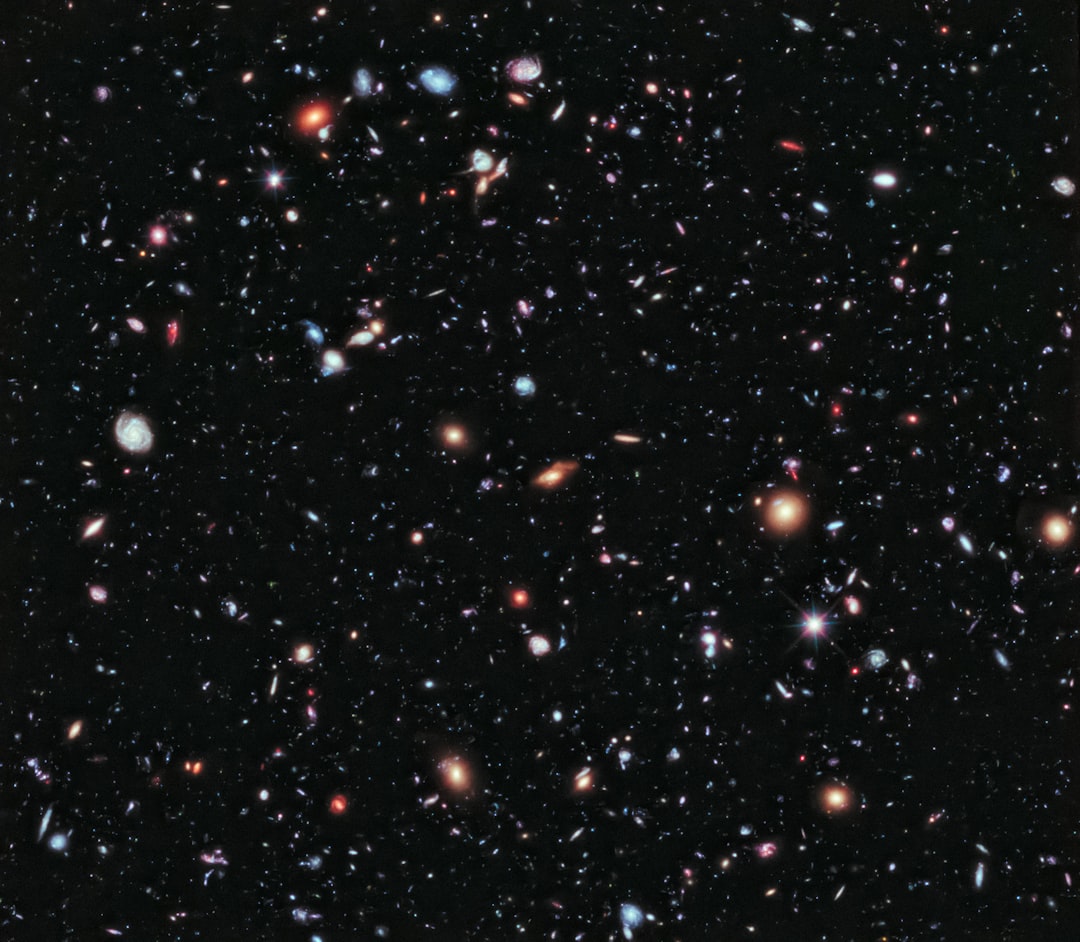
The James Webb Space Telescope (JWST) has once again challenged our understanding of the early universe with its discovery of surprisingly massive galaxies that existed a mere 600 million years after the Big Bang. These galaxies, far larger than predicted by current theories, have left astronomers searching for explanations. Now, a team of researchers using the Atacama Large Millimetre/submillimetre Array (ALMA) may have found the answer in a galaxy known as Y1, a superheated star factory with a star formation rate (SFR) 180 times greater than that of the Milky Way.
The findings, published in the Monthly Notices of the Royal Astronomical Society under the title "A warm ultraluminous infrared galaxy just 600 million years after the big bang," shed light on the discrepancy between the JWST's observations and our current models of early galaxy formation. Lead author Tom Bakx, a postdoc researcher at Chalmers University of Technology in Sweden, and his team propose that these early galaxies may have undergone brief periods of intense star formation, allowing them to grow much more rapidly than previously thought.
Observing the Early Universe with ALMA
To unravel the mystery of Y1, the researchers turned to ALMA, which can detect light in the radio part of the electromagnetic spectrum. By observing at a wavelength of 0.44 mm, known as Band 9, ALMA was able to measure the temperature of the galaxy's dust. This dust, heated by the intense light from young, massive stars, provides a window into the galaxy's star formation activity.
"At wavelengths like this, the galaxy is lit up by billowing clouds of glowing dust grains. When we saw how bright this galaxy shines compared to other wavelengths, we immediately knew we were looking at something truly special." - Tom Bakx, lead author
The temperature of Y1's dust, around 90 Kelvin (-180°C or -292°F), is significantly higher than that of the Milky Way, which ranges from 20 to 40 Kelvin. This elevated temperature reflects Y1's extreme SFR, forming about 180 solar masses per year compared to the Milky Way's mere 1 solar mass per year.
Implications for Early Galaxy Formation
The discovery of Y1 and its intense star formation activity suggests that such "star factories" may have been common in the early universe, potentially explaining the presence of the massive galaxies observed by the JWST. Even if these episodes of rapid star formation were brief, they could have allowed galaxies to grow much faster than current models predict.
Co-researcher Yoichi Tamura, an astronomer at Nagoya University in Japan, emphasizes the potential significance of this finding:
"Even though it's the first time we've seen a galaxy like this, we think that there could be many more out there. Star factories like Y1 could have been common in the early universe."
The study also addresses another puzzling observation about early galaxies: their seemingly high dust content. Astronomers typically attribute most galactic dust to older, evolved stars, particularly red giants. However, if the dust in these early galaxies is warmer than expected, it could be just as luminous as a smaller amount of cooler dust, eliminating the need for a large population of evolved stars to explain the observations.
Future Research Directions
While the discovery of Y1 provides a compelling explanation for the massive galaxies observed by the JWST, the researchers acknowledge that more work is needed to confirm their findings. They plan to search for more examples of these extreme star factories and use ALMA's high-resolution capabilities to study Y1 in greater detail.
As co-author Laura Sommovigo, of the Flatiron Institute and Columbia University, notes:
"Galaxies in the early universe seem to be too young for the amount of dust they contain. That's strange, because they don't have enough old stars, around which most dust grains are created. But a small amount of warm dust can be just as bright as large amounts of cool dust, and that's exactly what we're seeing in Y1."
The authors conclude that Y1 represents an extreme example of dust-obscured star formation contributing significantly to the early growth of galaxies, a phenomenon that can only be revealed through comprehensive observations in the submillimeter regime. As the JWST continues to probe the early universe and astronomers conduct follow-up studies with facilities like ALMA, we can expect to gain a clearer picture of how these massive galaxies formed and evolved in the cosmic dawn.
The discovery of Y1 and its implications for early galaxy formation highlight the power of combining observations from cutting-edge telescopes like the JWST and ALMA. By pushing the boundaries of our observational capabilities, astronomers are uncovering new insights into the early universe and refining our understanding of the processes that shaped the cosmos we see today. As research in this field continues, we can look forward to more groundbreaking discoveries that will further illuminate the mysteries of the universe's infancy.