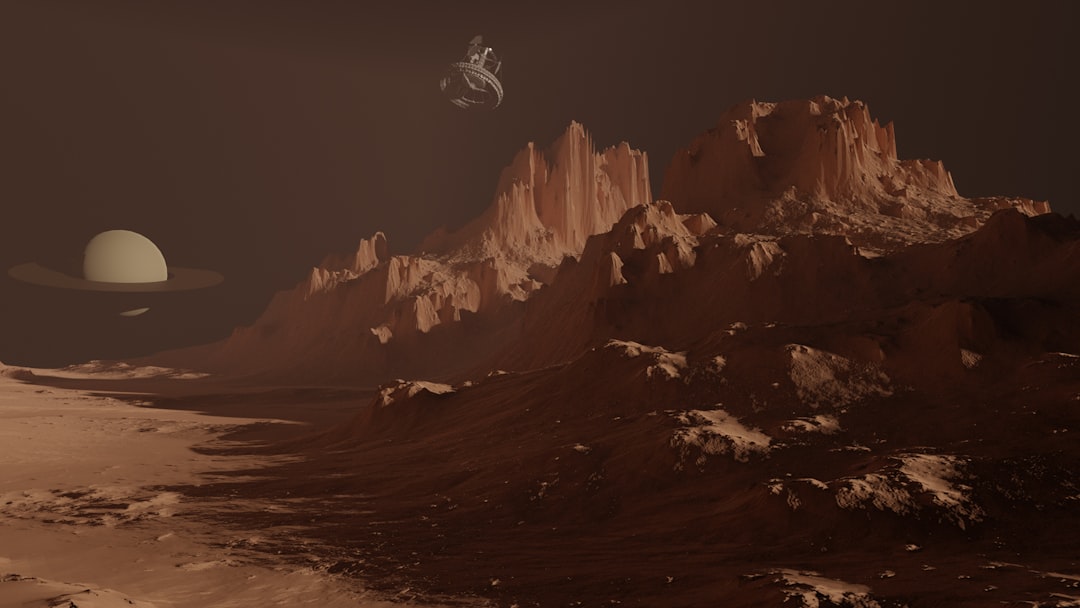
In the vast expanse of our galaxy, a largely invisible population of worlds drifts silently through the cosmic void—free-floating planets (FFPs) that wander through space untethered to any star. Recent estimates suggest the Milky Way could harbor billions of these cosmic wanderers, and where there are planets, there may well be moons. Now, groundbreaking research suggests that these rogue exomoons could represent an entirely new frontier in the search for habitable environments beyond Earth—one that challenges our fundamental assumptions about where life can emerge and thrive in the universe.
The concept seems counterintuitive at first: How could worlds drifting through the frigid darkness of interstellar space, receiving no warmth from a parent star, possibly support the conditions necessary for life? Yet new research published in the Monthly Notices of the Royal Astronomical Society demonstrates that under the right circumstances, tidally heated exomoons orbiting free-floating planets could maintain liquid water on their surfaces for billions of years—potentially long enough for complex life to evolve. This remarkable finding expands the cosmic real estate where we might search for life far beyond the traditional "habitable zones" around stars.
Led by David Dahlbüdding, a doctoral researcher in physics at Ludwig-Maximilians-University in Munich, the research team modeled an impressive array of scenarios: 26,293 Earth-mass exomoons orbiting Jupiter-mass free-floating planets. Their findings reveal a fascinating interplay between tidal heating, atmospheric composition, and the potential for habitability that operates entirely independently of stellar radiation—a paradigm shift in how we think about life-supporting environments in the cosmos.
The Hidden Population of Cosmic Nomads
Free-floating planets represent one of astronomy's most intriguing populations of celestial objects. These planetary-mass bodies, also called rogue planets, follow their own trajectories through the galaxy, unbound by the gravitational embrace of any star. Their origins are diverse: many form in conventional protoplanetary disks around young stars, just like the planets in our solar system, but are subsequently ejected through violent gravitational interactions with other planets or during close encounters with passing stars. Others may form through direct collapse of gas clouds, similar to how stars form, and may have never experienced the warmth of a parent sun.
The prevalence of these cosmic wanderers is staggering. NASA research suggests that rogue planets may actually outnumber stars in our galaxy, with some estimates placing their numbers in the hundreds of billions. Given that moon formation appears to be a natural byproduct of planet formation—as evidenced by the hundreds of moons orbiting planets in our own solar system—it stands to reason that many of these free-floating worlds retain their lunar companions even after their violent ejections from their birth systems.
When a planet is ejected from its solar system, the dynamics of the ejection process can dramatically alter the orbits of any accompanying moons. Rather than following neat, circular paths, these exomoons often end up in highly eccentric orbits around their host planets—unless they're thrown clear entirely. This eccentricity, while seemingly chaotic, becomes the key ingredient in a remarkable recipe for habitability in the depths of interstellar space.
Tidal Heating: Nature's Internal Furnace
The mechanism that could keep rogue exomoons warm enough for life is already at work in our own solar system, providing us with compelling proof-of-concept. Jupiter's moon Europa serves as perhaps the most famous example of tidal heating in action. Despite orbiting at a distance where solar radiation provides minimal warmth, Europa is believed to harbor a vast ocean of liquid water beneath its icy crust—an ocean that may contain more water than all of Earth's oceans combined.
The physics of tidal heating are elegantly simple yet profoundly effective. Europa is locked in an orbital resonance with two of its sibling moons: the violently volcanic Io and the massive Ganymede. This gravitational dance keeps Europa in an eccentric orbit, causing its distance from Jupiter to vary as it completes each orbital circuit. As Europa moves closer to Jupiter, the giant planet's immense gravitational field compresses the moon; as it moves away, that compression releases. This constant flexing and releasing generates tremendous internal friction, which converts to heat—enough heat to maintain a liquid ocean for billions of years without any contribution from the Sun.
"Exomoons around free-floating planets can survive their host planet's ejection. Such ejections can increase their orbital eccentricity, providing significant tidal heating in the absence of any stellar energy source," the research team explains in their published work.
Another Jovian moon, Ganymede, demonstrates an additional heating mechanism: radiogenic heating. The decay of radioactive elements within Ganymede's interior generates heat that, combined with some tidal effects, maintains its subsurface ocean. These two mechanisms—tidal flexing and radiogenic decay—could work in concert on rogue exomoons, providing the thermal energy necessary to maintain liquid water for geological timescales.
Why Earth-Mass Moons Matter
The research team's focus on Earth-mass exomoons is deliberate and scientifically strategic. Smaller, less massive moons face two critical challenges that would prevent them from supporting life as we understand it. First, lower-mass moons generate less heat during tidal flexing simply because there's less material being compressed and deformed. Second, and perhaps more importantly, they lack sufficient gravitational pull to retain thick, insulating atmospheres—atmospheres that are essential for trapping whatever heat is generated internally.
As the researchers note in their paper, "An Earth-like exomoon presents a plausible best-case scenario" for habitability. Such a moon would have enough mass to generate substantial tidal heat, sufficient gravity to maintain a thick atmosphere, and the geological complexity necessary for the chemical cycles that might support life.
The Hydrogen Atmosphere Solution
One of the most significant challenges for rogue exomoon habitability involves atmospheric retention over billions of years. On Earth, our carbon dioxide-rich atmosphere plays a crucial role in the greenhouse effect, trapping infrared radiation and maintaining surface temperatures warm enough for liquid water. However, previous research suggested that CO₂-rich atmospheres on exomoons could only maintain liquid water for approximately 1.6 billion years before the extreme cold causes the carbon dioxide to condense and precipitate out of the atmosphere, falling to the surface as dry ice.
While 1.6 billion years might seem like an eternity, it's insufficient for the evolution of complex life as we understand it. Life on Earth emerged relatively quickly—within the first billion years—but remained microbial for most of our planet's history. Complex, multicellular life didn't explode onto the scene until the Cambrian explosion approximately 541 million years ago, roughly 4 billion years after Earth's formation.
The breakthrough in this new research lies in a completely different atmospheric composition: hydrogen-dominated atmospheres. While hydrogen doesn't trap infrared radiation through the same greenhouse mechanism as carbon dioxide under normal conditions, the physics change dramatically under high atmospheric pressure. A phenomenon called collision-induced absorption (CIA) comes into play, offering a pathway to long-term habitability.
Under sufficiently high pressure, hydrogen molecules are forced into close proximity, forming transient molecular complexes that can absorb and trap infrared energy that would otherwise escape into space. The researchers' models demonstrate that this mechanism could maintain surface temperatures warm enough for liquid water for up to 4.3 billion years—remarkably close to Earth's current age and well within the timeframe necessary for complex life to potentially emerge and evolve.
The Earth Connection: Asteroid Impacts and Hydrogen Atmospheres
In a fascinating parallel to early Earth conditions, lead author Dahlbüdding points to our own planet's history as a potential analog. During Earth's Hadean eon—the earliest period of our planet's history—asteroid impacts may have created temporary hydrogen-rich atmospheric conditions that could have been conducive to the emergence of life.
"We discovered a clear connection between these distant moons and the early Earth, where high concentrations of hydrogen through asteroid impacts could have created the conditions for life," Dahlbüdding explained in a press release.
The mechanism involves iron-rich asteroids impacting Earth's early oceans under conditions of extreme heat and pressure. The iron would react with water molecules (H₂O), stripping away oxygen atoms to form iron oxides while releasing hydrogen gas into the atmosphere. While the researchers aren't suggesting this exact mechanism would occur on rogue exomoons—primarily because they would lack a nearby asteroid belt as a source of impactors—it demonstrates that hydrogen-rich atmospheres can indeed play a role in creating conditions favorable for life's emergence.
Beyond Temperature: The Chemistry of Life's Origins
The research reveals that tidal heating on rogue exomoons could contribute to habitability in ways that extend beyond simply maintaining liquid water. The evaporation and condensation cycles driven by tidal heating could create the chemical conditions necessary for the formation of complex organic molecules—the building blocks of life.
The researchers highlight that "wet-dry cycling caused by the strong tides together with the alkalinity of dissolved NH₃ could create favorable conditions for RNA polymerization and thus support the emergence of life." This is particularly significant because RNA polymerization—the process by which RNA molecules form chains—is considered one of the critical steps in the origin of life. The "RNA world hypothesis" suggests that self-replicating RNA molecules may have preceded DNA-based life on Earth.
The presence of dissolved ammonia (NH₃) in the oceans of these exomoons would create alkaline conditions, which laboratory experiments have shown can facilitate the formation of complex organic molecules. Combined with the regular wet-dry cycles that concentrate these molecules, rogue exomoons could potentially host the chemical environments necessary for life to bootstrap itself into existence.
The Observational Challenge and Future Prospects
Despite the theoretical promise of habitable rogue exomoons, detecting them poses extraordinary challenges. To date, astronomers have not confirmed a single exomoon around any planet, rogue or otherwise. Only two exomoon candidates have been identified—Kepler-1625b-i and Kepler-1708b-i—and both remain unconfirmed and controversial within the astronomical community. These candidates orbit planets that are themselves orbiting stars, making them far easier to detect than moons around free-floating planets.
The detection of free-floating planets themselves remains challenging. While several hundred candidates have been identified, the definition and confirmation of rogue planets exists in something of a gray area. These objects emit no light of their own and reflect no starlight, making them essentially invisible to traditional observational techniques. Current detections rely primarily on gravitational microlensing—a technique that exploits the way massive objects bend spacetime and magnify the light of background stars.
The Nancy Grace Roman Space Telescope: A Game-Changer
The situation is poised to change dramatically with the launch of the Nancy Grace Roman Space Telescope, currently scheduled for the mid-2020s. This NASA mission is specifically designed to excel at gravitational microlensing surveys and could discover hundreds of rogue planets during its operational lifetime. More remarkably, the Roman Space Telescope should possess the sensitivity to detect exomoons around these free-floating planets, provided they're at least half as massive as Ganymede, the largest moon in our solar system.
If the Roman Space Telescope conducts a dedicated transit search for exomoons—watching for the dimming of a rogue planet's thermal emission as a moon passes in front of it—estimates suggest it could discover approximately a dozen exomoons roughly the size of Titan (Saturn's largest moon) orbiting free-floating planets. Some optimistic projections suggest it might even reveal an entire population of these objects, fundamentally expanding our census of potentially habitable environments in the galaxy.
However, detection is only the first step. The researchers acknowledge that characterizing the atmospheres of rogue exomoons—essential for determining their actual habitability—remains beyond the capabilities of current or near-future instrumentation. As they note in their conclusion, "To verify and analyze an atmosphere may not be feasible with any instruments currently in operation."
Nevertheless, some indirect methods might provide clues. The researchers suggest that "direct observation of volcanic hotspots could even confirm the absence of a thick atmosphere," as such hotspots would be more easily visible without atmospheric interference. This technique could at least help astronomers rule out certain scenarios and focus attention on the most promising candidates.
Implications for the Search for Life
This research fundamentally expands the concept of habitable zones in the universe. Traditionally, astrobiologists have focused on planets orbiting within their star's habitable zone—the region where temperatures allow liquid water to exist on a planet's surface. This new work demonstrates that habitability might exist far from any star, in the cold darkness of interstellar space, sustained by internal heat sources and exotic atmospheric chemistry.
The implications are profound for our estimates of how common life might be in the universe. If rogue planets number in the hundreds of billions in our galaxy alone, and if even a small fraction retain Earth-mass moons with the right conditions for habitability, the number of potentially life-supporting environments could be far larger than previously imagined. These rogue exomoons would represent an entirely separate category of habitable real estate, one that exists independently of stars and could persist for billions of years.
Moreover, life that evolved on rogue exomoons would face fundamentally different evolutionary pressures than life on planets orbiting stars. Without day-night cycles, without seasons, and without the variable stellar radiation that drives so much of Earth's climate and chemistry, such life might develop along radically different pathways. The study of these environments—should we ever achieve the capability—could provide unprecedented insights into the diversity of possible biochemistries and evolutionary strategies.
Looking Forward: The Next Decade of Discovery
The coming decade promises to be transformative for our understanding of rogue planets and their potential moons. Beyond the Roman Space Telescope, future facilities like the Extremely Large Telescope (ELT) may eventually achieve the sensitivity necessary to directly image some rogue planets and potentially even their largest moons, particularly if those moons show evidence of volcanic activity or other heat sources.
The theoretical framework established by Dahlbüdding and his colleagues provides a roadmap for what to look for: Earth-mass moons in eccentric orbits around Jupiter-mass free-floating planets, with evidence of thick, hydrogen-rich atmospheres. While detecting such specific conditions remains technologically challenging, knowing what signatures to search for is the essential first step.
As our observational capabilities improve and our theoretical understanding deepens, rogue exomoons may transition from theoretical curiosities to serious targets in the search for life beyond Earth. They remind us that the universe is far stranger and more diverse than our Earth-bound perspective might suggest, and that life—if it exists elsewhere—might thrive in environments we're only beginning to imagine.
The search for habitable rogue exomoons represents a new chapter in astrobiology, one that challenges us to think beyond the familiar paradigm of sun-warmed