Astronomers Want to Build a Swarm of Telescopes to Find Life Beyond Earth
One of the most profound questions humanity has ever asked — are we alone in the universe? — may finally be within technological reach. Current plans for flagship space telescopes in the 2040s are converging on a singular scientific ambition: to search for unambiguous signs of life on worlds beyond our solar system. Our best observatories to date, including the revolutionary James Webb Space Telescope (JWST), have offered only tantalizing glimpses into the atmospheres of other worlds — enough to ignite scientific excitement, but not enough to deliver a definitive answer about whether life as we know it truly exists elsewhere. Now, a bold new proposal may change that.
Recently, the W.M. Keck Institute for Space Studies (KISS) released a landmark report detailing the Large Interferometer For Exoplanets (LIFE) mission — an audacious concept that would deploy a coordinated swarm of space telescopes working in concert to characterize the atmospheres of potentially habitable worlds with unprecedented precision. The report represents the culmination of years of theoretical groundwork and engineering advances, and it signals that humanity may, at last, be ready to build the instruments capable of answering the oldest question of all.
Why Exoplanets Are So Difficult to Study
To understand why the LIFE mission is so significant, one must first appreciate the extraordinary challenge of directly observing exoplanets — planets orbiting stars other than our Sun. The fundamental problem is one of contrast and proximity. A typical exoplanet orbits very close to its host star, which can be billions of times brighter than the planet itself. Trying to image an Earth-like world next to its star from light-years away is roughly analogous to spotting a firefly hovering next to a lighthouse from thousands of kilometers away.
One well-established solution to this problem is the coronagraph — a device that physically blocks the overwhelming light of the central star, allowing a telescope to detect only the faint reflected light emanating from the planet's surface or atmosphere. This is the core technique planned for NASA's Habitable Worlds Observatory (HWO), and it is particularly effective at capturing visible and ultraviolet wavelengths of light. The HWO represents a generational leap in direct imaging capability and is currently undergoing its design phase ahead of a planned 2040s launch.
The Unique Power of Mid-Infrared Light
But there is another wavelength regime that is arguably even more powerful for the search for life: the mid-infrared. Unlike visible light, which is largely reflected starlight bouncing off a planet's surface, mid-infrared radiation captures the thermal emission — the heat that a planet radiates on its own. This shift in observing strategy carries two crucial advantages.
- Improved contrast ratio: At mid-infrared wavelengths, the brightness contrast between a planet and its host star drops dramatically compared to visible wavelengths — from billions-to-one down to perhaps millions-to-one — making it far more tractable to isolate the planet's signal.
- A treasure trove of biosignatures: The mid-infrared spectral range is extraordinarily rich in molecular absorption features that are directly relevant to the search for life. Key biosignatures detectable in this regime include ozone (O₃), methane (CH₄), water vapor (H₂O), carbon dioxide (CO₂), and even phosphine (PH₃) — a molecule that has been proposed in some contexts as a potential "capstone" biosignature indicating biological activity.
- Planetary physical parameters: Mid-infrared observations also allow astronomers to directly derive a planet's effective temperature and radius, providing crucial constraints on its habitability entirely independent of stellar models.
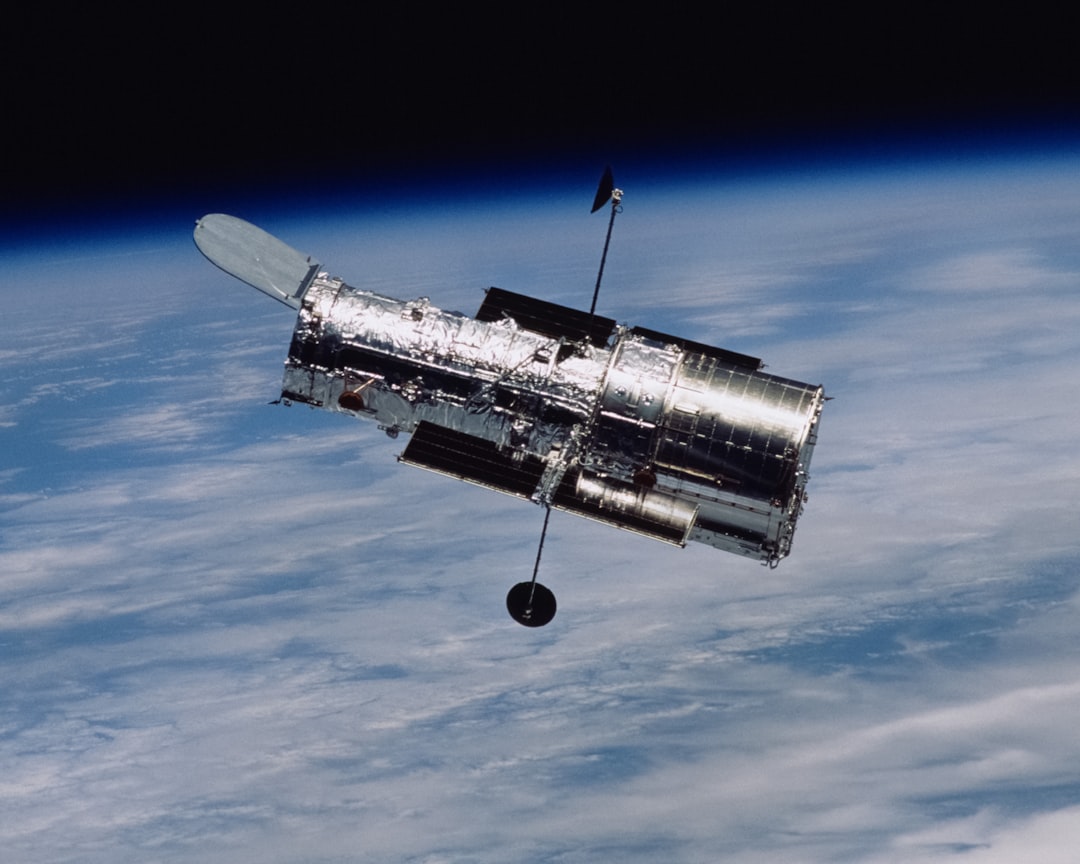
The combination of these factors makes mid-infrared astronomy a cornerstone of any serious strategy for detecting life. JWST was designed with infrared sensitivity in mind and has already made historic strides in characterizing exoplanet atmospheres. However, even JWST — with its 6.5-meter primary mirror — lacks the resolving power and sensitivity necessary to isolate and characterize the atmospheres of true Earth-analog planets around sun-like stars. A single monolithic telescope large enough to accomplish this would be physically impossible to launch on any existing or planned rocket. The LIFE mission proposes an elegant — if enormously challenging — solution to this fundamental engineering constraint.
Formation-Flying Null Interferometry: Engineering at the Frontier
The LIFE mission's central innovation is a technique known as formation-flying null interferometry. Rather than building one impossibly large telescope, LIFE would deploy multiple spacecraft — likely four collector satellites and one central beam-combining hub — flying in a precise, untethered formation separated by distances of tens to hundreds of meters. Each collector spacecraft gathers light independently, and that light is then transmitted via laser links to the central combining spacecraft.
At the hub, sophisticated optical processing performs two simultaneous operations. First, it "nulls" the light from the central star — essentially using the wave-like nature of light to cause starlight from different collectors to destructively interfere with itself and cancel out. Second, it coherently combines the planetary signal from all collectors, effectively creating a virtual telescope with a diameter equal to the maximum separation between spacecraft. The result is an instrument of extraordinary resolving power and sensitivity, capable of isolating and spectrally characterizing the atmosphere of a rocky planet orbiting in the habitable zone of a nearby star.
"The mid-infrared is a gold mine of potential spectral biosignatures — including ozone, methane, water, carbon dioxide, and even phosphine — making it one of the most compelling wavelength regimes for the search for life beyond Earth."
This is not a new concept. Two ambitious precursor missions — NASA's Terrestrial Planet Finder-Interferometer (TPF-I) and ESA's Darwin mission — were both proposed in the early 2000s and ultimately cancelled, largely because the precision engineering required to make nulling interferometry work in space simply wasn't mature enough at the time. Maintaining multiple free-flying spacecraft in a rigid formation to nanometer-level precision, while simultaneously processing starlight with exquisite optical fidelity, was considered too risky and too expensive. The LIFE report argues compellingly that this is no longer the case.
Why Now? The Technology Has Finally Caught Up
The past two decades have witnessed a quiet revolution in several key technologies that underpin the LIFE mission concept. The KISS report identifies a convergence of engineering breakthroughs that, taken together, make LIFE substantially more feasible today than it was when Darwin and TPF-I were shelved.
- Astrophotonics: Advances in integrated optical circuits — sometimes called astrophotonics — have miniaturized what once required an entire optical bench into components the size of a microchip. These photonic lanterns, beam combiners, and nulling chips dramatically reduce the mass, volume, and complexity of the optical heart of the interferometer.
- Reduced launch costs: The commercial space launch industry has fundamentally disrupted the economics of reaching orbit. Vehicles like SpaceX's Falcon Heavy and the emerging Starship architecture have pushed launch costs per kilogram to historic lows, making multi-spacecraft missions far more financially viable.
- Formation flying demonstrations: Precision formation flying — arguably the most demanding technological requirement of the entire mission — is actively being demonstrated by upcoming technology pathfinder missions. Projects such as SEIRIOS and SunRISE will fly CubeSat arrays in coordinated formations, directly validating the guidance, navigation, and control systems that LIFE would depend upon.
- Advances in nulling depth: Laboratory demonstrations of nulling interferometry have achieved null depths — the degree to which starlight is suppressed — that approach the levels required for detecting Earth-like biosignatures, a milestone that was out of reach just a decade ago.
LIFE and HWO: A Powerful Scientific Partnership
Far from competing with NASA's Habitable Worlds Observatory, the LIFE mission is envisioned as its ideal scientific partner. The two observatories are deliberately designed to examine completely separate — yet deeply complementary — aspects of the same planetary systems.
HWO will operate primarily in visible and near-ultraviolet wavelengths, using coronagraphy to image reflected starlight and search for biosignatures such as oxygen (O₂) and its photochemical byproduct ozone, as well as features like the vegetation "red edge." LIFE, meanwhile, will probe the mid-infrared thermal emission to independently measure a planet's temperature, radius, and a completely distinct set of atmospheric constituents. This multi-wavelength, multi-observatory approach is not merely additive — it is scientifically essential.
The reason is the persistent problem of false positives. Many potential biosignatures can, in principle, be produced by purely abiotic — non-biological — geological or chemical processes. Ozone, for instance, can theoretically accumulate on a dry, lifeless planet through photolysis of CO₂ and CO. Methane can be produced by volcanism. No single spectral feature, observed in isolation, can constitute definitive proof of life. But when multiple biosignatures are detected simultaneously across a broad spectral range — when the full atmospheric chemistry of a world is cross-referenced and internally consistent with biological activity — the case becomes far more compelling. NASA's Exoplanet Exploration Program has long emphasized this multi-messenger philosophy as essential to any credible life-detection strategy.
"Combining data from both the HWO and LIFE missions will be critical to eliminate 'false positives' — instances where an apparently biological signal is in fact produced by an abiotic geochemical process. Together, they form a complete picture of planetary habitability."
The Road Ahead: Funding, Collaboration, and Timeline
Both HWO and LIFE are currently in development, with target launch windows in the 2040s. The KISS report emphasizes that LIFE should be structured as a broad international collaboration, drawing on funding and expertise from multiple space agencies — including ESA, NASA, and potentially partners from Japan, Canada, and Australia — rather than relying on any single national funding source. This model mirrors the successful international partnership behind JWST and acknowledges the sheer scale of investment required for flagship-class science missions.
The scientific community's excitement about LIFE is already building. A key early validation came when the LIFE instrument architecture was tested in a remarkable real-world experiment: the team used simulated LIFE observations of Earth itself — our planet as seen from a distance — and successfully recovered biosignatures including ozone and methane from the data. In other words, if LIFE were operational today and pointed at our own world, it would detect the signs of life here. That is exactly the kind of ground truth validation that builds confidence in a mission concept.
The Profound Stakes of This Endeavor
It is worth stepping back to appreciate the magnitude of what missions like LIFE and HWO are attempting. For the first time in human history, we possess — or are on the verge of possessing — the technological capability to systematically survey dozens of nearby Earth-like planets and search for direct spectroscopic evidence of biological activity. This is not a search for microbes in our solar system, where we can send robotic spacecraft to collect samples. This is a search for the chemical fingerprints of alien life imprinted in the light arriving at our detectors from stars light-years away.
The implications of either a positive or negative result would be transformative. A confirmed detection of biosignatures on even one other world would be arguably the most significant scientific discovery in human history — proof that life is not a cosmic accident confined to a single pale blue dot. An absence of detectable biosignatures across a large survey of habitable worlds would itself carry profound scientific weight, placing stringent constraints on models of the origin and prevalence of life and potentially confirming a deeply sobering picture of our cosmic solitude.
As the LIFE report concludes, we are finally reaching a point where the technology, the institutional knowledge, and the scientific imperative are aligned. If the funding follows — and the case for it has never been stronger — the 2040s could be the decade humanity receives its long-awaited answer to the question that has haunted us since we first looked up at the stars.
Key Facts About the LIFE Mission
- LIFE stands for Large Interferometer For Exoplanets, proposed in a report by the W.M. Keck Institute for Space Studies.
- The mission concept uses formation-flying null interferometry with multiple free-flying spacecraft separated by tens to hundreds of meters.
- LIFE targets the mid-infrared wavelength range (roughly 4–20 micrometers), which is rich in biosignature molecules including O₃, CH₄, H₂O, CO₂, and PH₃.
- The mission is designed to be complementary to NASA's HWO, which will observe in visible and ultraviolet light.
- Predecessor concepts — NASA's TPF-I and ESA's Darwin — were cancelled in the 2000s due to immature technology; key advances since then now make LIFE substantially more feasible.
- The LIFE concept has already passed a critical proof-of-concept test by successfully retrieving biosignatures from simulated observations of Earth itself.
- The mission is envisioned as a broad international collaboration, with a target launch in the 2040s.