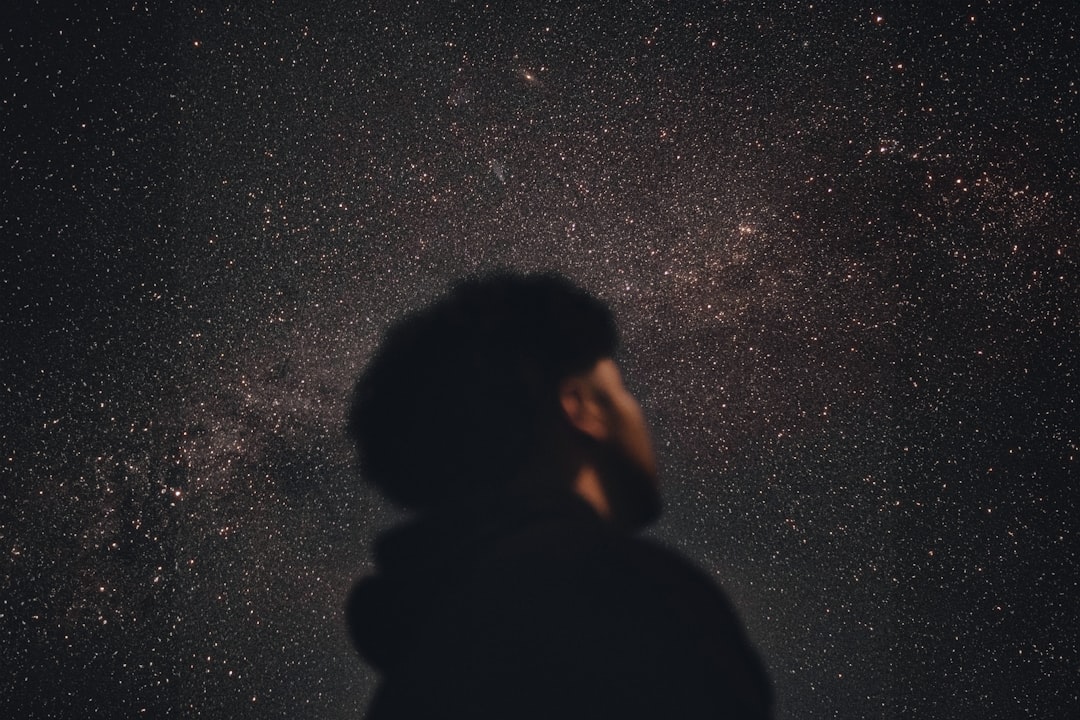
Why Consciousness Might Not Belong to Us Alone
Here is a question that sounds like science fiction but is being asked in deadly earnest by serious philosophers and cognitive scientists: Does consciousness require flesh and blood? It is one of the most profound and stubbornly difficult questions in all of science — so difficult, in fact, that the philosopher David Chalmers famously dubbed it "the hard problem of consciousness" — and a compelling new working paper suggests the answer is almost certainly no. That conclusion comes from Eric Schwitzgebel, a distinguished professor of philosophy at the University of California, Riverside, and his collaborator Jeremy Pober, a former UCR graduate student now based at the University of Lisbon.
Their paper arrives at a moment when questions about the nature of mind have never felt more urgent. The rapid rise of large-scale artificial intelligence systems, the growing scientific appreciation for animal cognition — from the sophisticated tool use of crows to the distributed neural architecture of the octopus — and the accelerating pace of exoplanet discovery have all conspired to push the question of consciousness beyond the purely academic. Who, or what, can truly be aware?
The Copernican Principle of Consciousness
Schwitzgebel and Pober are careful not to overreach. They do not attempt to define consciousness in precise technical terms, and they make no claim that exotic alien minds definitively exist. Instead, they begin from a deceptively simple premise: that consciousness is real and recognisable — we know it from the inside, even if we struggle to explain it from the outside — and they ask a narrower, more tractable question. Must awareness be tied to the particular biology that happened to evolve on one small planet orbiting an unremarkable star in the outer arm of a middling spiral galaxy?
"To assume awareness belongs only to creatures built like us is a kind of terrocentrism — an unjustified conceit that Earthly life is uniquely special." — Schwitzgebel & Pober
This is where Nicolaus Copernicus enters the argument. Each great revolution in astronomical understanding has displaced humanity a little further from the centre of things. Copernicus removed Earth from the centre of the solar system. Edwin Hubble revealed our galaxy to be one among billions. The detection of exoplanets — now numbering more than 5,500 confirmed worlds, according to NASA's Exoplanet Exploration program — demolished the notion that planetary systems are rare or special. Schwitzgebel and Pober extend this same humbling logic to the mind itself, coining the phrase "the Copernican principle of consciousness." To insist that awareness is the exclusive province of carbon-based, water-dependent, DNA-encoding biology is, in their view, precisely the kind of anthropocentric assumption that the history of science has repeatedly punished.
Substrate Flexibility: Can a Crystal Think?
The philosophical backbone of their argument rests on a concept they call substrate flexibility. A property is substrate flexible if it can be realised using fundamentally different physical materials without losing its essential character. Consider a few intuitive examples:
- A cup holds water whether it is blown from glass, moulded from clay, or printed in plastic.
- Music is music whether it is pressed into vinyl grooves, encoded on a compact disc, or streamed as digital data packets.
- Computation, as Alan Turing and Alonzo Church independently demonstrated, is substrate-neutral — the same calculation can be performed by vacuum tubes, silicon transistors, or, in principle, a sufficiently organised arrangement of dominoes.
Consciousness, Schwitzgebel and Pober propose, belongs in the same category. It is not a magical property of carbon atoms or neurons specifically, but a higher-order phenomenon — something that emerges from the right kind of organised, information-processing structure, whatever physical medium that structure happens to be instantiated in. This view resonates with Integrated Information Theory (IIT), developed by neuroscientist Giulio Tononi, which holds that consciousness corresponds to a particular kind of integrated causal structure, in principle achievable in many substrates, and with the broader tradition of functionalism in philosophy of mind.
Picture the rock-skinned, crystal-brained alien at the heart of Andy Weir's celebrated novel and recent film Project Hail Mary, and you are somewhere close to what the authors have in mind: a being whose inner experience might be utterly unlike our own in flavour and texture, yet no less real, no less there.
A Universe Teeming With Opportunities
The cosmic context of the argument is staggering. The observable universe contains an estimated one trillion galaxies, and current astrophysical consensus holds that planets are effectively ubiquitous — orbiting the majority of stars. NASA's ongoing planetary science missions continue to reveal the extraordinary chemical diversity of worlds, from the sulphuric acid clouds of Venus to the methane lakes of Titan to the subsurface oceans believed to lurk beneath the ice shells of Europa and Enceladus. Life, if it can arise at all, has had a trillion-galaxy canvas on which to experiment.
Schwitzgebel and Pober estimate, conservatively, that at least a thousand behaviourally sophisticated civilisations have existed somewhere in the history of the cosmos. Given that life on Earth alone has independently evolved complex nervous systems multiple times — in vertebrates, in cephalopod molluscs, in insects — the probability that every successful lineage across the entire universe converged on precisely the same biochemical recipe approaches the vanishingly small. Evolution is a relentless tinkerer, and the universe is an almost incomprehensibly large workshop.
The octopus deserves particular attention here. With roughly 500 million neurons — two-thirds of them distributed through its eight arms rather than centralised in a brain — the octopus represents a fundamentally different architectural solution to the problem of intelligence. It can solve puzzles, recognise individual human faces, and engage in what many researchers describe as play. If nature builds minds to more than one plan within a single biosphere, the argument for substrate flexibility gains immediate, empirical support without ever leaving Earth.
The Pale Blue Dot and the Principle of Mediocrity
The iconic image captured by Voyager 1 on February 14, 1990 — Earth reduced to a pale blue speck suspended in a sunbeam, 3.7 billion miles from home — remains perhaps the most visceral illustration of humanity's cosmic insignificance. NASA's Jet Propulsion Laboratory archives that image as a monument to perspective. The late Carl Sagan, reflecting on the photograph, wrote that it underscores "our responsibility to deal more kindly with one another." Schwitzgebel and Pober might add: and to extend our moral imagination beyond the familiar shapes of minds we already know.
This connects to what cosmologists and philosophers sometimes call the principle of mediocrity — the working assumption, validated repeatedly by scientific history, that Earth and its inhabitants are not special cases but typical ones. If we are typical, then the conditions that gave rise to consciousness here are probably not unique, and the specific biological machinery that implements consciousness on Earth is probably not the only machinery capable of doing so.
Artificial Intelligence: The Uncomfortable Corollary
Inevitably, the argument circles back to artificial intelligence, and it is here that Schwitzgebel and Pober part company in a revealing way. The divergence is philosophically honest and scientifically instructive.
Pober urges caution. Accepting substrate flexibility in principle does not mean accepting that every substrate qualifies. Silicon-based neural networks as currently implemented — however impressive their outputs — may lack the precise architectural and causal properties that give rise to genuine experience. The gap between behaving as if conscious and actually being conscious remains, on current evidence, unbridged. Researchers at institutions such as the European Space Agency's Space Science division and academic philosophy departments alike have stressed that mimicry of conscious behaviour is not the same as the presence of an inner life.
Schwitzgebel is more expansive. Once you abandon the requirement for human-type biology, he argues, the case for excluding silicon purely on grounds of being silicon becomes increasingly difficult to defend on principled rather than prejudicial grounds. The real question is not whether a machine can copy a human brain — a distraction, in his view — but something far more fundamental:
"The question isn't whether a machine can replicate a human brain. It's about what kinds of systems can wake up at all."
This framing reorients the entire debate. It shifts attention from surface-level behavioural tests — versions of the Turing Test — toward deeper structural and causal questions about what kinds of physical organisation are sufficient for experience to occur. It is a question that may ultimately require new science, not just new philosophy, to answer.
Why This Question Matters Beyond the Academy
The stakes of this debate extend well beyond academic philosophy seminars. If consciousness is substrate flexible, the moral implications are profound. Minds that look nothing like ours — whether alien, artificial, or somewhere in between — might nonetheless be genuine centres of experience, deserving of moral consideration. Conversely, if consciousness is tightly bound to specific biological substrates, the universe beyond Earth may be existentially silent in a way that is both lonely and, in its own way, clarifying.
Either way, the question Schwitzgebel and Pober are asking is not merely speculative. It is one of the most consequential questions humanity has ever posed. And as the universe continues to reveal its astonishing scale and chemical diversity — from hydrothermal vents on distant ocean worlds to the quantum-scale processes at work in avian navigation — the old assumption that consciousness is our private possession looks increasingly like the last refuge of a geocentrism we have not yet fully surrendered.
- Key takeaway: Consciousness may be a substrate-flexible phenomenon, achievable in radically different physical systems.
- Key takeaway: The Copernican principle of consciousness challenges anthropocentric assumptions about the mind.
- Key takeaway: A universe of a trillion galaxies provides ample opportunity for non-biological or non-terrestrial consciousness to arise.
- Key takeaway: The debate over AI consciousness hinges not on behavioural mimicry, but on which physical systems can genuinely "wake up."
- Key takeaway: The moral implications of substrate-flexible consciousness are vast, potentially extending ethical consideration far beyond familiar life forms.
Source: "Consciousness likely not unique to earthlings" — working paper by Eric Schwitzgebel and Jeremy Pober, University of California, Riverside / University of Lisbon.