Colliding Dwarf Planets Created a 'Cat's Tail' 1,000 Astronomical Units Long
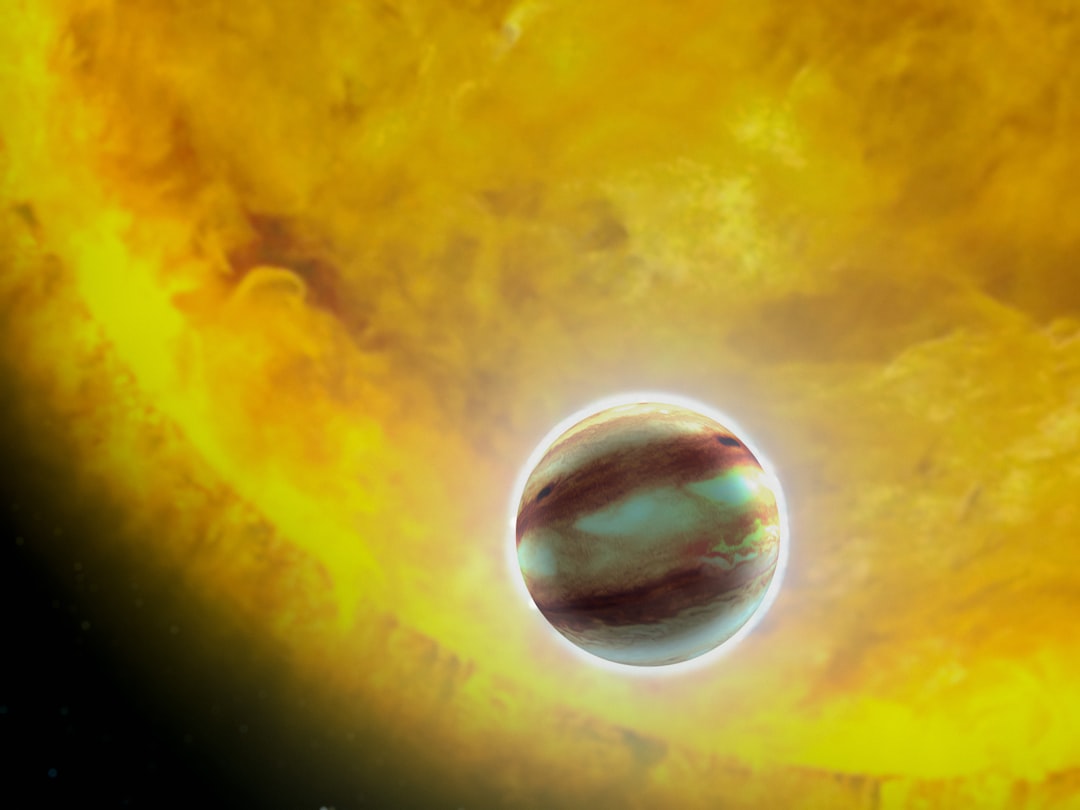
In the grand theater of planetary science, few systems have captivated astronomers as thoroughly as Beta Pictoris (β Pictoris) — a young, blazing star located approximately 63 light-years from Earth in the southern constellation Pictor. Known for hosting the first directly imaged debris disk ever recorded, β Pictoris has served as a cornerstone of our understanding of how planetary systems form and evolve. Now, a dramatic new feature — a sweeping, carbon-rich plume stretching an astonishing 1,000 astronomical units (AU) — is rewriting what we know about cataclysmic collisions in young star systems.
The star itself is a main sequence A-type star roughly 1.75 times the mass of our Sun, and at approximately 23 million years old, it is a cosmic infant compared to our 4.6-billion-year-old Solar System. This youth makes it an extraordinary natural laboratory: a window into the chaotic, collision-riddled early epochs that our own planetary system experienced long before Earth formed. Three planets within β Pictoris' disk have been directly imaged, a remarkable feat in exoplanetary science. One of them, Beta Pictoris c, holds the distinction of being the closest exoplanet to its host star ever captured in direct imaging.
"The β Pictoris debris disk is a unique system where mid-infrared coronagraphic imaging with JWST/MIRI revealed a new spatially resolved substructure known as the Cat's Tail." — Avsar et al., The Astrophysical Journal Letters, 2026
A System Ripe for Discovery
β Pictoris owes much of its scientific fame to a fortunate geometric arrangement: its debris disk is oriented nearly edge-on as viewed from Earth, allowing telescopes to observe fine structural details in cross-section. This orientation has enabled researchers to identify a host of remarkable features, including a warped inner disk, distinct asymmetries between its northeast and southwest extensions, and tantalizing evidence of exocomets — cometary bodies falling inward toward the star, detected through spectroscopic signatures in the stellar light they transit.
In 2024, astronomers achieved another milestone when the James Webb Space Telescope (JWST) captured its first thermal infrared images of the β Pictoris system. Among the revelations was a previously unknown structure: a curved, elongated plume of material bending away from the plane of the disk, immediately dubbed the "Cat's Tail." The discovery paper noted the feature's curious association with a clump of carbon monoxide gas, a warp in the disk's geometry, and a pronounced mid-infrared asymmetry on the southwest side. The Cat's Tail, extending for approximately 1,000 AU — more than 25 times the distance from the Sun to Neptune — immediately demanded explanation.
Understanding structures like the Cat's Tail is not merely an exercise in curiosity. Features of this scale and composition encode the physical history of an entire planetary system, telling us what types of bodies formed, how they collided, and what raw materials were available for planet building. In our own Solar System's youth, analogous collisions were routine — the very Moon is thought to have formed from a giant impact between proto-Earth and a Mars-sized body called Theia.
New Research Unveils the Cat's Tail's Origins
A new study, led by Arin Avsar, a PhD Candidate in planetary science at the Lunar and Planetary Laboratory at the University of Arizona, has now pieced together the origin story of this remarkable feature. The research, titled "Deep HST/STIS Coronagraphic Imaging of the β Pictoris Debris Disk: On the Scattered Light Component of the Cat's Tail," has been published in The Astrophysical Journal Letters. Using the legendary Hubble Space Telescope (HST) and its Space Telescope Imaging Spectrograph (STIS), the team obtained deep coronagraphic images of β Pictoris at six distinct epochs spanning 2012 to 2025, building an unprecedented multi-epoch dataset of the system in visible scattered light.
Coronagraphic imaging is essential for studying debris disks because it blocks the overwhelming glare of the central star, allowing astronomers to detect the faint reflected and scattered light from dust. The debris disk is visible in scattered light precisely because it is laden with fine dust particles — and the color and brightness of that scattered light act as a diagnostic fingerprint, revealing the grain sizes, porosity, and chemical composition of the dust. By combining the scattered light data from Hubble with the thermal emission data already gathered by JWST, the researchers were able to build a more complete physical picture of the Cat's Tail than has ever been possible before.
Why Was the Cat's Tail Invisible to Hubble — Until Now?
One of the most puzzling aspects of the Cat's Tail has been its invisibility in shorter wavelength light. JWST detected it clearly in the mid-infrared, yet it remained stubbornly hidden in previous visible-light observations — a fact that baffled the planetary science community for years.
"The Cat's Tail is thought to be the aftermath of a collision between large bodies — think something like Pluto," lead author Avsar explained in a press release. "Oddly, this feature had previously only been seen with the James Webb Space Telescope, which detects infrared light, but remained invisible at shorter wavelengths, which has puzzled the community for a while."
The answer, it turns out, lies in the Cat's Tail's unusual composition. "We think the Cat's Tail has eluded our observations in visible light until now because of what it's made of," Avsar explained. "It consists almost entirely of what we call organic refractory material, which is heavily carbon-based. These long chains of carbon atoms absorb visible light, so they're quite black."
This finding resolves the long-standing photometric mystery. Organic refractory materials — complex, carbon-rich macromolecular solids — are highly absorptive at optical wavelengths while remaining detectable at thermal infrared wavelengths, where they emit rather than reflect radiation. This dual behavior made the feature essentially transparent to Hubble's optical detectors while making it prominent in JWST's thermal maps.
The Smoking Gun: A Collision Between Dwarf Planets
The composition of the Cat's Tail is more than just an optical curiosity — it is a direct clue about the nature of the objects that created it. Both this new study and the 2024 JWST paper converge on the same conclusion: the Cat's Tail is predominantly composed of porous organic refractory material, the same class of substance found in some of the most primitive bodies in our own Solar System.
"In the solar system, organic refractory material best reproduces the red surface spectra of Kuiper Belt objects, most notably Pluto," the authors write. Indeed, NASA's New Horizons mission detected tholins — complex reddish-brown organic compounds formed by the irradiation of simple nitrogen and carbon-bearing molecules — on the surface of Pluto and its companion moon Charon. Tholins give these icy worlds their characteristic rusty hues and are considered hallmarks of chemically unprocessed, primordial material.
However, the researchers emphasize an important distinction: tholins constitute only a small fraction of Pluto's total mass, far too little to account for the volume of material in the Cat's Tail. Instead, the team argues that the organic material likely originates from the interiors of the disrupted bodies — deep reservoirs of carbon-rich compounds that would only be exposed and dispersed in a catastrophic collision of sufficient violence.
To quantify the scale of the collision, the researchers drew on two critical reference datasets. First, they examined the organic content of the local interstellar medium (ISM), which placed constraints on how much carbonaceous material would have been available to the colliding bodies when they formed in the β Pictoris disk. Second, they analyzed organic abundances in Comet 67P/Churyumov-Gerasimenko, the celebrated icy body visited by the European Space Agency's Rosetta mission, which provided a direct measurement of organic fractions in a primitive Solar System analog body.
- Each colliding body is estimated to have had a mass of approximately 1–3 × 10²¹ kg — equivalent to a few percent of Earth's Moon, or roughly 1 to 3 times the mass of the dwarf planet Ceres.
- Together, the two impactors produced an estimated 2 × 10¹⁹ kg of organic refractory debris — the material now forming the Cat's Tail.
- Assuming bulk densities comparable to known Kuiper Belt dwarf planets, the colliding bodies would have had radii between approximately 600 km and 800 km.
- This size range places them firmly in the category of dwarf planets, comparable to bodies like Charon (radius ~606 km) and Makemake (radius ~715 km) in our own Kuiper Belt.
- These mass estimates are strikingly consistent with those derived independently in the 2024 JWST discovery paper, providing strong cross-validation.
"The mass and radius range is similar to that of dwarf planets in the Kuiper Belt, like Charon and Makemake." — Avsar et al., 2026
The Mystery of the Porous Dust
Among the most scientifically intriguing — and currently unresolved — aspects of the Cat's Tail is the peculiar nature of its dust particles. Measurements indicate the grains are micron-sized and highly porous, a combination that defies straightforward explanation within current models of collisional fragmentation.
"How you can get dust grains that small that are as porous as we see here, no one really understands, and that's part of why we study this feature," Avsar said candidly.
One hypothesis, proposed by co-author Kevin Wagner, an assistant research professor at the University of Arizona's Steward Observatory, involves a dramatic phase-change scenario: "It's possible that the velocities involved in the collisions were so high that the carbon grains vaporized, turned into gas, and then recondensed as they cooled, and that's how they became so porous."
This vaporization-recondensation mechanism — analogous to processes seen in high-velocity meteorite impacts on the Moon — would naturally produce ultra-fine, fluffy grain structures as the rapidly cooling gas molecules aggregate into loosely bound, highly porous aggregates. Modeling such extreme impact conditions in planetary-scale collisions remains one of the frontier challenges of computational planetary science, and the β Pictoris Cat's Tail may be one of the best observational benchmarks available for testing those models.
A Newly Revealed Warp — and the Role of Beta Pictoris B
The new Hubble observations did not stop at confirming the Cat's Tail in scattered light. They also uncovered a previously undetected convex/concave morphological asymmetry in the outer halo of β Pictoris — a subtle but significant warp that hints at unseen dynamical forces shaping the disk's outer architecture.
The likely culprit, the authors suggest, is Beta Pictoris B — a directly imaged giant planet with a mass approximately ten times that of Jupiter, whose gravitational influence is powerful enough to stir and warp the surrounding disk. Giant planets are well known to sculpt debris disks through resonant and secular gravitational perturbations, and Beta Pictoris B's orbital parameters make it a natural candidate for generating large-scale disk asymmetries. However, the researchers are careful to note that "dedicated follow-up dynamical modeling is needed to confirm this," underscoring the complexity of disentangling gravitational interactions in such a young and active system.
A Window Into Our Own Solar System's Violent Youth
The broader significance of studying β Pictoris extends far beyond characterizing one unusual stellar system. Because it is so young — only 23 million years old compared to our Solar System's 4.6 billion years — it offers a rare, direct view of the conditions that prevailed during the Late Heavy Bombardment epoch and the earlier, even more violent phase of planetary accretion that shaped our own cosmic neighborhood.
During the Solar System's first few hundred million years, dwarf-planet-scale collisions were not exceptional events — they were the dominant mechanism by which planets grew. The Moon-forming giant impact, the hypothesized collision that stripped Mercury of much of its mantle, and the giant impacts thought to have tilted Uranus on its side are all legacies of this primordial violence. β Pictoris, still deep in that chaotic epoch, is essentially showing us what our Solar System looked like before any of the worlds we know today had fully taken shape.
The detection of the Cat's Tail — a direct, observable monument to a dwarf-planet collision — adds an important data point to our models of how often such events occur, how much material they disperse, and what role that dispersal plays in the overall chemical evolution of a planetary disk. The fact that the collision products are rich in organic refractory material also raises tantalizing questions about the role of large-body collisions in seeding protoplanetary environments with the building blocks of complex chemistry.
What Comes Next: ELT, GMT, and the Future of β Pictoris Research
β Pictoris has never been more accessible to observation than it is today, and that accessibility is only set to grow. The Extremely Large Telescope (ELT), currently under construction in Chile's Atacama Desert and expected to achieve first light in the late 2020s, will wield a primary mirror 39 meters in diameter — the largest optical/infrared telescope ever built. Alongside it, the Giant Magellan Telescope (GMT) will add another formidable tool to the astronomer's arsenal, with its seven 8.4-meter mirror segments offering extraordinary resolution and light-gathering power.
Both of these next-generation observatories are expected to transform our understanding of β Pictoris. Their advanced coronagraphs and adaptive optics systems will enable direct imaging of exoplanets in far greater detail than currently possible, potentially resolving surface or atmospheric features and refining orbital measurements. For the Cat's Tail specifically, these instruments may finally unlock the mystery of why such an extreme collision produced such remarkably small, porous dust grains — a question that touches on fundamental physics of high-velocity impacts, material vaporization, and grain nucleation under exotic conditions.
The β Pictoris system, already among the most studied objects in stellar astrophysics, has revealed yet another layer of its extraordinary complexity. A collision between two dwarf worlds, each several hundred kilometers across and rich in primordial organic material, has carved a 1,000