Moon Habitats May Use Layered Mylar to Block Extreme Heat — A Breakthrough in Lunar Insulation Technology
The dream of establishing a permanent human presence on the Moon is rapidly transitioning from science fiction into an engineering reality. Whether housing trained astronauts conducting scientific research or, eventually, civilian settlers, lunar habitation presents one of the most formidable challenges in the history of human exploration. At the heart of this challenge lies a deceptively fundamental question: how do you keep people warm — or cool — on a world with no atmosphere, no magnetic field, and temperature swings that would destroy most conventional building materials?
Now, a team of researchers from the University of Pennsylvania (UPenn) has offered a compelling answer, unveiling a novel insulation design based on layered Mylar sheets that could one day line the walls of lunar habitats. Their findings, published in the peer-reviewed journal ACS Applied Materials & Interfaces, represent a significant step forward in the materials science underpinning humanity's return to the Moon.
The Lunar Environment: A Hostile Thermal Frontier
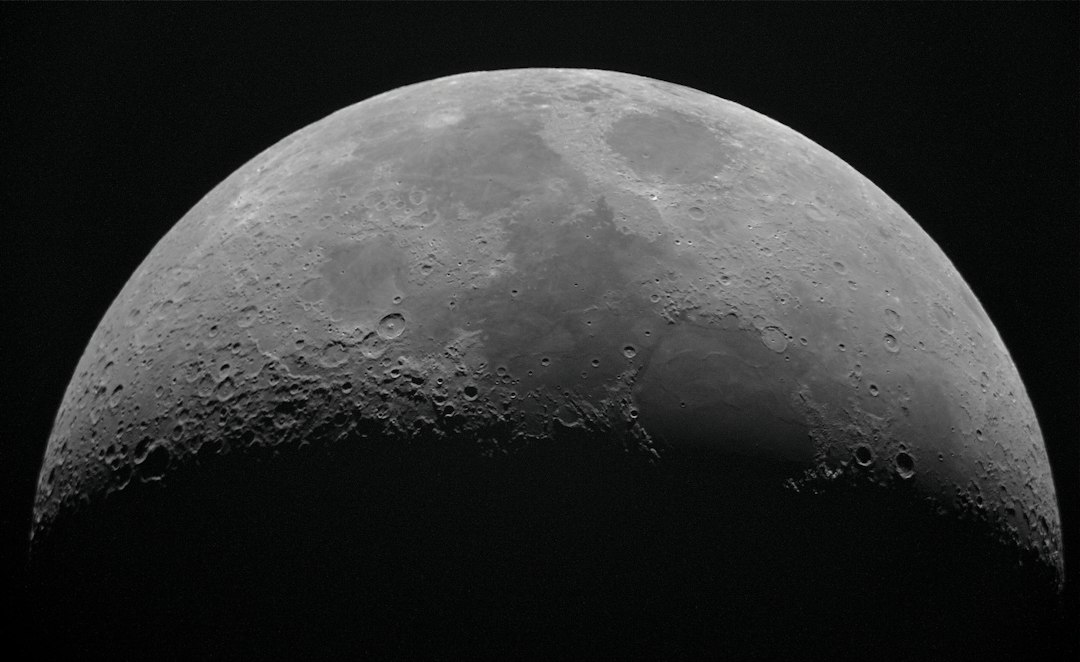
To appreciate why this research matters, one must first understand the extraordinary thermal environment of the lunar surface. Unlike Earth, the Moon possesses no appreciable atmosphere to moderate temperature extremes or distribute heat across its surface. This absence of an atmospheric buffer creates conditions that are, by any terrestrial standard, violent in their thermal swings.
On the sunlit side of the Moon, surface temperatures can soar to between 70°C and 127°C (158°F to 260°F). In permanently shadowed regions — particularly the craters near the lunar south pole that NASA's Artemis program has identified as prime habitation targets — temperatures plunge to a staggering minus 238°C to minus 247°C (minus 396°F to minus 413°F). These are temperatures approaching the coldness of deep space itself.
Compounding this challenge is the extraordinary length of a lunar day. A single lunar day-night cycle spans approximately 29.5 Earth days — roughly two weeks of continuous, unrelenting sunlight followed by two weeks of complete, frigid darkness. Any habitat material must be capable of enduring this prolonged thermal assault, cycle after cycle, without degrading, cracking, or losing its insulating properties.
- Daytime surface temperatures: Up to 127°C (260°F)
- Nighttime surface temperatures: As low as −247°C (−413°F)
- Total temperature swing: Up to 374°C (705°F) between day and night
- Lunar day-night cycle duration: ~29.5 Earth days
- Atmospheric pressure on lunar surface: Effectively zero (high vacuum)
In such an environment, conventional Earth-based insulation materials — fiberglass batts, foam panels, aerogel blankets — face severe limitations. They may outgas in a vacuum, become brittle under cryogenic conditions, or simply lack the mechanical resilience to survive repeated physical contact and pressure loads. This is precisely the knowledge gap that the UPenn team set out to address.
Mylar: From Space Blankets to Lunar Walls
Mylar, the trade name for a type of biaxially-oriented polyethylene terephthalate (BoPET) film, is already a familiar material in the space industry. It forms the golden, mirror-like outer layers of spacecraft thermal blankets — known as Multi-Layer Insulation (MLI) — and has been used on missions ranging from the James Webb Space Telescope to countless Earth-orbiting satellites. Its appeal lies in its exceptional ability to reflect infrared radiation, its stability across a wide temperature range, and its extraordinarily low mass.
However, existing MLI systems were largely designed for the vacuum of deep space, where they primarily contend with radiative heat transfer. A lunar habitat presents a different and more complex set of demands: the material must also withstand physical manipulation, compression, and repeated mechanical stress from astronauts moving, bumping, and working in close proximity to habitat walls. The question of how layered Mylar performs under these combined thermal and mechanical stresses had never been rigorously investigated — until now.
The UPenn Study: Engineering Resilience Layer by Layer
The research team, led in part by Dr. Igor Bargatin, Associate Professor in Mechanical Engineering and Applied Mechanics at UPenn, designed a systematic experimental framework to evaluate how different configurations of layered Mylar perform under simulated lunar conditions. The study tested three distinct Mylar thicknesses:
- 2.5 micrometers (μm) — ultra-thin sheets, stacked at 400 layers per millimeter
- 5 μm — medium-thickness sheets, stacked at 200 layers per millimeter
- 12.5 μm — thicker sheets, stacked at 80 layers per millimeter
Each layered stack was subjected to a rigorous battery of tests within vacuum conditions replicating the lunar environment, across a wide range of temperatures. Crucially, the team also subjected the stacks to pressures equivalent to approximately 200 pounds of force concentrated on a fingertip-sized area — simulating the kind of accidental contact and mechanical loading that would be unavoidable in a lived-in habitat.
The results upended the team's initial hypothesis in a scientifically illuminating way. The researchers had expected the thinnest sheets — with the highest layer density of 400 layers per millimeter — to deliver the best thermal insulation, reasoning that more layers would create more barriers to heat transfer. Instead, the opposite proved true.
"You could use these stacks to insulate a lunar habitation, but astronauts will inevitably have little accidents where they bump into them. When we're talking about long-term habitation on the Moon, it's really important to have tough materials that can last long enough." — Dr. Igor Bargatin, Associate Professor, Mechanical Engineering and Applied Mechanics, University of Pennsylvania
Why Thicker Layers Won: The Microparticle Effect
The key to understanding the results lies in how microparticles — tiny contaminants or surface irregularities present within the Mylar film — interact at the microscale. In the ultra-thin 2.5 μm sheets, these microparticles were found to create more numerous and intimate contact points between adjacent layers. This inadvertently formed a network of thermal bridges, allowing heat to conduct more readily from one layer to the next, significantly undermining the stack's insulating performance.
In contrast, the medium (5 μm) and thicker (12.5 μm) Mylar sheets possessed enough structural rigidity that the microparticles within each sheet were far less likely to be in direct contact with those in adjacent layers. This preserved the crucial air-gap-free vacuum space between layers — the primary mechanism by which MLI systems prevent heat transfer through radiation reflection and suppressed conduction. The thicker sheets, paradoxically, maintained better layer separation and therefore superior insulation.
Equally encouraging was the finding on mechanical resilience. Despite being subjected to extreme pressures, all tested configurations demonstrated a degree of durability that exceeded the researchers' expectations. After compression events, the stacks were able to recover much of their structural integrity, suggesting that these materials could realistically survive the incidental physical abuse of daily life in a lunar habitat.
Implications for NASA's Artemis Program and Beyond
This research arrives at a pivotal moment in humanity's return to the Moon. NASA's Artemis program has set its sights firmly on the lunar south pole, a region of intense scientific and strategic interest. Permanently shadowed craters in this region are believed to harbor substantial deposits of water ice, a resource that could be electrolyzed to produce breathable oxygen and rocket propellant, making it a cornerstone of any sustainable lunar economy.
But establishing a base near the south pole also means contending with some of the Moon's most extreme thermal environments. Habitats will need to manage not only the brutal cold of shadowed regions but also the intense solar radiation that strikes sun-facing slopes. Thermal insulation is therefore not a secondary engineering concern — it is a primary life-support function.
The European Space Agency (ESA) has similarly articulated visions for a permanent "Moon Village," while private companies and international partners are developing complementary habitat concepts. In all scenarios, the wall systems protecting human occupants will need to satisfy a demanding and interconnected set of requirements: thermal regulation, vacuum compatibility, radiation attenuation, and long-term mechanical durability. Layered Mylar systems, as characterized by this UPenn study, could become a key component within such a multi-functional habitat shell.
The Broader Context: Materials Science for Deep Space Habitation
The UPenn study is part of a broader and accelerating field of research dedicated to developing materials capable of supporting long-duration human presence beyond Earth. Scientists and engineers are actively investigating regolith-based construction techniques, inflatable habitat architectures, radiation shielding composites, and advanced aerogel systems — each targeting a specific vulnerability in the lunar habitation challenge.
What distinguishes the layered Mylar approach is its elegant simplicity. Mylar is already a proven, flight-heritage material with a well-understood manufacturing process and supply chain. Scaling its production for habitat insulation, while certainly an engineering challenge, does not require the development of entirely new chemical processes or exotic raw materials. This makes it an attractively near-term solution that could be integrated into habitat designs within the current decade.
Furthermore, the fundamental insights gained from this study — particularly the counterintuitive relationship between layer thickness, microparticle contact, and thermal bridging — have implications beyond lunar habitation. Similar principles could inform the design of thermal protection systems for Mars habitats, next-generation spacecraft insulation, and even terrestrial cryogenic applications in medical or industrial settings.
Looking Ahead: From Laboratory to the Lunar Surface
While the UPenn findings are a meaningful advance, the path from laboratory characterization to certified habitat insulation is long and demanding. Future research will need to address how these layered Mylar systems perform over thousands of thermal cycles — not merely the handful tested in the laboratory — and how they interact with lunar regolith dust, which is notorious for its abrasive, electrostatically charged properties capable of penetrating and degrading almost any material it contacts.
Researchers will also need to evaluate how the stacks perform under combined stressors applied simultaneously — vacuum, extreme cold, mechanical loading, and dust exposure all at once — rather than in isolated test sequences. Integration challenges, such as seaming, anchoring, and repairing sections of insulation within a pressurized habitat, will require creative engineering solutions.
Nevertheless, the study represents precisely the kind of rigorous, materials-focused research that must underpin any credible vision for long-term lunar habitation. As Dr. Bargatin and his colleagues at the UPenn School of Engineering and Applied Science have demonstrated, the answers to some of humanity's grandest exploratory ambitions may lie in the careful, methodical study of materials as thin as a few millionths of a meter.
The Moon's surface is one of the most thermally hostile environments accessible to human missions. Solving the insulation problem is not a footnote to lunar habitation — it is a prerequisite for it.
As NASA's Artemis program works toward returning humans to the lunar surface for the first time since Apollo 17 in December 1972, and as space agencies and private ventures worldwide plan for a sustained human presence beyond Earth, studies like this one serve as essential building blocks. Each advance in our understanding of how materials behave in the lunar environment brings us measurably closer to the day when humans will not merely visit the Moon, but call it home.