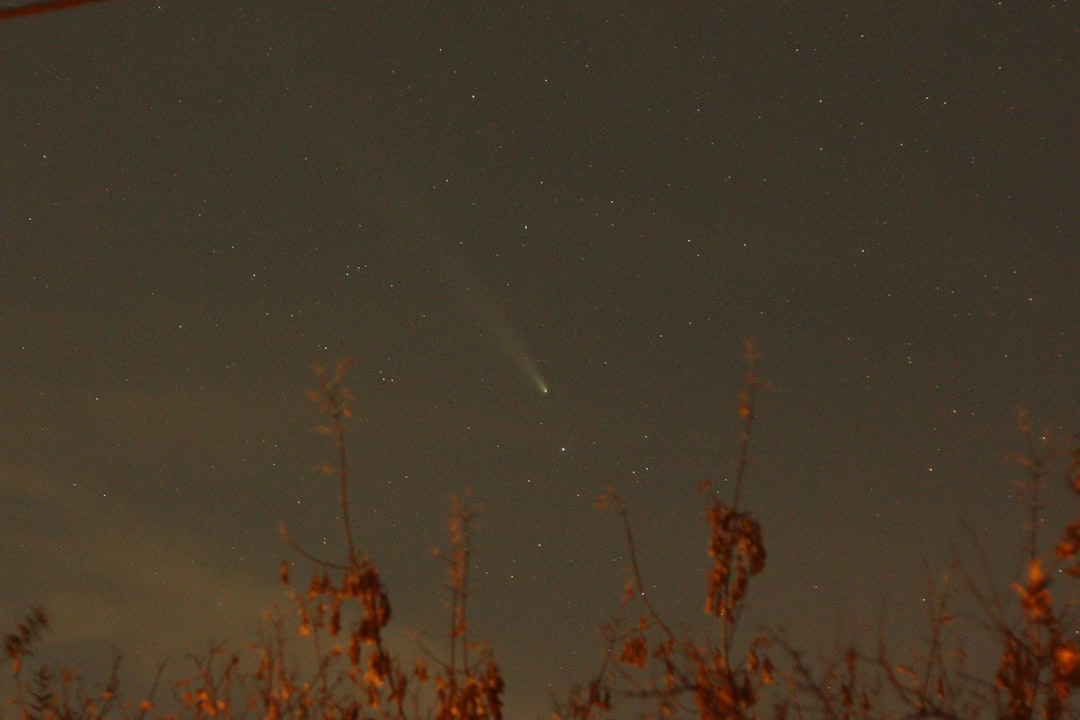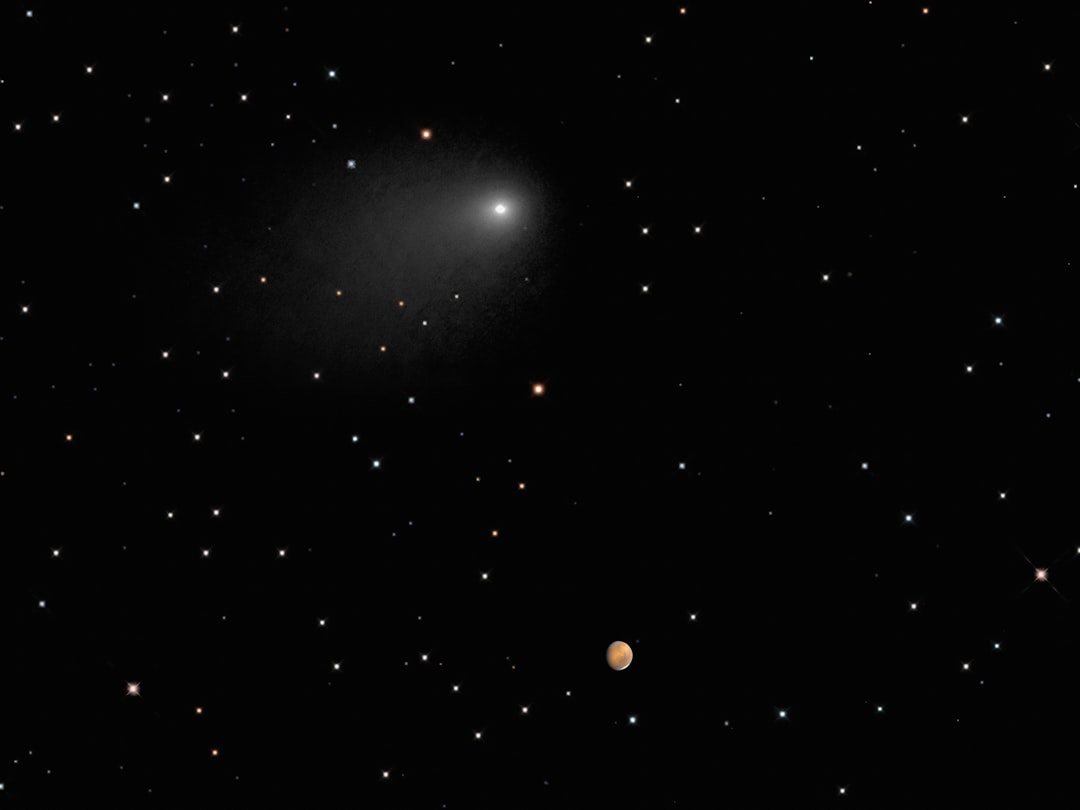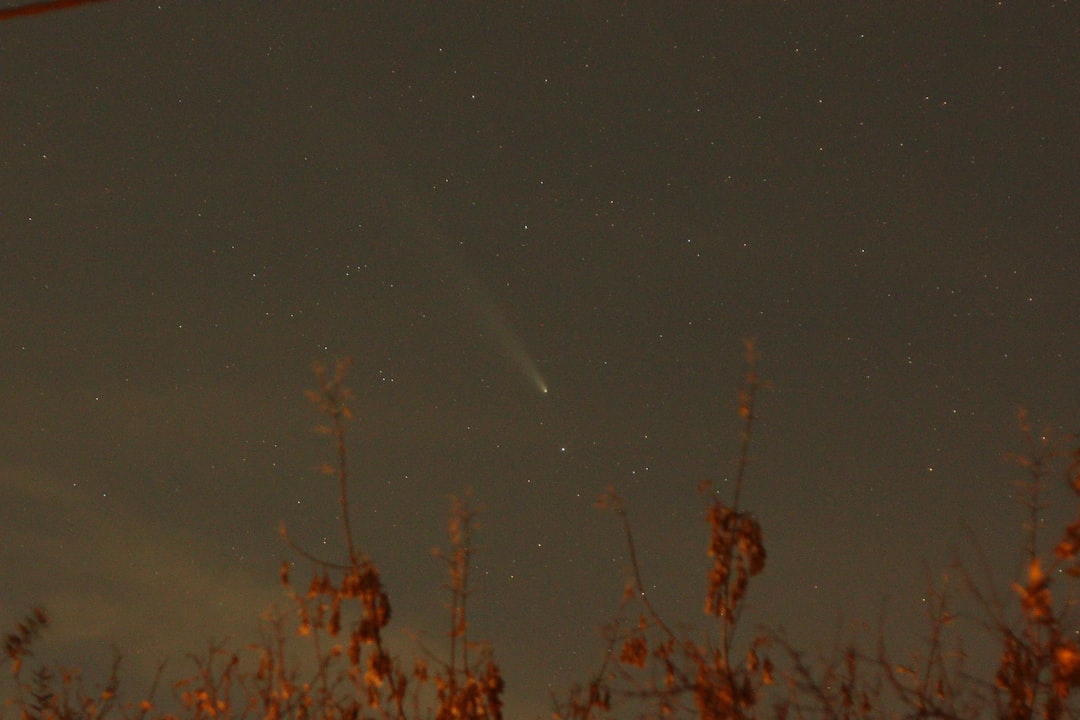
In a remarkable demonstration of modern astronomical capabilities, scientists have uncovered compelling evidence that interstellar comet 3I/ATLAS carries a chemical signature that offers an unprecedented window into the distant stellar nursery where it formed billions of years ago. The cosmic wanderer, which made its dramatic passage through our Solar System in 2025, has left behind a wealth of data revealing that its interior composition is surprisingly rich in methane—a discovery that challenges our understanding of planetary system formation across the galaxy.
The findings, published in The Astrophysical Journal Letters, represent a significant milestone in the study of interstellar objects (ISOs). Led by Caltech graduate student Matthew Belyakov, the research team utilized observations from the James Webb Space Telescope to analyze the mid-infrared signatures emanating from 3I/ATLAS as it journeyed through our cosmic neighborhood. What they discovered provides crucial clues about the environmental conditions in a distant star system that existed long before our own Sun ignited.
When 3I/ATLAS entered our Solar System on July 1st, 2025, it became only the third confirmed interstellar visitor ever detected—following the mysterious 1I/'Oumuamua in 2017 and 2I/Borisov in 2019. By October 30th, the comet reached perihelion, its closest approach to the Sun, before disappearing from Earth's view behind our star and beginning its long journey back to the depths of interstellar space. As of April 2026, it had crossed beyond Jupiter's orbit, carrying with it secrets from a stellar system potentially hundreds of light-years away.
A Cosmic Time Capsule Reveals Its Secrets
Comets and asteroids serve as pristine archives of planetary system formation, preserving the chemical and physical conditions that existed during the earliest epochs of a star's development. Unlike planets, which undergo extensive geological processing, these smaller bodies remain largely unchanged since their formation, making them invaluable for understanding the building blocks of worlds. When an interstellar object like 3I/ATLAS visits our Solar System, it offers scientists a rare opportunity to study the compositional fingerprints of an entirely different stellar environment without the need for interstellar travel.
The James Webb Space Telescope observed 3I/ATLAS on August 6th, 2025, during a critical phase of its journey. Initial observations revealed a coma predominantly composed of carbon dioxide, a common feature in many comets. However, the real breakthrough came when Belyakov and his colleagues examined data collected in December 2025, after the comet had made its close solar encounter and was heading outward into the outer Solar System.
"It's a very interesting object. It has been traveling through the galaxy for at least a billion years," explained Matthew Belyakov, the study's lead author. "The high speed at which it flew past us gave just a narrow window to study it. JWST is going to look at 3I/ATLAS one more time this spring. It's already getting tough to observe; it's now out by Jupiter."
The analysis revealed something unexpected: as 3I/ATLAS moved away from the Sun, it began releasing significantly more methane (CH₄) than had been observed during its approach. This dramatic shift in outgassing behavior told a fascinating story about the comet's structure and its billion-year journey through the galaxy.
Cosmic Radiation and the Unveiling of Ancient Ice
During its eons-long voyage through interstellar space, 3I/ATLAS was continuously bombarded by cosmic rays—high-energy particles that permeate the galaxy. This relentless irradiation fundamentally altered the comet's surface layers, breaking down complex molecules and creating a weathered outer shell. As the comet approached our Sun, these ancient, radiation-damaged surface ices produced only weak outgassing, masking the comet's true interior composition.
However, the intense heat and solar radiation experienced during perihelion acted like a cosmic excavation tool. The Sun's energy stripped away these ancient outer layers, exposing pristine subsurface material that had been shielded from cosmic ray bombardment for potentially billions of years. This fresher ice, rich in methane and other volatiles, began outgassing vigorously as the comet receded from the Sun, finally revealing the chemical composition of the stellar system where 3I/ATLAS was born.
This discovery methodology represents a significant advance in how scientists study interstellar objects. By observing changes in outgassing patterns before and after solar encounters, researchers can effectively peer beneath the weathered surfaces of these cosmic visitors to understand their original composition—a technique that could prove invaluable for studying future interstellar objects.
Comparing Interstellar Visitors: A Tale of Three Objects
The three confirmed interstellar objects detected to date have presented dramatically different observational challenges and scientific puzzles. 1I/'Oumuamua, the first recognized interstellar visitor, was discovered in October 2017 when it was already departing our Solar System. Scientists had only 80 days to observe it, and the object's unusual elongated shape, lack of visible coma, and mysterious non-gravitational acceleration led to intense debate about its nature. Some researchers even speculated about artificial origins, though natural explanations involving outgassing from sublimating hydrogen ice have since been proposed.
2I/Borisov, discovered by amateur astronomer Gennady Borisov in August 2019, provided a more straightforward case. Detected when it was still more than 3 astronomical units (AU) from the Sun—three times the Earth-Sun distance—it exhibited clear cometary activity from the outset. However, it remained relatively faint throughout its passage, limiting the depth of analysis possible with available instruments.
3I/ATLAS stands apart from its predecessors in several crucial ways:
- Exceptional Brightness: The comet proved significantly brighter than 2I/Borisov, providing much stronger signals for spectroscopic analysis
- Larger Size: Physical measurements indicated 3I/ATLAS exceeded initial size estimates, offering more material for study
- Intense Outgassing: The comet experienced dramatic periods of volatile release both approaching and receding from the Sun
- Extended Observation Window: Unlike 'Oumuamua, 3I/ATLAS was tracked for many months, from its inbound journey through its departure
- Multi-Mission Coverage: The object was observed by numerous facilities, including JWST, ESA's JUICE mission, and ground-based telescopes
Advanced Instrumentation Unlocks Molecular Secrets
The research team's success in characterizing 3I/ATLAS's methane-rich composition relied heavily on the Mid-Infrared Instrument (MIRI) aboard the James Webb Space Telescope. MIRI's sensitive spectrometers can detect the unique infrared signatures of specific molecules in cometary comas, even at the vast distances involved in observing rapidly moving interstellar objects.
Complementing JWST's observations, the Moons and Jupiter Imaging Spectrometer (MAJIS) aboard the European Space Agency's JUICE mission also captured valuable data on 3I/ATLAS. This multi-mission approach provided cross-validation of findings and offered different perspectives on the comet's composition and behavior.
Ground-based facilities also played crucial roles. Recent observations from the Atacama Large Millimeter/submillimeter Array (ALMA) in Chile have provided additional constraints on the comet's molecular inventory. ALMA's ability to detect millimeter-wave emissions from various molecules complements JWST's infrared capabilities, creating a more complete picture of 3I/ATLAS's composition.
Methane as a Stellar System Fingerprint
The abundance of methane in 3I/ATLAS's interior carries profound implications for understanding its origin. Methane formation and preservation require specific temperature and pressure conditions that vary depending on a stellar system's architecture and evolutionary history. In our own Solar System, methane ice is abundant in the outer regions beyond the "ice line," where temperatures are cold enough for volatile compounds to condense into solid form.
The methane-to-carbon dioxide ratio observed in 3I/ATLAS differs from typical Solar System comets, suggesting it formed in a stellar system with different chemical and thermal conditions than our own. By comparing these ratios with theoretical models of planetary system formation, astronomers can begin to constrain where in the Milky Way galaxy 3I/ATLAS might have originated—potentially narrowing down the type of star around which it formed and the characteristics of that distant planetary system.
Implications for Galactic Planetary Science
The study of interstellar objects represents a revolutionary new field in astronomy, offering insights that bridge the gap between Solar System science and exoplanet research. Each interstellar visitor provides direct samples of material from other stellar systems—something that would otherwise require interstellar missions taking thousands of years to accomplish with current technology.
The research paper, titled "The Volatile Inventory of 3I/ATLAS as Seen with JWST/MIRI," was co-authored by Ian Wong of the Space Telescope Science Institute and Professor Mike Brown of Caltech's Division of Geological and Planetary Sciences. The collaborative effort also included researchers from Caltech's Center for Comparative Planetary Evolution, the Johns Hopkins University Applied Physics Laboratory's Planetary Exploration Group, Auburn University's Leach Science Center, Eureka Scientific, and NASA's Jet Propulsion Laboratory.
Looking forward, astronomers anticipate that improved detection capabilities will reveal many more interstellar objects passing through our Solar System. The Vera C. Rubin Observatory, scheduled to begin operations soon, is expected to detect dozens of interstellar visitors per year once fully operational. Each new detection will add to our understanding of the diversity of planetary systems throughout the galaxy and the processes that shape them.
As Belyakov noted, JWST plans to observe 3I/ATLAS one final time in spring 2026, though the rapidly receding comet presents increasing observational challenges. Even as it fades from view, the data already collected will keep scientists busy for years, revealing new details about this remarkable messenger from the depths of interstellar space and the alien star system that gave it birth billions of years ago.