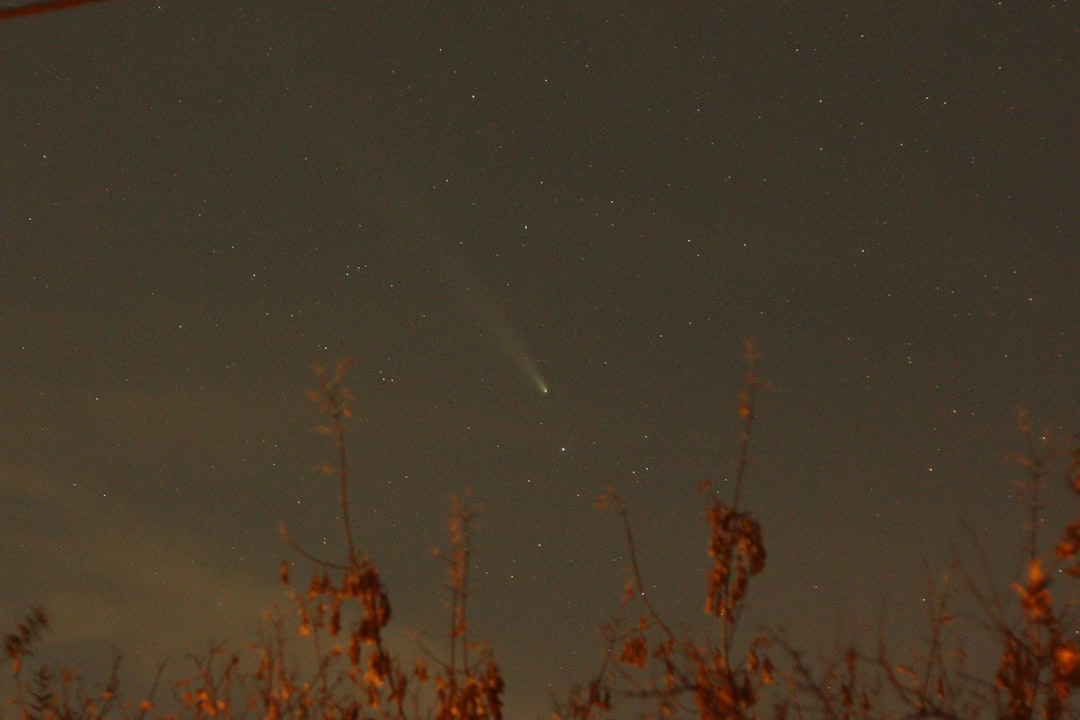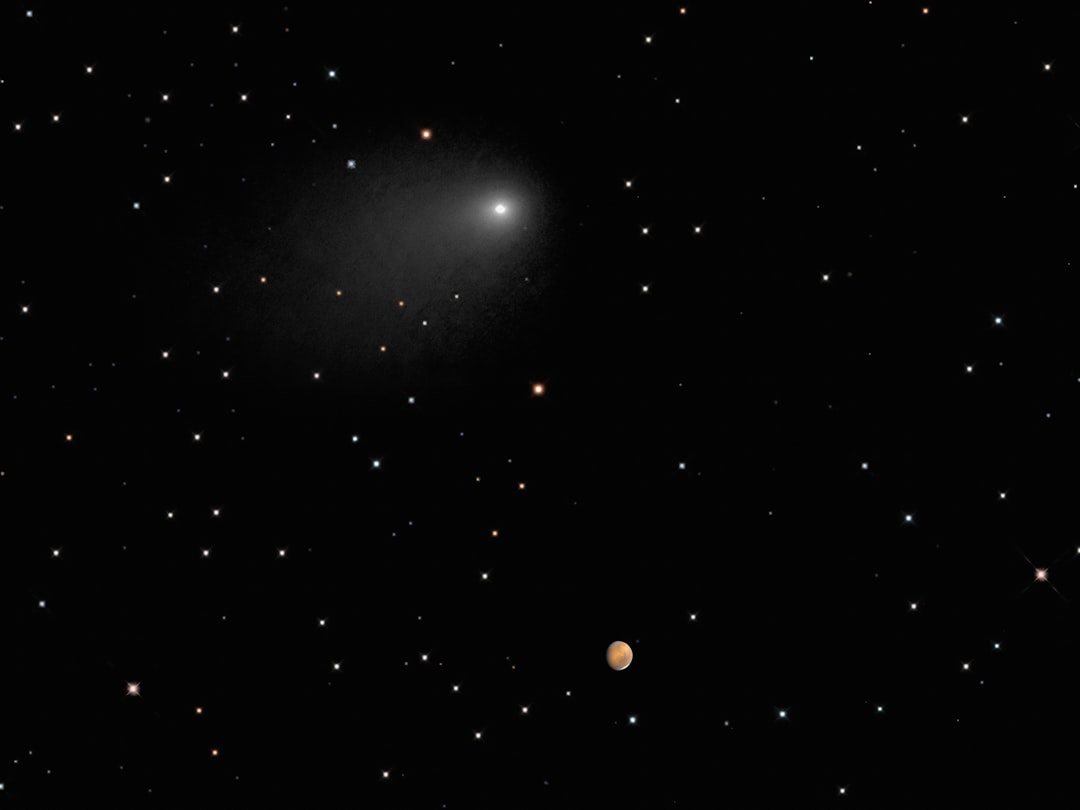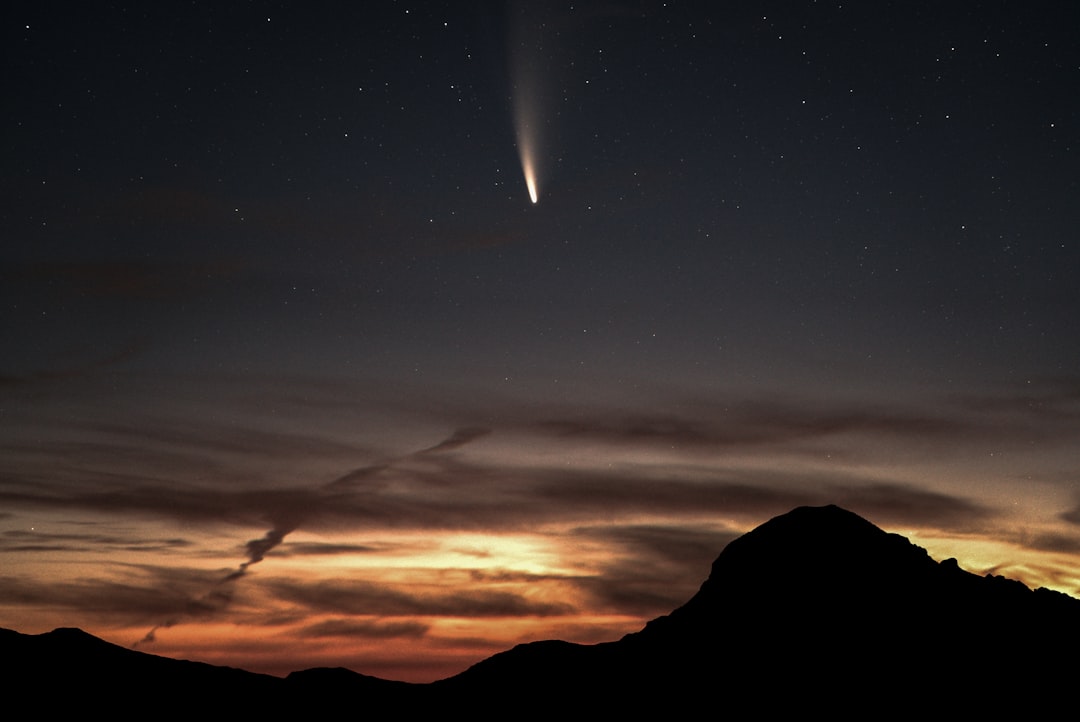
In a groundbreaking revelation that reshapes our understanding of planetary formation across the galaxy, astronomers have discovered that the interstellar visitor 3I/ATLAS originated in a stellar environment dramatically colder than our own Solar System. This remarkable finding, made possible through observations by the Atacama Large Millimeter/submillimeter Array (ALMA), marks the first time scientists have successfully measured deuterated water—a rare form of "semi-heavy water"—in an object from beyond our cosmic neighborhood. The discovery provides an unprecedented chemical fingerprint of the frigid conditions that characterized this comet's distant birthplace, offering a unique window into the diverse planetary nurseries scattered throughout the Milky Way.
As only the third interstellar object (ISO) ever detected passing through our Solar System, 3I/ATLAS has captivated the scientific community since its discovery. Unlike the billions of comets native to our own solar neighborhood, this cosmic wanderer spent eons drifting through the vast emptiness of interstellar space before its brief encounter with our Sun. Every measurement, every spectroscopic analysis of this visitor represents a precious opportunity to study material forged under conditions vastly different from those that created Earth and its sibling planets. The chemical composition preserved within 3I/ATLAS serves as a time capsule, carrying information about stellar environments that may be fundamentally unlike anything found in our local cosmic environment.
The research team, led by PhD student Luis E. Salazar Manzano from the University of Michigan and assistant professor Teresa Paneque-Carreño, who served as Principal Investigator of the ALMA Director's Discretionary Time program, collaborated with scientists from NASA's Goddard Space Flight Center, the Jet Propulsion Laboratory, the National Radio Astronomy Observatory, and several other prestigious institutions. Their findings, which reveal deuterium-to-hydrogen ratios far exceeding anything observed in Solar System comets, suggest formation temperatures below -243°C—barely above absolute zero and indicative of an extremely cold protoplanetary disk.
The Challenge of Observing Interstellar Visitors
Capturing detailed observations of interstellar objects presents extraordinary technical challenges that push the limits of modern astronomical instrumentation. These cosmic travelers move at tremendous velocities relative to our Solar System, spending only brief periods within range of Earth-based telescopes. The observation window becomes even more constrained when the object passes close to the Sun, as most optical telescopes cannot safely point in that direction without risking catastrophic damage to their sensitive instruments.
The research team executed their observations in December 2025, a mere six days after 3I/ATLAS reached perihelion—its closest approach to the Sun. This timing was critical, as the comet's activity peaked during this phase, releasing maximum amounts of gas and dust that could be analyzed spectroscopically. The successful observation relied on two unique capabilities of ALMA that set it apart from conventional telescopes.
First, ALMA's Atacama Compact Array (ACA) configuration, consisting of four 12-meter and twelve 7-meter radio dishes arranged in a compact formation, enables a technique called short-baseline interferometry. This approach allows astronomers to detect extremely faint emissions from diffuse objects like cometary comas—the vast clouds of gas and dust that surround a comet's nucleus. Second, unlike optical telescopes that would be blinded or damaged by solar radiation, ALMA's radio receivers can safely observe objects in close angular proximity to the Sun, opening observational windows impossible for other facilities.
"Most instruments can't point toward the Sun, but radio telescopes like ALMA can. We were able to observe the comet within days after perihelion, just as it peeked out from its transit behind the Sun. This gave us a constraint on these molecules that's not possible using other instruments," explained Paneque-Carreño.
Deuterated Water: A Chemical Thermometer for Ancient Star Systems
To understand the significance of this discovery, we must first appreciate what makes deuterated water (HDO) such a powerful diagnostic tool for understanding planetary formation. Regular water molecules consist of two hydrogen atoms bonded to one oxygen atom (H₂O). However, a small fraction of water molecules contain deuterium—a heavier isotope of hydrogen that possesses an additional neutron in its nucleus. When deuterium replaces one of the hydrogen atoms, the result is HDO, sometimes called "semi-heavy water."
The ratio of deuterium to hydrogen in cosmic materials serves as an extraordinarily sensitive thermometer for the conditions under which those materials formed. This is because the chemical processes that preferentially incorporate deuterium into molecules operate most efficiently at extremely low temperatures, typically below 30 Kelvin (-243°C or -406°F). In warmer environments, the thermal energy disrupts these delicate chemical pathways, resulting in much lower deuterium enrichment.
In our Solar System's comets, astronomers have measured approximately one HDO molecule for every ten thousand regular water molecules—a ratio established during the formation of our Sun's protoplanetary disk roughly 4.6 billion years ago. This ratio reflects the temperature conditions in the outer regions of the nascent Solar System, where comets coalesced from ice, dust, and organic compounds. Any significant deviation from this ratio in an interstellar comet immediately signals formation under markedly different environmental conditions.
Innovative Detection Through Methanol Analysis
The ALMA observations faced a significant technical hurdle: the regular water content of 3I/ATLAS fell below the telescope's detection threshold during the observation window. However, the research team employed an ingenious indirect method to constrain the deuterium-to-hydrogen (D/H) ratio by detecting HDO through methanol line excitation—a sophisticated spectroscopic technique that showcases ALMA's remarkable analytical capabilities.
This method exploits the fact that different molecules in a comet's coma interact with each other and with solar radiation in predictable ways. By carefully analyzing the spectral signatures of methanol and other molecules, the team could infer the presence and abundance of deuterated water even when direct detection proved impossible. This approach also allowed them to estimate the rate at which 3I/ATLAS was releasing water vapor as solar heating vaporized its icy surface—a process called outgassing.
A Comet Born in Extreme Cold
The results of the ALMA analysis proved startling: the D/H ratio in 3I/ATLAS is at least 30 times higher than what astronomers observe in Solar System comets. Even more remarkably, this ratio exceeds the deuterium abundance in Earth's oceans by a factor of 40. These numbers aren't merely statistical curiosities—they represent a fundamental difference in the formation environment of this interstellar wanderer.
The elevated deuterium content points conclusively to formation in a protoplanetary disk where temperatures remained below approximately 30 Kelvin throughout the critical period when ices were condensing and accreting into larger bodies. For context, this temperature is far colder than the coldest natural temperature ever recorded on Earth (-89.2°C in Antarctica) and approaches the background temperature of interstellar space itself.
"Our new observations show that the conditions that led to the formation of our Solar System are much different from how planetary systems evolved in different parts of our Galaxy. The chemical processes that lead to the enhancement of deuterated water are really sensitive to temperature and usually require environments colder than about 30 Kelvin, or about minus 406 degrees Fahrenheit," noted Manzano.
Such frigid conditions might arise in several scenarios. The parent star system may have been located in a particularly cold region of the galaxy, far from sources of external heating. Alternatively, 3I/ATLAS might have formed in the outermost reaches of its home system, where stellar radiation barely penetrates. Some theoretical models even suggest formation in the disk of a low-mass protostar, which would produce less heat than our Sun during its formative years.
Complementary Insights from the James Webb Space Telescope
The ALMA findings gain additional context from complementary observations made by the James Webb Space Telescope (JWST), also conducted in December 2025. A research team led by scientists at Caltech analyzed JWST's infrared observations of 3I/ATLAS, revealing significant methane content in the comet's composition—another clue pointing toward formation in an exceptionally cold environment.
Methane, like water ice, becomes enriched in certain isotopic forms under low-temperature conditions. The presence of abundant methane alongside highly deuterated water paints a consistent picture of a comet that formed in one of the coldest planetary formation environments yet characterized. Together, the ALMA and JWST observations provide complementary views across different wavelengths, each revealing distinct aspects of this interstellar visitor's chemical makeup.
This multi-instrument approach represents the future of interstellar object studies. By combining radio observations from ALMA with infrared spectroscopy from JWST and optical imaging from ground-based telescopes, astronomers can construct comprehensive chemical profiles of these rare visitors, extracting maximum scientific value from their brief passages through our cosmic neighborhood.
Implications for Galactic Chemical Evolution
The discovery carries profound implications extending far beyond the story of a single comet. The deuterium-to-hydrogen ratio measured in 3I/ATLAS provides a unique probe into the primordial conditions established during the Big Bang, when the fundamental abundances of light elements were set. By comparing D/H ratios across different objects—from Earth's oceans to Solar System comets to now interstellar visitors—astronomers can test models of how these ratios evolved as the universe aged and galaxies formed.
Furthermore, these findings underscore the remarkable diversity of planetary formation environments across the Milky Way. For decades, our understanding of how planets and smaller bodies form was necessarily based almost entirely on observations of our own Solar System. While studies of exoplanetary systems have revealed tremendous architectural diversity, direct chemical sampling of material from other star systems remained impossible—until interstellar objects began arriving.
Key Scientific Contributions of This Research
- First HDO Detection in an Interstellar Object: This measurement establishes a new technique for characterizing the formation environments of interstellar visitors, providing a template for future observations of similar objects.
- Extreme D/H Ratio: The 30-fold enhancement compared to Solar System comets definitively demonstrates that planetary formation conditions vary dramatically across different stellar environments in our galaxy.
- Temperature Constraints: The findings provide concrete evidence that 3I/ATLAS formed at temperatures below 30 Kelvin, offering quantitative constraints on its birthplace conditions.
- Multi-Wavelength Synergy: The combination of ALMA and JWST observations demonstrates the power of coordinated campaigns using complementary instruments to maximize scientific return from transient events.
- Cosmological Implications: By probing deuterium abundances in material from another star system, the research contributes to our understanding of Big Bang nucleosynthesis and galactic chemical evolution.
The Broader Context of Interstellar Object Studies
3I/ATLAS joins a small but growing roster of confirmed interstellar visitors to our Solar System. The first, 'Oumuamua, detected in 2017, sparked intense scientific interest and considerable debate about its nature and origin. The second interstellar object, 2I/Borisov, discovered in 2019, appeared more conventionally comet-like and provided our first detailed spectroscopic observations of material from another star system.
Each of these visitors offers irreplaceable scientific opportunities. Unlike exoplanets, which we can only observe from vast distances, interstellar objects pass through our immediate cosmic neighborhood, allowing detailed characterization with our most powerful instruments. They serve as messengers from distant stellar environments, carrying pristine samples of material that formed under conditions we can never directly visit.
The detection rate of interstellar objects is expected to increase dramatically as new survey telescopes come online. The Vera C. Rubin Observatory, scheduled to begin operations soon, will scan the entire visible sky every few nights, potentially detecting dozens or even hundreds of interstellar visitors per year. Each detection will trigger rapid-response observations from facilities like ALMA and JWST, building a statistical sample that reveals the diversity of planetary formation environments across our galaxy.
"Each interstellar comet brings a little bit of its history, its fossils, from elsewhere. We don't know exactly where, but with instruments like ALMA we can begin to understand the conditions of that place and compare them to our own," concluded Paneque-Carreño.
Future Directions and Unanswered Questions
While the ALMA observations of 3I/ATLAS represent a major advance, they also raise intriguing questions that future research must address. Where exactly did this comet originate? Can we identify candidate star systems with the requisite cold formation environments? How common are such frigid planetary formation regions in our galaxy?
Advanced computational models combining stellar dynamics with chemical evolution may eventually allow astronomers to trace 3I/ATLAS's trajectory backward through space, potentially identifying its home system. Such work would require accounting for millions of years of gravitational interactions with stars throughout the galaxy—a formidable computational challenge but one increasingly within reach as supercomputing capabilities advance.
Additionally, future observations of other interstellar comets will reveal whether 3I/ATLAS represents an extreme outlier or a common formation pathway. If many interstellar visitors show similarly elevated deuterium ratios, it might suggest that cold formation environments are more prevalent than our Solar System's experience would indicate. Conversely, if 3I/ATLAS proves unusual even among interstellar objects, it would highlight the remarkable diversity of conditions under which planetary systems form.
The techniques pioneered in this research—particularly the indirect detection of deuterated water through methanol excitation—will undoubtedly find application in future studies. As astronomers refine these methods and develop new analytical approaches, each interstellar visitor will yield increasingly detailed chemical profiles, gradually building a comprehensive picture of planetary formation across our galaxy.
This discovery reminds us that our Solar System represents just one data point in a vast cosmic experiment in planetary formation. By studying visitors from other stellar environments, we gain perspective on our own origins and appreciate the diverse pathways through which planetary systems emerge from the chaos of collapsing molecular clouds. In the frozen chemistry of 3I/ATLAS, preserved across billions of years of interstellar wandering, we glimpse conditions utterly unlike those that forged our Earth—yet governed by the same fundamental physics that shapes worlds throughout the cosmos.