The quest to discover an exomoon—a natural satellite orbiting a planet beyond our solar system—has taken another intriguing turn. In a groundbreaking study led by Emily Pass and her colleagues at MIT, Harvard, and the University of Chicago, astronomers deployed the formidable capabilities of the James Webb Space Telescope (JWST) to search for Earth-Moon analogs around two promising exoplanets. However, their ambitious hunt was unexpectedly thwarted not by technical limitations, but by the very star these worlds orbit—a reminder that even our most advanced instruments must contend with the dynamic, turbulent nature of stellar surfaces.
Our Moon has been instrumental in shaping Earth into the habitable world we know today. It stabilizes our planet's axial tilt, preventing wild climate fluctuations that could make complex life impossible. The Moon's gravitational influence creates tidal forces that may have been crucial in the emergence of early life forms in Earth's primordial oceans. Given these profound influences, the discovery of a similar Earth-Moon system elsewhere in the cosmos would represent one of the most significant findings in the search for extraterrestrial habitability. Yet despite years of dedicated searching, this cosmic twin has remained frustratingly elusive—until now, when astronomers thought they had their best chance yet.
The Prime Target: TOI-700 and Its Habitable Zone Planets
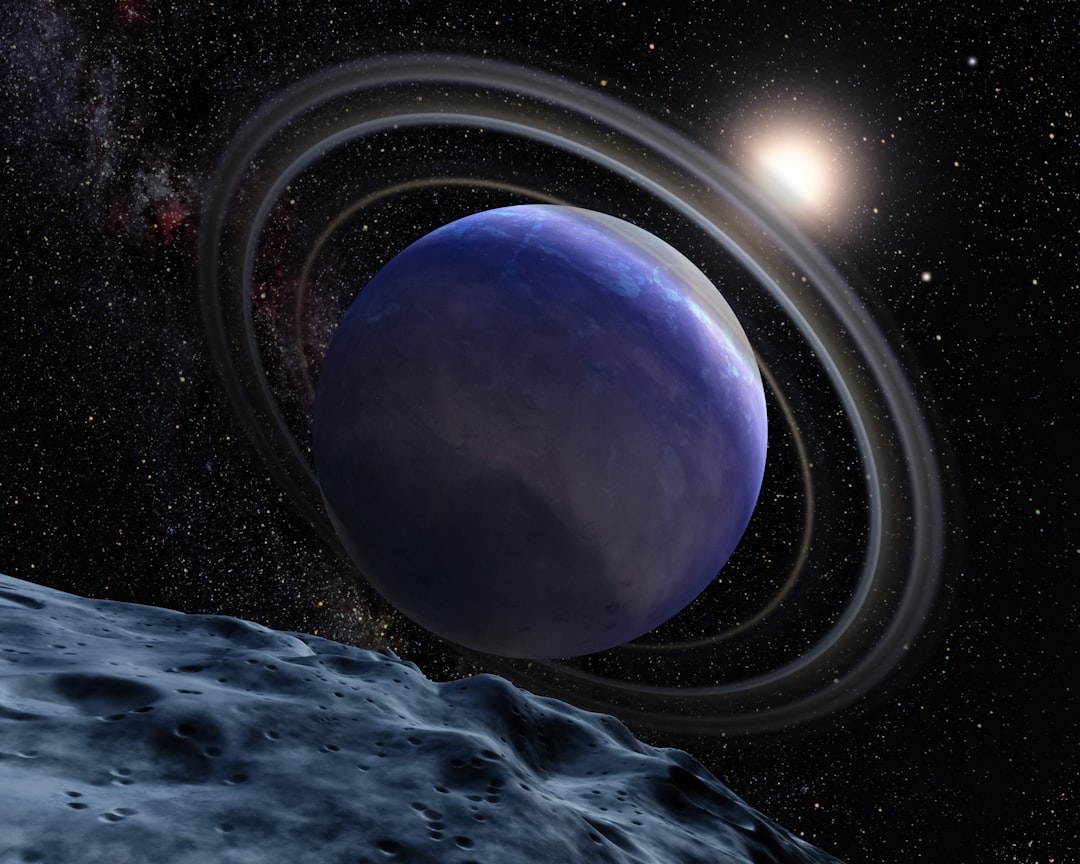
The focus of this ambitious investigation is TOI-700, a small M-dwarf star situated approximately 100 light-years from Earth in the constellation Dorado. This relatively nearby stellar system has captured astronomers' attention due to its remarkable planetary architecture. TOI-700 hosts multiple known exoplanets, including two Earth-sized worlds—TOI-700 d and TOI-700 e—that orbit within the star's habitable zone, the region where liquid water could theoretically exist on a planet's surface.
According to the research paper, now available as a pre-print on arXiv, these two planets represent our best candidates for harboring stable, detectable moons. Their positioning within the habitable zone, combined with their appropriate mass and gravitational characteristics, creates ideal conditions for moon retention over astronomical timescales. The NASA Exoplanet Archive lists TOI-700 d as having a radius of 1.145 times that of Earth, while TOI-700 e measures slightly smaller at 0.919 Earth radii—dimensions that place both worlds squarely in the terrestrial planet category.
JWST's Unprecedented Observational Capabilities
The decision to point the James Webb Space Telescope at the TOI-700 system was no casual choice. As humanity's most powerful space observatory, JWST possesses the sensitivity required to detect the minuscule signals that an exomoon would produce. The telescope's advanced infrared capabilities and precision instruments can measure incredibly subtle variations in starlight—variations measured in mere parts per million (ppm).
Even before addressing the exomoon question, JWST's observations dramatically improved our understanding of the TOI-700 planets themselves. The data collected increased the accuracy of orbital parameter estimates by an order of magnitude—a tenfold improvement over previous measurements. Additionally, the radius measurements for both planets were refined by factors of 2 to 3, providing astronomers with far more precise characterizations of these distant worlds. Such improvements are crucial for understanding not just whether these planets could host moons, but whether they might harbor conditions suitable for life.
The Technical Challenge: Detecting an Earth-Moon Analog
To understand the magnitude of this observational challenge, consider the signal astronomers were hunting for. The research team calculated that detecting a Luna-analog moon—a satellite similar in size and orbital characteristics to Earth's Moon—would require identifying a transit signal producing a mere 20 parts per million dip in the star's brightness. To put this in perspective, this is equivalent to detecting the shadow of a single grain of sand passing in front of a powerful searchlight from several miles away.
JWST is theoretically more than capable of achieving this level of precision. Its instruments can detect variations far smaller than 20 ppm under ideal conditions. However, as the research team discovered, the telescope's extraordinary sensitivity became both a blessing and a curse. The very precision that makes JWST capable of detecting exomoons also makes it exquisitely sensitive to other phenomena that can masquerade as or obscure the signals astronomers seek.
The Stellar Interference Problem: Red Noise from Granulation
The breakthrough moment in this research came not from discovering an exomoon, but from identifying why one couldn't be detected—at least not yet. When Pass and her colleagues analyzed the JWST data, they encountered a significant obstacle: a repeating noise pattern known as "red noise" that permeated their observations. This wasn't random interference or instrumental error, but rather a signal originating from the star itself.
"The stellar granulation creates a noise signal with an amplitude of approximately 46 parts per million, oscillating every 16 minutes—more than twice the amplitude of the 20 ppm signal we would expect from an Earth-Moon analog," the research team noted in their paper, highlighting the fundamental challenge facing exomoon detection efforts.
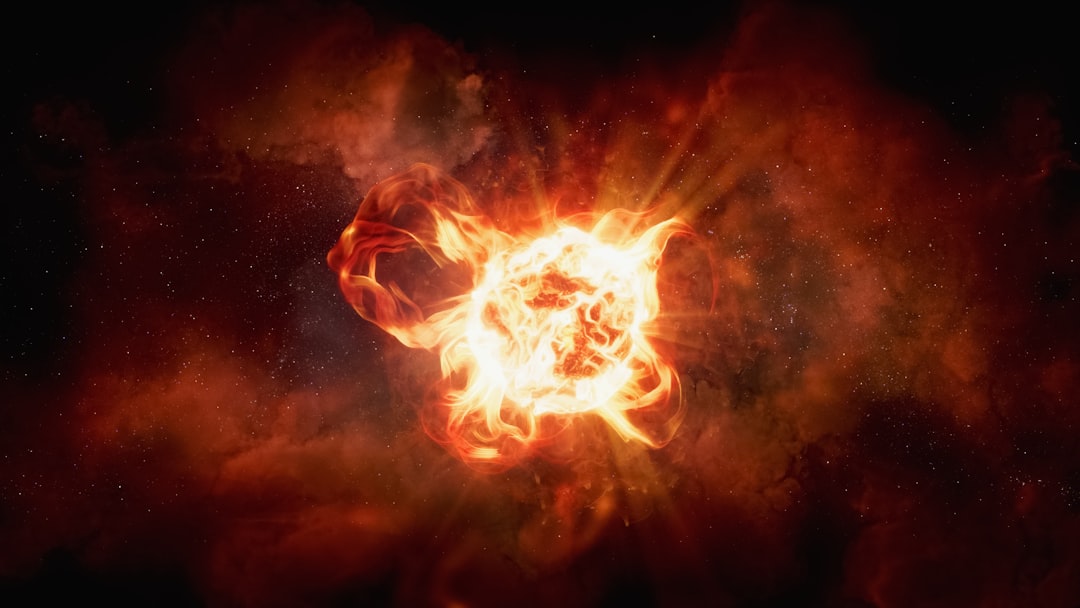
This red noise originates from stellar granulation—the continuous boiling and churning of plasma on the star's surface. Like bubbles rising in a pot of boiling water, convection cells in the star's photosphere create constantly changing patterns of brightness. On our Sun, these granulation cells are roughly 1,000 kilometers across and last about 8-20 minutes before breaking up and reforming. For M-dwarf stars like TOI-700, similar processes occur, though at different scales and timescales.
The problem is straightforward but profound: when the noise amplitude (46 ppm) exceeds the signal you're trying to detect (20 ppm) by more than a factor of two, distinguishing genuine exomoon transits from stellar variability becomes statistically impossible with current analysis techniques. It's like trying to hear a whisper in a room full of people talking at normal volume—the signal is simply drowned out by the background noise.
What Can Still Be Detected: Larger Moons on Wider Orbits
Despite this setback, the research wasn't entirely fruitless. The team was able to establish important detection limits for the TOI-700 system. Their analysis demonstrated that the observations remain sensitive to moons larger than Ganymede—Jupiter's largest satellite and the biggest moon in our solar system, with a diameter of 5,268 kilometers—provided these moons orbit their host planets with periods longer than two days.
While these constraints might seem modest, they represent valuable scientific progress. The Ganymede-sized detection threshold helps astronomers understand what kinds of satellite systems might exist around other worlds. In our own solar system, large moons like Ganymede, Titan, and Callisto play significant roles in their planetary systems, potentially harboring subsurface oceans and complex geological processes.
A Silver Lining: The Data May Already Hold the Answer
Perhaps the most tantalizing aspect of this research is its forward-looking implication. The research team made a crucial determination: if appropriate noise-reduction algorithms can be developed, and if an exomoon actually exists in the TOI-700 system, the data to prove its existence may already be sitting in JWST's archives. The signal might be there, hidden beneath the stellar noise like a fossil waiting to be unearthed from surrounding rock.
This represents a paradigm shift in exomoon hunting. Rather than requiring new observations with different instruments or techniques, the breakthrough might come from advances in data analysis methodology. Computer scientists and astronomers are now challenged to develop sophisticated algorithms capable of mathematically separating stellar granulation noise from genuine exomoon transit signals—a formidable task, but one that falls within the realm of possibility.
The approach would likely involve detailed modeling of stellar surface activity, machine learning techniques to identify and characterize noise patterns, and statistical methods to extract weak signals from noisy data. Similar challenges have been overcome in other fields, from gravitational wave detection to medical imaging, suggesting that with sufficient effort and ingenuity, the red noise problem may eventually be solved.
The Broader Context: Why Exomoon Detection Remains So Challenging
This isn't the first time exomoon hunters have been frustrated by confounding factors. The field has a history of promising candidates that ultimately couldn't be confirmed. Previous potential exomoon detections have been alternatively explained by phenomena such as:
- Starspot transits: When a planet passes over a dark region on its star's surface, it can create brightness variations that mimic the signal of a moon
- Statistical anomalies: Random variations in data that initially appear significant but fail to hold up under rigorous statistical scrutiny
- Orbital resonances: Complex gravitational interactions between multiple planets that can produce periodic signals resembling moon transits
- Instrumental systematics: Subtle artifacts introduced by telescope instruments or data processing pipelines that can masquerade as real astronomical signals
These challenges have led some astronomers to explore alternative approaches. Dr. David Kipping at Columbia University, a leading expert in exomoon detection and creator of the educational YouTube channel Cool Worlds, has pioneered techniques focusing on free-floating exomoons—moons that have been ejected from their planetary systems and now drift through interstellar space. By studying these rogue satellites directly, astronomers can avoid the stellar noise problems that plague traditional transit searches.
Future Prospects and Technological Solutions
Despite current limitations, the exomoon detection field remains vibrant and optimistic. Several promising avenues for progress exist:
First, improved stellar modeling could help astronomers better predict and account for granulation noise. The European Southern Observatory's Very Large Telescope and other ground-based facilities are conducting detailed studies of stellar surfaces, building libraries of stellar behavior that can inform noise-reduction strategies.
Second, machine learning and artificial intelligence techniques are rapidly advancing. Neural networks trained on simulated exomoon signals and real stellar noise patterns might learn to distinguish between the two with superhuman accuracy. Similar AI approaches have already revolutionized exoplanet detection, identifying planets that human analysts missed in archival data.
Third, next-generation space telescopes currently in planning stages may incorporate design features specifically optimized for exomoon detection. By combining improved sensitivity with observing strategies designed to minimize stellar noise effects, these future instruments could finally crack the exomoon detection problem.
Why Finding Exomoons Matters for Astrobiology
The search for exomoons isn't merely an academic exercise in celestial mechanics—it has profound implications for understanding habitability throughout the universe. Moons can be habitable in their own right, as evidenced by the subsurface oceans likely present on Jupiter's Europa and Saturn's Enceladus. In fact, our solar system may have more potentially habitable moons than planets.
Furthermore, large moons can make their host planets more habitable through several mechanisms. They can stabilize planetary obliquity (axial tilt), preventing extreme seasonal variations. They generate tidal heating that can maintain geological activity and magnetic fields. They can even influence atmospheric retention and climate regulation. A planet with a large moon might be significantly more likely to develop and sustain complex life than an identical planet without such a companion.
As Dr. Alex Teachey, another prominent exomoon researcher, has noted in various interviews, "If we want to understand the full diversity of potentially habitable environments in the galaxy, we need to include moons in our census. They may represent a significant fraction—perhaps even the majority—of habitable real estate in the cosmos."
Conclusion: Patience and Innovation in the Hunt for Cosmic Twins
The TOI-700 study represents both a setback and a step forward in humanity's quest to find an Earth-Moon analog beyond our solar system. While the immediate goal of detecting an exomoon was thwarted by stellar activity, the research has clarified the technical challenges involved and pointed toward potential solutions. The data already collected may contain the evidence astronomers seek—it simply requires new analytical tools to extract it from the noise.
The history of astronomy is filled with examples of problems that seemed insurmountable until they weren't. Exoplanets themselves were once considered nearly impossible to detect; today, we know of over 5,000 confirmed worlds beyond our solar system. The first exomoon detection will likely follow a similar arc—years of frustration and false starts, followed by a breakthrough that, in retrospect, seems almost inevitable.
With JWST's unprecedented capabilities, improving data analysis techniques, and the dedication of researchers like Emily Pass and her colleagues, the discovery of the first confirmed exomoon may be closer than we think. When that moment arrives, it will open an entirely new chapter in our understanding of planetary systems, habitability, and our place in the cosmic landscape. Until then, astronomers continue their patient, methodical work—refining their tools, analyzing their data, and preparing for the day when a tiny, 20-part-per-million signal finally emerges clearly from the stellar noise that currently obscures it.