Making Sense of Mars' Tiny Moon Phobos: A World That Defies Simple Explanation
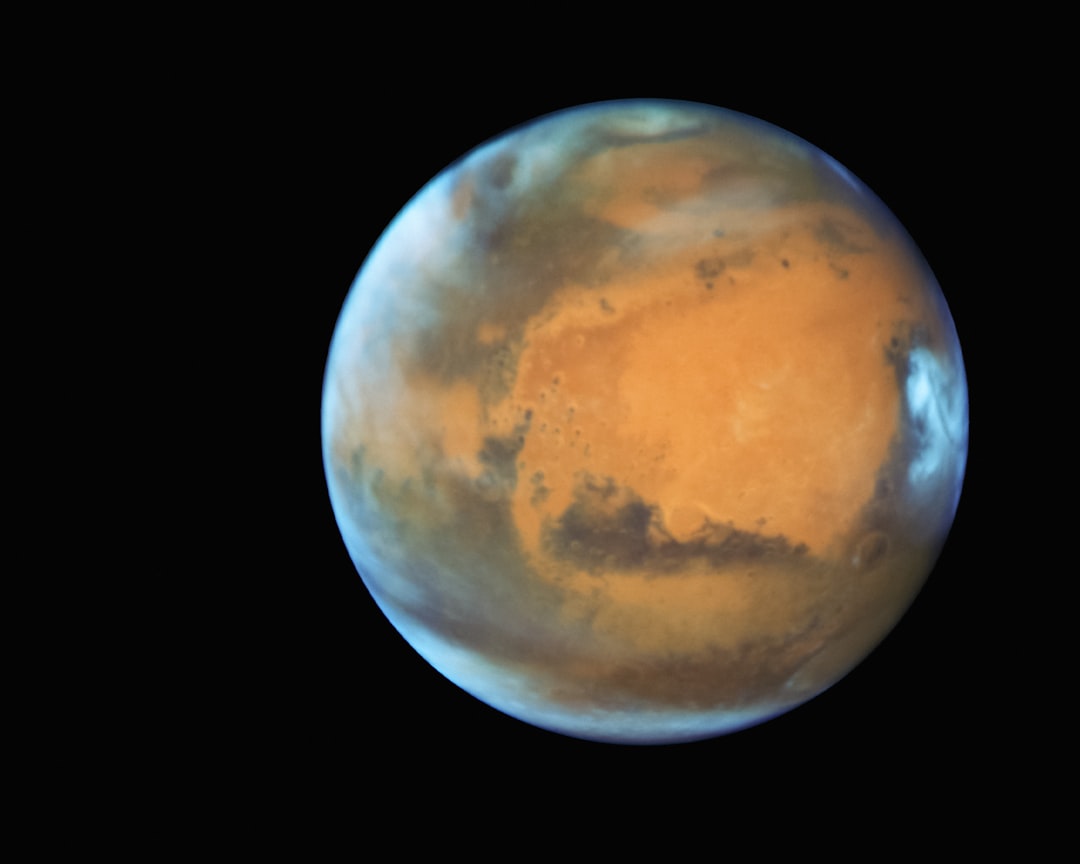
Of all the moons in our solar system, few have proven as persistently enigmatic as Phobos, the innermost and larger of Mars' two diminutive satellites. For decades, planetary scientists have debated its very origins — is it a captured asteroid dragged in by Martian gravity, or a fragment of Mars itself, flung skyward by a colossal ancient impact? Now, new research presented at the European Geosciences Union (EGU) General Assembly 2026 in Vienna is attempting to untangle this cosmic riddle by modeling subtle variations in Phobos' geophysical signatures, with particular focus on the moon's most dramatic feature: the enormous Stickney Crater.
The key to solving the mystery, researchers argue, rests almost entirely with a better understanding of Phobos' internal structure — a critical piece of information that, frustratingly, remains what scientists call a "known unknown." We are aware of our ignorance, but lack the tools, or the proximity, to fully resolve it. That situation, however, may be about to change.
"The main puzzle is not just what Phobos is made of, but what kind of interior structure can explain all its characteristics simultaneously. Understanding this is essential to distinguish between formation scenarios such as capture, formation from impact-generated debris, or a more complex mixed origin." — Benjamin Haser, Universität der Bundeswehr München
Not Just a Rock in Orbit
At first glance, Phobos might seem unremarkable. With a mean diameter of only 22.2 kilometers and an orbital period around Mars of just 7 hours and 39 minutes — faster than Mars itself rotates — it is, by any measure, tiny. Its surface is heavily cratered, grooved with mysterious linear features, and dusted with a fine regolith that gives it a muted, carbonaceous appearance. And yet, as Benjamin Haser, a doctoral student in planetary science at Germany's Universität der Bundeswehr München, emphasized in Vienna, Phobos is emphatically not a simple rock in orbit.
Current estimates paint a picture of a deeply complex body: a porous interior with a bulk density of approximately 1,876 kg/m³ — far lower than solid rock — suggesting the moon may be as much as 25–35% empty space, riddled with voids and fractures. Some models go further, proposing the possible presence of water-ice deposits within its interior, alongside a denser mass concentration in its equatorial region. These characteristics make Phobos one of the most scientifically compelling small bodies in the inner solar system, comparable in intrigue to asteroid belt objects like asteroid Bennu, visited by NASA's OSIRIS-REx mission.
Haser and his co-author Thomas Andert elaborate on these findings in a 2026 paper appearing in Monthly Notices of the Royal Astronomical Society (MNRAS), one of the world's oldest and most prestigious astronomical journals. Their work argues that detailed gravitational field mapping is perhaps the single most powerful tool available to resolve Phobos' ambiguous identity.
Two Competing Origin Stories
The scientific community is broadly divided between two leading hypotheses for how Phobos came to exist, and both carry dramatically different implications for the early history of the Martian system.
The Giant Impact Hypothesis
The first theory proposes that a massive impactor struck the surface of early Mars billions of years ago, ejecting an enormous volume of debris into orbit. This material eventually coalesced into a debris disc, from which both Phobos and its sibling moon Deimos gradually assembled. This scenario is loosely analogous to the giant impact hypothesis for Earth's Moon, in which the proto-Earth was struck by a Mars-sized body called Theia. Under this model, both Martian moons would be largely composed of Martian crustal material, mixed with the impactor's debris — a composition that could be verified through sample return.
The Captured Asteroid Hypothesis
The competing theory holds that Phobos and Deimos are not children of Mars at all, but rather wandering asteroids — most likely from the outer asteroid belt — that were gravitationally captured by Mars at some point in the distant past. This idea draws support from Phobos' spectroscopic properties, which in some analyses resemble those of D-type asteroids, primitive, carbon-rich bodies found in the outer regions of the asteroid belt. The irregular, lumpy shape of Phobos also visually echoes objects like asteroid 25143 Itokawa, visited by Japan's Hayabusa mission.
However, capturing an asteroid into a nearly circular, near-equatorial orbit like that of Phobos is dynamically challenging, requiring a significant dissipation of energy — a process not fully understood. Each hypothesis has its strengths and its unresolved difficulties.
Stickney Crater: A Cosmic Clue
At the heart of Haser's research lies Stickney Crater, a 9-kilometer-wide impact scar so large relative to Phobos itself that the collision which created it must have come extraordinarily close to shattering the entire moon. Named after Chloe Angeline Stickney Hall, the mathematician wife of Phobos' discoverer Asaph Hall, Stickney is visible even in relatively modest telescope observations of Mars.
The timing of the Stickney impact differs dramatically depending on which origin hypothesis one accepts:
- Under the giant impact hypothesis, the Stickney-forming event is estimated to have occurred approximately 4.2 billion years ago, during or shortly after the heavy bombardment period of the early solar system.
- Under the captured asteroid hypothesis, the event is estimated to be significantly younger — around 2.6 billion years ago — reflecting a different dynamical history for the moon.
This divergence in estimated ages makes Stickney not just a geological feature, but a potential chronological discriminator between the two competing origin models. If the age of the crater can be determined precisely — perhaps via samples returned to Earth — it could tip the scales decisively in favor of one hypothesis or the other.
A Planetary Sponge?
The sheer scale of the Stickney impact raises an immediate question: how did Phobos survive it? The answer may lie in the moon's unusual internal structure. Haser offers a compelling analogy.
"You would assume that such an impact would have shattered Phobos, unless it has a very low homogeneous density — like a sponge that can absorb that kind of impact. And at that impact region, there must have been very high temperatures that melted and compressed the stone beneath it." — Benjamin Haser
This "sponge" model aligns with the concept of a rubble pile body — an aggregate of loosely bound rock and dust held together primarily by gravity and cohesive forces, rather than structural integrity. Many small solar system bodies, including asteroid Ryugu (visited by Japan's Hayabusa2 mission) and Bennu, are thought to have similar porous, rubble-pile configurations. A rubble pile structure would allow the shock wave from a major impact to dissipate harmlessly through the void spaces between fragments, rather than fracturing the entire body catastrophically.
Haser's modeling focuses specifically on how a localized zone of densified, compressed material beneath the Stickney impact site — created by the heat and pressure of the ancient collision — would affect measurable physical parameters of Phobos today. These include the moon's gravitational field, its moments of inertia, and critically, its libration amplitude: the subtle wobble and oscillation that Phobos exhibits as it orbits Mars. Each of these geophysical observables carries a faint but detectable imprint of the moon's internal mass distribution, potentially revealing whether a denser, compressed core exists beneath Stickney.
A Uniquely Dynamic Orbital System
Adding yet another layer of complexity to Phobos' character is its remarkable orbital situation. Unlike Earth's Moon, which is slowly receding from our planet due to tidal interactions, Phobos is doing the opposite: it is spiraling inward toward Mars at a rate of approximately 1.8 centimeters per year. At this rate, Phobos is expected to either impact Mars' surface or be torn apart into a planetary ring within roughly 30 to 50 million years — a blink of an eye in geological time.
This inward spiral is driven by tidal forces: Mars' gravity raises a tidal bulge on Phobos, and because Phobos orbits faster than Mars rotates, the gravitational interaction continuously drains orbital energy from the moon. The eventual disintegration of Phobos would likely produce a diffuse ring of debris around Mars, making the Red Planet — at least temporarily — a ringed world. You can explore more about Martian moon dynamics through NASA's Mars Exploration Program.
"Phobos is not only a record of the past, but also an actively evolving geophysical system." — Benjamin Haser
This dynamic orbital evolution also complicates efforts to study Phobos from orbit. The moon's gravity field is strongly overshadowed by Mars' own powerful gravitational influence, making it exceedingly difficult to isolate and measure the subtle gravitational signatures that betray Phobos' internal structure. There is, as Haser notes, truly no stable orbit around Phobos itself — any spacecraft attempting to orbit the moon must contend with the perpetual gravitational tug of Mars lurking in the background.
MMX: The Mission That Could Resolve Everything
The scientific questions surrounding Phobos are not merely academic. They are precisely the targets of the Martian Moons eXploration (MMX) mission, a flagship project of the Japan Aerospace Exploration Agency (JAXA) developed in collaboration with international partners including NASA, the European Space Agency (ESA), and the French space agency CNES. Currently targeted for launch in late 2026, MMX represents one of the most ambitious planetary sample return missions ever attempted.
The mission profile is enormously challenging. MMX's main spacecraft will attempt to achieve a quasi-stable orbit around Phobos — a carefully choreographed trajectory that balances the gravitational influences of both Phobos and Mars. From this vantage point, the spacecraft will conduct detailed remote sensing of Phobos' surface and subsurface, mapping its composition, topography, and gravitational field with unprecedented precision.
The crown jewel of the mission, however, is its dual sample collection system:
- A core sampler will drill into the Phobos surface, collecting subsurface material from depths of up to 2 centimeters — potentially accessing pristine material shielded from the harsh radiation environment of space.
- A pneumatic sampler, contributed by NASA, will use a burst of pressurized gas to loft surface regolith into a collection container, capturing a broad sample of fine surface material.
All collected samples will be sealed within a specially designed sample return capsule, engineered to survive the intense heat and deceleration of atmospheric re-entry, and returned to Earth by mid-2031. The analysis of these samples in terrestrial laboratories — using instruments far more sensitive than anything that can be flown to Mars — could definitively resolve the question of Phobos' origin. If the samples reveal a composition dominated by Martian crustal material, the giant impact hypothesis gains powerful support. If they instead resemble carbonaceous chondrite meteorites typical of outer belt asteroids, the capture hypothesis would be vindicated. You can follow mission updates through JAXA's official MMX mission page.
The Broader Significance: What Phobos Can Tell Us About Mars
Beyond the intrinsic fascination of Phobos itself, resolving its origin carries significant implications for our understanding of early Mars and the broader solar system. If Phobos formed from impact debris, it preserves a chemical record of Martian crustal composition from the early solar system — a record potentially more accessible than Mars' own heavily weathered and altered surface. Conversely, if it is a captured asteroid, it represents a pristine sample of primitive outer solar system material, offering a window into the conditions of the early solar nebula.
Phobos also holds potential significance for future human exploration of Mars. Its low gravity, proximity to Mars, and possible water-ice content have led some mission planners to consider it as a potential staging post or resource depot for future crewed Mars missions. Understanding its internal structure is therefore not purely a scientific exercise — it has practical implications for the future of space exploration.
For now, as Haser and Andert's meticulous gravitational modeling work demonstrates, every subtle wobble and gravitational whisper from this small, scarred, and deeply mysterious moon carries within it the potential to rewrite our understanding of how the Martian system came to be. The answers, quite literally, may be only a few years away — locked within the ancient dust of Stickney's crater floor, waiting to be collected, returned to Earth, and finally heard.
Key Facts About Phobos
- Mean diameter: 22.2 kilometers (irregular shape)
- Orbital period: 7 hours and 39 minutes (faster than Mars rotates)
- Bulk density: ~1,876 kg/m³ (suggesting 25–35% porosity)
- Distance from Mars surface: ~6,000 kilometers (the closest moon-to-planet distance in the solar system)
- Inward spiral rate: ~1.8 cm per year toward Mars
- Estimated lifetime: 30–50 million years before disruption or impact
- Stickney Crater diameter: 9 kilometers
- Discovery: Asaph Hall, 1877, using the US Naval Observatory's 26-inch refractor