On The Hunt For Earth's First Complex Life
How life started on our own planet may not seem as dramatic as the search for microbial signatures on Mars, or the tantalizing possibility of life lurking beneath the icy crusts of Europa or Enceladus. Yet the quest to find the first eukaryotes — the earliest complex, nucleated cells — here on Earth remains one of the most profound and consequential pursuits in all of astrobiology. Understanding our own planet's biological history, it turns out, is inseparable from understanding the likelihood of life arising anywhere else in the cosmos.
The stakes are immense. For roughly ninety percent of Earth's 4.5-billion-year history, life here was exclusively microbial — invisible to the naked eye, leaving behind only the faintest chemical whispers in ancient rocks. Unlocking those whispers is the life's work of scientists like Dr. Ross Anderson, a paleontologist at the University of Oxford, who is dedicating his career to understanding how our planet transitioned from a world of single-celled bacteria to one teeming with the staggering complexity of plants, animals, and fungi.
A Timeline Written in Stone: Earth's Biological Milestones
To appreciate the magnitude of this research, it helps to visualize just how ancient the story of life truly is. Speaking from his office at Oxford, Dr. Anderson laid out the remarkable chronology of life's development on Earth:
- ~3.5 billion years ago: The origins of life — primitive, single-celled prokaryotes with no membrane-bound nucleus, representing the earliest chapter of Earth's biological story.
- ~2.7–2.3 billion years ago: The emergence of cyanobacteria and oxygenic photosynthesis, a revolution that would slowly transform Earth's atmosphere and make complex life energetically possible.
- ~1.7–2.0 billion years ago: The appearance of the first confirmed eukaryotes — cells with enclosed nuclei, organelles, and the biochemical machinery capable of sustaining far more complex biological processes.
- ~1.0–1.6 billion years ago: The emergence of early algae and the likely common ancestor of the plant and animal kingdoms — a pivotal but poorly understood chapter in evolutionary history.
- ~570–635 million years ago: The Ediacaran period, featuring the first macroscopic, soft-bodied multicellular organisms — the forerunners of the animal kingdom.
- ~538–541 million years ago: The Cambrian Explosion, one of the most dramatic events in evolutionary history, when animals with shells, skeletons, and complex mobility appeared across the fossil record in a geologically brief window of time.
"On Earth, we had origins of life over three and a half billion years ago," Anderson told me. "We had cyanobacteria and oxygenic photosynthesis at least 2.3 billion years ago; then we had eukaryotes at least 1.7 billion years ago." He is careful to note that these are minimum dates, constrained by what has been preserved — reality almost certainly pushes these milestones even further back in time.
"To find the common ancestor of the plant and animal kingdom, you must go back to something like 1.6 billion years ago." — Dr. Ross Anderson, University of Oxford
What Exactly Are Eukaryotes?
Eukaryotes represent one of the most significant leaps in the history of life. Unlike simpler prokaryotes — bacteria and archaea — eukaryotic cells possess a membrane-bound nucleus that houses the organism's DNA, protecting and organizing genetic information with remarkable sophistication. But the nucleus is only part of the story.
Equally critical are the organelles — specialized subcellular structures that allow eukaryotic cells to perform complex metabolic tasks. Chief among these is the mitochondrion, often described as the "powerhouse of the cell," which generates the energy currency ATP through aerobic respiration. It is widely accepted, through the endosymbiotic theory first championed by biologist Lynn Margulis, that mitochondria were once free-living bacteria that were engulfed by a host cell — a merger that proved to be one of the most consequential events in the history of life on Earth.
"It's the eukaryotes which have developed complex multicellularity and macroscopic forms," says Anderson. "All the animals, plants, and fungi that we see around the world are eukaryotic." In this sense, the emergence of the eukaryotic cell was not merely a step forward in evolution — it was the essential prerequisite for every complex organism that has ever lived on this planet, including us.
Anderson is unequivocal: he considers eukaryotes to be Earth's first truly complex life. So-called crown eukaryotes — the earliest branching members of the eukaryotic tree of life — are thought to have been absolutely fundamental to the development of biological complexity that followed over the subsequent billions of years.
The Extraordinary Challenge of Finding Ancient Microfossils
Here lies the central scientific problem: finding physical evidence of these pivotal early organisms is extraordinarily difficult. No organism older than roughly 500 million years possessed hard shells or mineralized skeletons — those biological innovations had not yet evolved. This means that paleontologists studying the deep history of complex life cannot rely on the kinds of robust, well-preserved fossils that fill natural history museums. Instead, they are entirely dependent on rare and unusual environmental settings where cellular remains and soft tissues have somehow survived billions of years of geological transformation.
"The biggest challenge now is that we have an under-sampled fossil record," Anderson acknowledges. The window of time they are investigating — spanning hundreds of millions to over a billion years — represents the vast majority of Earth's biological history, yet it remains almost entirely opaque to scientific scrutiny.
Even when eukaryotic microfossils are found, they present their own analytical challenges. These ancient organic structures are subject to billions of years of diagenetic alteration — the chemical and physical processes that gradually transform sedimentary rocks and the organic matter within them. Proteins degrade, membranes collapse, and the delicate morphological features that might distinguish one organism from another can be compressed into near-unrecognizable forms.
"Those kinds of multicellular fossils are hard to find," says Anderson, "so I do a lot of work on the chemistry of the rocks to find out in which settings they are preserved." This geochemical approach — analyzing isotopic ratios, organic biomarkers, and mineral compositions — allows researchers to reconstruct the environmental conditions that ancient organisms lived in, even when the organisms themselves have left only the most fragmentary traces.
"I'm interested in how we went from a planet which just had bacteria to one which had complex multicellular organisms." — Dr. Ross Anderson
The Ediacaran-Cambrian Transition: A Pivotal Evolutionary Threshold
While Anderson's research extends deep into the Proterozoic eon, one of the most fascinating focal points in this field remains the Ediacaran-Cambrian transition, approximately 540 million years ago. This boundary represents one of the most extraordinary evolutionary thresholds in Earth's history — the passage from a world dominated by soft-bodied, largely sessile organisms to one populated by active, mobile animals with hard body parts capable of predation, escape, and complex ecological interaction.
The Ediacaran biota, which thrived between approximately 635 and 541 million years ago, represent Earth's first unambiguous macroscopic, multicellular organisms. Frond-like, disc-shaped, and tubular in form, these enigmatic creatures left behind compression fossils in fine-grained sediments around the world. Their exact relationship to modern animal phyla remains a matter of significant scientific debate — some may represent early animals, while others may belong to entirely extinct lineages with no living descendants. You can explore more about these ancient organisms through the Natural History Museum's resources on Ediacaran life.
"Most of their diversity got set up across the Ediacaran/Cambrian transition," Anderson explains. "We're interested in how animals became so diverse today." Understanding how and why this explosion of biological diversity occurred — after billions of years of relative microbial stasis — is one of the most compelling unsolved problems in evolutionary biology.
Where Do You Look? Remote Landscapes and Ancient Seas
Given the extraordinary rarity and fragility of these ancient microfossils, choosing the right locations to search is as important as any laboratory technique. Anderson and his colleagues have developed a highly strategic approach to fieldwork, targeting geological formations that offer the best possible chances of preservation.
One of the most promising locations currently under investigation is a 100-square-kilometer area in what was once a shallow Proterozoic sea, located at approximately 80 degrees North latitude near the remote archipelago of Svalbard, Norway — one of the most isolated and pristine geological environments on Earth. The extreme Arctic conditions mean that rock outcrops are beautifully exposed, with minimal vegetation cover obscuring the ancient strata.
Meanwhile, in a significant recent discovery, researchers in Australia announced the identification of some of the oldest eukaryote microfossils ever described, dating back approximately 1.75 billion years. Australia's ancient, geologically stable cratons have long been a treasure trove for Precambrian paleontology, and findings like these help fill in the sparse fossil record of early complex life. Learn more about Australia's ancient geological record through Geoscience Australia.
The ideal preservation environments share several key characteristics:
- Ancient shallow coastal and nearshore marine settings, where eukaryotes had access to rich organic matter, nutrients, and sunlight for photosynthesis.
- Massive clay mineral deposits, which Anderson specializes in studying — fine-grained clays can act as a protective matrix, encasing and preserving delicate organic structures that would otherwise be destroyed.
- Geologically stable cratons — ancient, undisturbed sections of continental crust that have not been subjected to the intense heat and pressure of major tectonic events that would obliterate any preserved fossils.
- Arid or Arctic surface environments today, where lack of vegetation and soil formation ensures that ancient rock surfaces remain exposed and accessible.
"Today, you're looking at places that are desert or Arctic, where there's no vegetation so rocks are exposed," Anderson notes. This geographic constraint narrows the field considerably but also directs researchers toward some of the most spectacular and remote landscapes on Earth.
The Astrobiological Imperative: Why Earth's Past Matters for Space Exploration
Perhaps the most profound implication of this research lies not in what it tells us about our own planet's past, but in what it tells us about the possibility of life elsewhere in the universe. This connection is not incidental — it is central to the motivation driving much of this work.
The NASA Astrobiology Program explicitly recognizes that understanding the origin, evolution, and limits of life on Earth is foundational to the search for life beyond it. The same chemical and environmental conditions that allowed eukaryotes to emerge and thrive on early Earth could, in principle, exist — or have existed — on other worlds. The icy moons of the outer solar system, such as Europa and Enceladus, are thought to harbor liquid water oceans beneath their frozen surfaces, potentially rich in the same organic chemistry that characterized early Earth's coastal environments. ESA's JUICE mission and NASA's Europa Clipper are actively investigating these possibilities.
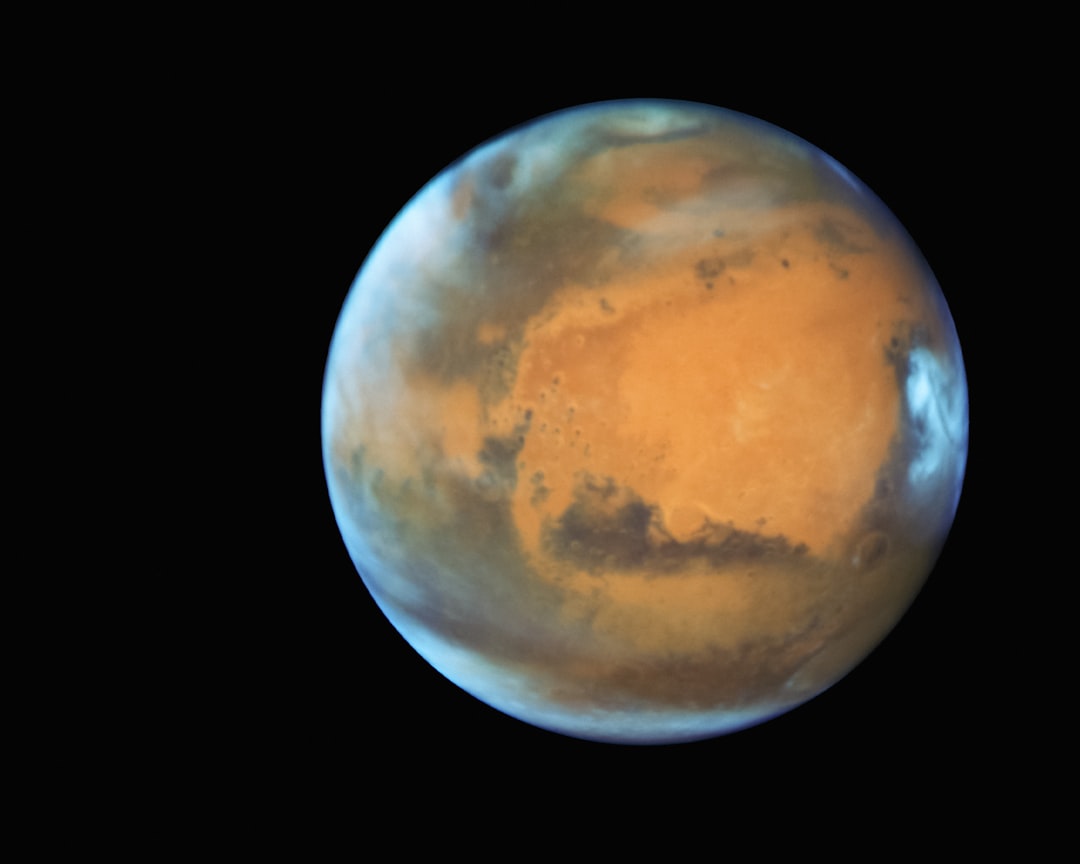
Anderson's research on clay minerals bridges these two worlds with particular elegance. Clay minerals have been detected on Mars by orbital spectrometers and rover instruments, suggesting that ancient Martian environments may have hosted the same kinds of preserving conditions that Anderson studies on Earth. Understanding how eukaryotic biosignatures are preserved in terrestrial clays could directly inform the design of future Mars sample return analysis and the interpretation of potential biosignatures in Martian sediments.
"A lot of the work we've done on clays was motivated by finding life on other planets," Anderson confirms. "We'd better understand how life happened here if we hope to understand the likelihood of it happening elsewhere."
Progress and the Path Forward
Despite the enormous challenges, the field is moving forward with growing momentum. Advances in high-resolution electron microscopy, synchrotron-based imaging, and molecular geochemistry are allowing researchers to extract biological information from ancient rocks at a level of detail that was simply impossible a generation ago. Techniques such as Raman spectroscopy and secondary ion mass spectrometry (SIMS) can detect and characterize organic molecules in individual microfossils, helping researchers distinguish genuine biological material from abiotic contamination — a critical distinction when working with rocks that are hundreds of millions to over a billion years old.
"We've started to figure out which are the right rocks to find early fossils, and that's starting to give us the data with which we can record the history of Earth's earliest life," says Anderson, with measured but genuine optimism.
The recognition that the transition from single-celled to multicellular life occurred multiple times independently across different lineages — in animals, plants, fungi, and algae — is itself a profound insight. It suggests that multicellularity may not be an extraordinarily unlikely accident, but rather a recurring evolutionary solution to the challenges of survival and reproduction. If this transition can happen multiple times on a single planet, it raises tantalizing questions about how common complex life might be across the universe.
Conclusion: The Deep Past as a Guide to the Cosmic Future
The hunt for Earth's first complex life is, at its heart, a search for context — a way of placing our own existence within the vast sweep of cosmic and biological time. Every ancient eukaryotic microfossil recovered from an Arctic cliff face or an Australian desert outcrop adds another data point to our understanding of how life responds to opportunity, how complexity emerges from simplicity, and how a planet can be transformed by the cumulative action of countless generations of microscopic organisms over billions of years.
As we send robotic explorers to Mars, as we train our telescopes on the atmospheres of distant exoplanets searching for the chemical signatures of biology, and as we plan future missions to the ocean worlds of the outer solar system, the answers to the most fundamental questions about life's cosmic prevalence may well come not from the stars, but from the ancient rocks beneath our feet.
"We'd better understand how life happened here if we hope to understand the likelihood of it happening elsewhere." — Dr. Ross Anderson, University of Oxford
For further reading on the search for early life on