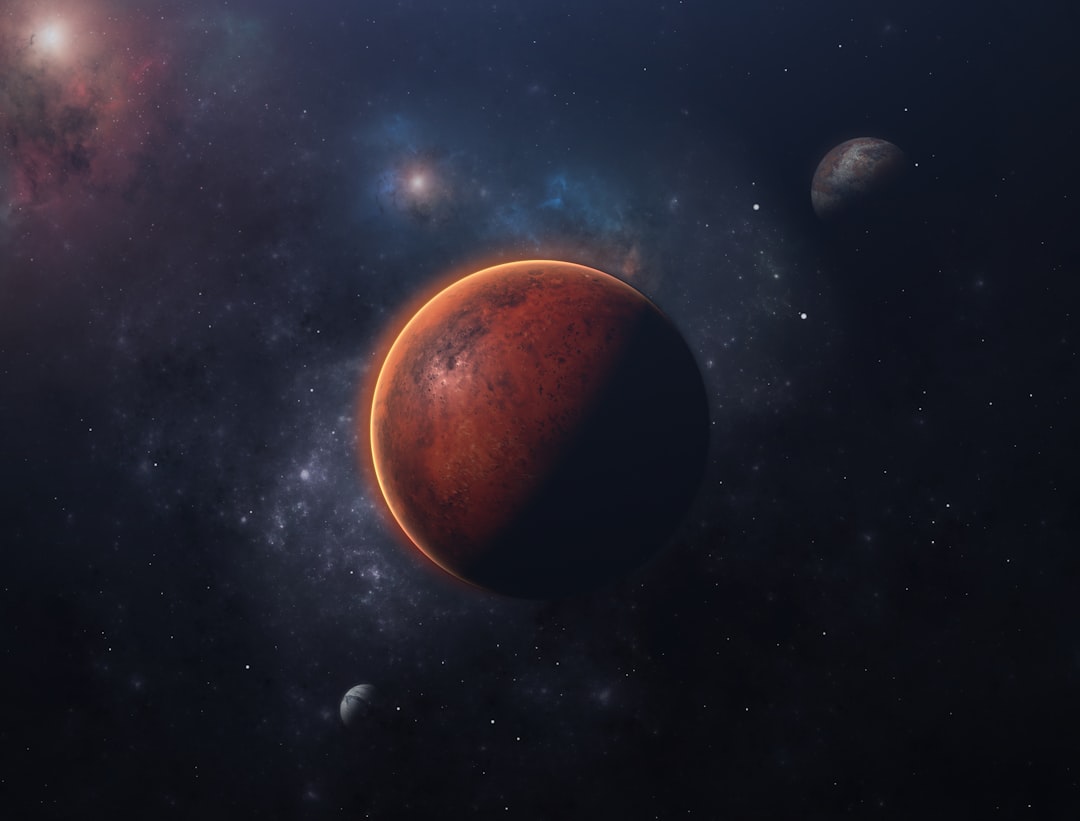
In a groundbreaking discovery that challenges our understanding of planetary atmospheres, NASA's MAVEN (Mars Atmosphere and Volatile Evolution) spacecraft has detected an extraordinary atmospheric phenomenon previously thought impossible on the Red Planet. Scientists have observed the Zwan-Wolf effect—a dynamic plasma compression process—occurring within Mars' ionosphere, marking the first time this effect has been documented in a planetary atmosphere rather than within a protective magnetic field. This remarkable finding, detailed in a recent study published in Nature Communications, fundamentally reshapes our comprehension of how solar wind interacts with unmagnetized planetary bodies.
The discovery carries profound implications for planetary science, as it reveals that Mars possesses a previously unknown atmospheric defense mechanism against incoming solar radiation. Unlike Earth, which relies on its robust magnetic field to deflect harmful solar particles, Mars must contend with the relentless solar wind using only its thin atmosphere. The detection of the Zwan-Wolf effect demonstrates that the Martian atmosphere is far more dynamic and responsive to space weather than scientists previously believed, opening new avenues for understanding atmospheric evolution on planets throughout our solar system and beyond.
Understanding the Zwan-Wolf Effect: From Earth's Magnetosphere to Mars' Atmosphere
The Zwan-Wolf effect, named after the scientists who first described this plasma compression phenomenon, has been extensively studied within Earth's magnetosphere for decades. When the solar wind—a continuous stream of charged particles emanating from the Sun—encounters Earth's magnetic field, it creates a compression wave that squeezes the magnetosphere on the dayside of our planet. This squeezing effect is measurable and predictable, serving as one of the key mechanisms by which our planet's magnetic shield responds to varying solar conditions.
According to research from NASA's MAVEN mission, the traditional understanding of the Zwan-Wolf effect required the presence of a planetary magnetic field. Earth's magnetosphere, extending tens of thousands of kilometers into space, provides the necessary structure for this compression to occur. The magnetic field lines act like elastic bands, compressing under pressure from intense solar wind and then rebounding when the pressure subsides. This dynamic interaction creates complex plasma physics that scientists have studied using numerous spacecraft and ground-based observatories.
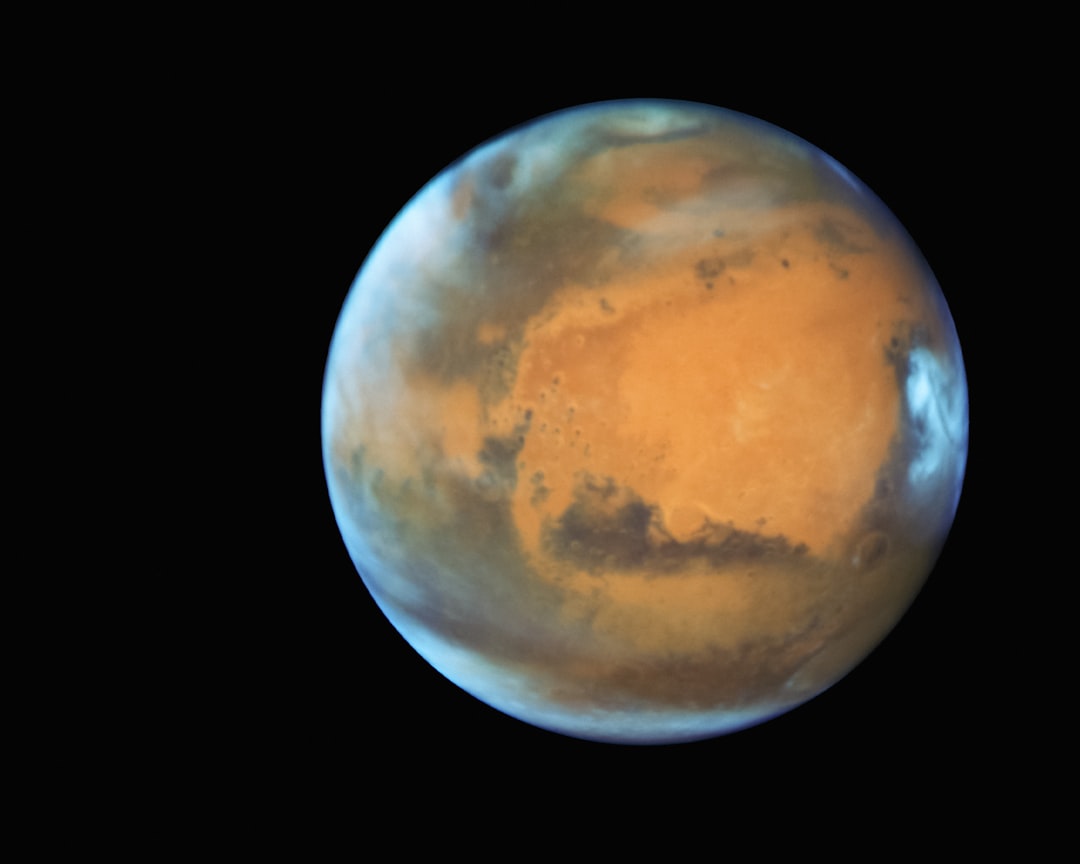
Mars, however, presents a fundamentally different scenario. The Red Planet lost its global magnetic field approximately 4 billion years ago, leaving its atmosphere directly exposed to the solar wind. Without the protective cocoon of a magnetosphere, Mars has been gradually losing its atmosphere to space—a process that MAVEN was specifically designed to study. The absence of a magnetic field led scientists to assume that phenomena like the Zwan-Wolf effect simply couldn't occur at Mars. This assumption has now been proven incorrect.
The December 2023 Solar Storm: A Natural Experiment
The breakthrough observation occurred in December 2023, when a particularly powerful solar storm struck Mars. MAVEN's sophisticated suite of instruments, including its Solar Wind Ion Analyzer (SWIA) and Magnetometer (MAG), detected unmistakable signatures of the Zwan-Wolf effect occurring within the planet's ionosphere. The ionosphere—the electrically charged upper region of Mars' atmosphere—responded to the incoming solar wind pressure in a manner strikingly similar to how Earth's magnetosphere behaves, but with crucial differences that reveal new physics.
During this event, the solar wind dynamic pressure increased dramatically, compressing the Martian ionosphere and creating measurable changes in plasma density and magnetic field strength. The compression occurred over a timescale of minutes to hours, matching theoretical predictions for how an atmospheric boundary should respond to external pressure variations. What makes this observation particularly significant is that it occurred without any magnetic field structure—the ionosphere itself provided the necessary plasma environment for the effect to manifest.
"No one expected that this effect could even occur in the atmosphere. That's what makes this even more exciting. It introduces interesting physics that we haven't yet explored and a new way the Sun and space weather can change the dynamics in the Martian atmosphere," explained Dr. Christopher Fowler, assistant research professor at the University of West Virginia and lead author of the study.
Scientific Implications: Rewriting Planetary Atmosphere Textbooks
The detection of the Zwan-Wolf effect in Mars' atmosphere carries several profound implications for planetary science. First, it demonstrates that ionospheric plasma can exhibit magnetosphere-like behavior even without an underlying magnetic field. This finding challenges fundamental assumptions about the requirements for certain space plasma phenomena and suggests that planetary atmospheres may be more resilient to solar wind erosion than previously thought.
Research teams at NASA's Jet Propulsion Laboratory are now reassessing models of atmospheric escape at Mars and other unmagnetized planets. The ability of the ionosphere to compress and respond to solar wind pressure variations suggests the existence of a dynamic feedback mechanism that could, under certain conditions, provide temporary protection against atmospheric stripping. While this protection is far less effective than Earth's magnetic field, it represents a previously unrecognized factor in the long-term evolution of planetary atmospheres.
Implications for Venus and Exoplanetary Science
Beyond Mars, this discovery has significant implications for understanding Venus, the only other planet in our solar system with a substantial atmosphere but no global magnetic field. Venus lost its magnetic field billions of years ago, likely due to the absence of plate tectonics, which prevents the internal heat circulation (convection) necessary to maintain a magnetic dynamo. Despite having a liquid iron core—one of the two requirements for generating a magnetic field—Venus cannot sustain the convective motion needed to power a dynamo.
Scientists studying Venus through missions like ESA's Venus Express may now search for similar Zwan-Wolf signatures in that planet's thick ionosphere. Given Venus's proximity to the Sun and its dense atmosphere, the effect might be even more pronounced there, potentially occurring with greater frequency and intensity than at Mars. This could provide crucial data for understanding how different atmospheric compositions and densities respond to solar wind pressure.
The implications extend even further to exoplanetary science. Astronomers have discovered thousands of planets orbiting other stars, many of which likely lack protective magnetic fields. Understanding how unmagnetized planets interact with stellar winds is crucial for assessing their habitability and atmospheric stability over geological timescales. The MAVEN discovery suggests that even planets without magnetic fields may possess atmospheric mechanisms that provide some degree of protection against stellar radiation and particle bombardment.
MAVEN's Legacy: Unraveling Mars' Atmospheric Mysteries
Launched in November 2013 and arriving at Mars in September 2014, the MAVEN spacecraft has revolutionized our understanding of the Martian atmosphere. Its primary mission objective was to determine how and why Mars lost most of its atmosphere, transforming from a potentially habitable world with liquid water on its surface to the cold, dry desert planet we observe today. Over more than a decade of operations, MAVEN has provided unprecedented insights into atmospheric escape processes, the interaction between Mars and the solar wind, and the complex dynamics of the Martian upper atmosphere.
MAVEN's observations confirmed that the solar wind stripping process has been gradually eroding Mars' atmosphere over billions of years. Without a magnetic field to deflect charged particles, the solar wind directly impacts the upper atmosphere, imparting energy to atmospheric atoms and molecules and allowing them to escape to space. This process accelerates during solar storms, when the solar wind becomes more intense and carries more energy. The spacecraft has measured escape rates of hundreds of grams of atmospheric gas per second during quiet conditions, increasing to several kilograms per second during major solar events.
Advanced Instrumentation Enabling Discovery
The detection of the Zwan-Wolf effect was made possible by MAVEN's comprehensive suite of eight scientific instruments, designed to measure everything from atmospheric composition to magnetic field variations. The Particles and Fields Package includes instruments that measure solar wind characteristics, while the Remote Sensing Package observes the upper atmosphere's global characteristics. The Neutral Gas and Ion Mass Spectrometer measures the composition and structure of atmospheric gases with unprecedented precision.
This multi-instrument approach allows scientists to observe the same phenomena from multiple perspectives simultaneously, providing a complete picture of how the solar wind interacts with Mars' atmosphere. During the December 2023 solar storm, instruments across the spacecraft detected coordinated changes in plasma density, magnetic field strength, and atmospheric composition that together painted a clear picture of the Zwan-Wolf effect in action.
Future Research Directions and Unanswered Questions
While the December 2023 observation represents a major breakthrough, it also raises numerous questions that will drive future research. The research team hypothesizes that the Zwan-Wolf effect may occur regularly at Mars, but most occurrences are too weak to detect with current instrumentation. Only during exceptionally powerful solar storms does the effect become strong enough for MAVEN's instruments to clearly identify the characteristic signatures.
Scientists are now developing more sensitive detection methods and analysis techniques to identify weaker instances of the effect in MAVEN's extensive data archive, which spans more than a decade of continuous observations. Statistical analysis of these events could reveal patterns in their occurrence, correlations with solar activity cycles, and variations with Martian seasons and atmospheric conditions. Understanding the frequency and intensity distribution of Zwan-Wolf events will be crucial for assessing their cumulative impact on atmospheric evolution.
Key Research Questions Moving Forward
- Frequency and Intensity: How often does the Zwan-Wolf effect occur at Mars, and what range of solar wind conditions can trigger it? Determining the statistical distribution of these events will help scientists understand their role in long-term atmospheric evolution.
- Atmospheric Protection: Does the compression effect provide any measurable protection against atmospheric escape, or does it primarily redistribute atmospheric plasma without significantly affecting loss rates? This question is crucial for understanding Mars' atmospheric history.
- Seasonal Variations: Does the effect vary with Martian seasons, which cause significant changes in atmospheric density and composition? Mars' elliptical orbit creates substantial seasonal variations that could influence how the ionosphere responds to solar wind pressure.
- Comparative Planetology: How does the Martian Zwan-Wolf effect compare to similar phenomena that might occur at Venus, Titan, or other solar system bodies with atmospheres but weak or absent magnetic fields?
- Ancient Mars: Could similar atmospheric compression effects have played a role in atmospheric retention when Mars' atmosphere was much thicker billions of years ago? Understanding this could reshape theories about early Martian climate and habitability.
Broader Context: Mars Exploration and the Search for Past Life
The discovery of the Zwan-Wolf effect at Mars contributes to a broader understanding of the planet's evolution and its potential to have harbored life in the past. Evidence from missions like NASA's Perseverance rover suggests that ancient Mars possessed a thick atmosphere, stable liquid water on its surface, and environmental conditions potentially suitable for life. Understanding how Mars lost this atmosphere is crucial for reconstructing the planet's climate history and assessing the duration of potentially habitable conditions.
The atmospheric compression effect revealed by MAVEN demonstrates that even without a magnetic field, Mars' atmosphere exhibits complex, dynamic behavior in response to space weather. This dynamism may have implications for understanding how atmospheric chemistry evolved over time, how different atmospheric escape processes interacted, and ultimately, how long Mars maintained surface conditions suitable for life. Each new piece of atmospheric physics helps scientists refine models of ancient Martian climate and test hypotheses about the planet's habitability timeline.
As we continue to explore Mars with increasingly sophisticated spacecraft and rovers, discoveries like the Zwan-Wolf effect remind us that even well-studied planets can surprise us with unexpected phenomena. The Red Planet continues to reveal secrets about planetary evolution, atmospheric dynamics, and the complex interactions between planets and their stellar environment—knowledge that extends far beyond Mars itself to inform our understanding of planetary systems throughout the universe.
The future of Mars atmospheric research remains bright, with planned missions and continued operations of existing spacecraft promising additional breakthroughs. As always, the pursuit of scientific knowledge drives us forward, revealing the intricate workings of our cosmic neighborhood one discovery at a time.