In the quest to understand whether life exists beyond our planet, scientists are increasingly turning their attention to a fundamental question closer to home: how did life first emerge from the primordial chaos of early Earth? A groundbreaking review paper published in Trends in Chemistry offers fascinating insights into this ancient mystery by exploring what researchers call "simplified proteins"—molecular structures that may hold the key to understanding the biochemical dawn of life itself. This research not only illuminates our own origins but also provides crucial guidance for the search for life on distant worlds like Saturn's moon Enceladus and Jupiter's Europa.
The journey from lifeless chemistry to living biology represents one of the most profound transformations in cosmic history. At the heart of this transition lies the emergence of functional proteins—complex molecular machines capable of catalyzing reactions, maintaining structure, and performing the countless tasks necessary for life. Yet modern proteins, composed of intricate combinations of twenty distinct amino acids, seem impossibly sophisticated to have emerged spontaneously from Earth's early chemical environment. This apparent paradox has driven researchers to investigate whether life's first proteins were far simpler than their modern descendants, and whether a restricted "alphabet" of amino acids was sufficient to kickstart the evolutionary process.
The Complexity Problem: Modern Proteins vs. Prebiotic Reality
Contemporary proteins represent marvels of molecular engineering, each one a precisely folded three-dimensional structure built from a vocabulary of twenty standard amino acids. These building blocks range from simple glycine to complex aromatic structures like tryptophan and phenylalanine. However, geochemical evidence and theoretical models strongly suggest that early Earth's environment could not have produced such a diverse molecular toolkit. The prebiotic world likely offered access to only a handful of these amino acids—those that could form through simple chemical reactions in the absence of biological catalysts.
This realization creates a fundamental challenge for origin-of-life researchers. If modern proteins require all twenty amino acids to fold and function properly, how could the first proteins have emerged with access to perhaps only seven to ten amino acid types? The answer, according to research reviewed in the new paper by K. Seya and colleagues, lies in understanding that protein foldability doesn't necessarily require the full complexity we observe today. The core architectural principles that allow proteins to adopt stable three-dimensional structures appear to be remarkably robust, even when implemented with a severely restricted chemical palette.
Alphabet Reduction: Recreating Ancient Molecular Languages
To test the limits of protein simplicity, scientists have developed an ingenious experimental approach called "alphabet reduction." This technique involves systematically rebuilding known protein structures using only a subset of the twenty standard amino acids—typically between seven and fourteen types. The results have been nothing short of remarkable, demonstrating that functional, properly folded proteins can be constructed while completely excluding entire classes of amino acids, including both aromatic amino acids and some of the more chemically complex varieties.
These experiments reveal a profound truth about the information requirements for life: the fundamental architectures necessary for protein function require surprisingly little molecular diversity. A prebiotic alphabet of approximately ten amino acids appears more than sufficient to generate proteins capable of folding into stable three-dimensional structures and performing basic catalytic functions. This discovery dramatically narrows the gap between what early Earth could plausibly provide and what early life would have needed to emerge.
"The core architectures of proteins needed to produce life require startlingly little information. A prebiotic alphabet of roughly ten amino acids is more than enough to get the ball rolling on more complex life forms."
The Eck-Dayhoff Hypothesis: Symmetry and Simplicity
One of the most influential ideas in this field emerged in 1966 when researchers Richard Eck and Margaret Dayhoff proposed that ancient proteins might have formed through the duplication and fusion of short, simple peptide sequences. This hypothesis suggested that early proteins possessed high degrees of internal symmetry—a natural consequence of being built from repeated molecular motifs. Modern experimental work has vindicated this prescient idea, with researchers successfully demonstrating that simple peptides can spontaneously "homo-oligomerize," essentially clicking together like molecular LEGO bricks to form symmetric, fully functional protein structures.
This process of peptide oligomerization offers an elegant solution to the complexity problem. Rather than requiring the spontaneous assembly of a long, complex amino acid sequence, early proteins could have emerged through the repeated combination of short, simple peptides—perhaps only five to ten amino acids in length. These building blocks would have been far more likely to form through random chemical processes, and their subsequent assembly into larger structures could have been driven by basic physical and chemical forces rather than requiring sophisticated biological machinery.
Environmental Scaffolding: How Early Earth Supported Primitive Proteins
The story of early protein evolution extends beyond molecular structure to encompass the harsh yet supportive environment of prebiotic Earth. Far from forming in isolation, the first proteins would have been immersed in a chemical milieu that actively influenced their stability and function. Recent research has revealed that several environmental factors on early Earth may have provided crucial support for proteins that would have been only marginally stable on their own.
The ancient oceans, likely far more saline than today's seas, created conditions that could promote protein folding through charge screening. High salt concentrations alter the electrostatic interactions between charged amino acids, potentially stabilizing protein structures that would otherwise unfold. Additionally, the presence of polyamines and divalent cations—such as magnesium ions carrying a +2 charge—could have acted as molecular glue, helping to hold primitive protein structures together.
Coacervates: Nature's First Protein Factories
Perhaps most intriguingly, researchers have identified coacervates—concentrated chemical droplets that separated from the surrounding aqueous environment—as potential incubators for early protein evolution. These structures, which likely preceded the development of true cellular membranes, created crowded molecular environments where peptides were forced into close proximity. This molecular crowding could have dramatically increased the rates of both peptide folding and oligomerization, essentially creating microscopic factories for protein assembly long before the emergence of cells as we know them.
The coacervate hypothesis connects to broader theories about the origin of cellular life, suggesting that compartmentalization—one of the defining features of living systems—may have emerged through simple phase separation rather than requiring sophisticated membrane-building machinery. Research from institutions like the Earth-Life Science Institute in Tokyo continues to explore how these primitive compartments could have supported the chemical reactions necessary for life's emergence.
Artificial Intelligence: A New Lens on Ancient Biology
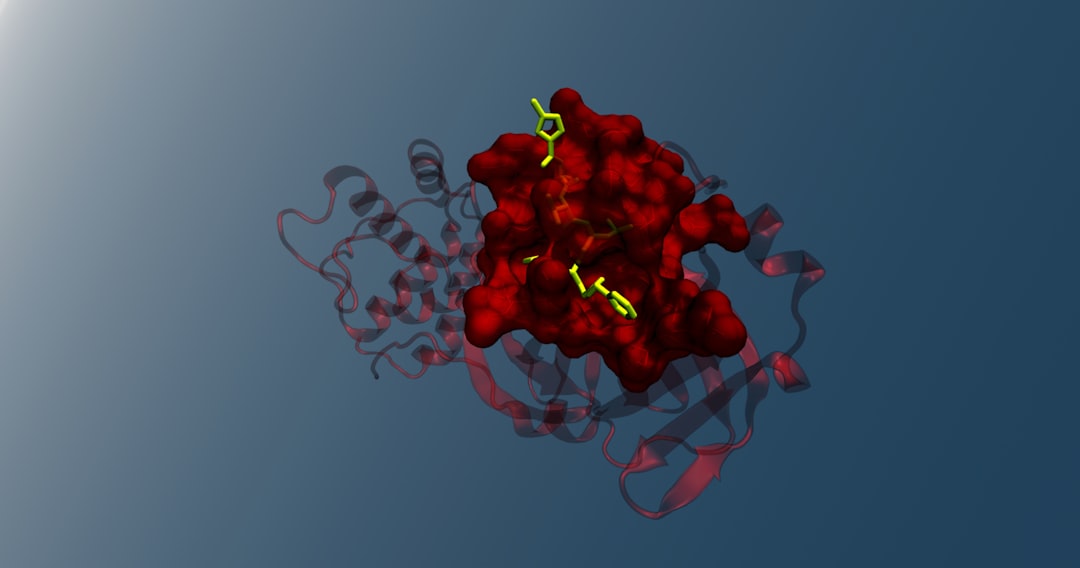
The field of prebiotic protein research has been revolutionized by the introduction of artificial intelligence tools, particularly AlphaFold and related protein structure prediction systems. These powerful computational platforms, trained on vast libraries of known protein structures, can predict how amino acid sequences will fold into three-dimensional shapes with remarkable accuracy. While AlphaFold was initially developed to understand modern proteins, its application to simplified, prebiotic protein sequences has opened entirely new research avenues.
By using AI to model proteins built from restricted amino acid alphabets, researchers can now simulate what might have been happening billions of years ago on early Earth—or what might currently be occurring in the subsurface oceans of icy moons like Enceladus or Europa. These large language models of protein libraries allow scientists to explore vast sequence spaces and identify which simplified proteins are most likely to fold into functional structures, providing testable predictions that can guide laboratory experiments.
Implications for Astrobiology and the Search for Life
The insights gained from studying simplified proteins extend far beyond understanding Earth's ancient past. As humanity's search for extraterrestrial life intensifies, with missions planned to explore the subsurface oceans of Europa and the hydrothermal vents of Enceladus, understanding the minimal requirements for protein-based life becomes crucial. If life can emerge from a restricted alphabet of amino acids supported by environmental factors, then the conditions necessary for biochemical evolution may be more common throughout the cosmos than previously thought.
The research suggests several key principles that could guide the search for life beyond Earth:
- Chemical Simplicity: Early life doesn't require access to all twenty standard amino acids, making biochemical emergence more probable in diverse environments
- Environmental Support: Harsh conditions—high salinity, mineral surfaces, concentrated chemical droplets—may actually facilitate rather than hinder the emergence of functional proteins
- Modular Assembly: Life's first proteins likely formed through the repetition and combination of simple molecular motifs, a process that could occur through basic chemical principles
- Gradual Complexity: The transition from simple chemistry to complex biology proceeded step by step, suggesting that intermediate stages of biochemical organization should be detectable
Future Directions and Open Questions
Despite remarkable progress in understanding simplified proteins, many questions remain unanswered. Researchers continue to investigate which specific amino acids were most likely available on early Earth, how environmental conditions influenced protein evolution, and what the minimum functional requirements were for the first enzymes. The integration of computational modeling, laboratory experiments, and geological evidence promises to further refine our understanding of life's biochemical origins.
As we stand at the threshold of a new era in astrobiology, with advanced telescopes scanning distant exoplanets for biosignatures and spacecraft preparing to explore potentially habitable worlds within our own solar system, the lessons learned from studying Earth's prebiotic proteins become increasingly relevant. The jump from inert chemistry to living biology may seem vast, but research into simplified proteins reveals it as a series of achievable steps—each one built upon simple, repeating chemical fragments supported by environmental scaffolding.
Understanding this ancient molecular language not only illuminates our own origins but also expands our conception of where and how life might arise elsewhere in the universe. As we search for life's early-stage journeys throughout the cosmos, the story written in simplified proteins reminds us that complexity emerges from simplicity, and that the universe's most profound transformations often begin with the humblest of molecular building blocks.