Orionid and Taurid Meteors Haunt October Skies: A Celestial Halloween Spectacle
As autumn deepens and the nights grow longer, two of the most storied annual meteor showers make their return to the evening sky, offering skywatchers a spectacular celestial display that perfectly complements the Halloween season. The Orionid and Taurid meteor showers are both active in late October, each with its own distinct character, scientific heritage, and parent body — offering a rich tapestry of cosmic history for anyone willing to step outside and look up.
The Science Behind Meteor Showers
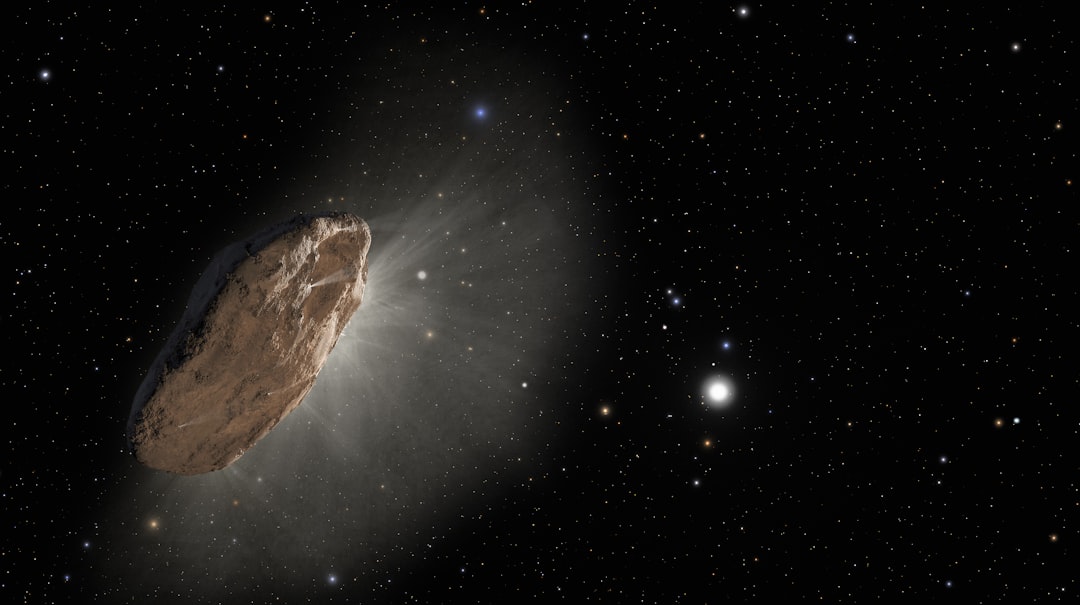
Before diving into the specifics of October's celestial offerings, it's worth understanding exactly what meteor showers are and why they occur with such clockwork regularity. As a comet approaches the Sun during its orbital journey, solar radiation and the solar wind cause its icy nucleus to sublimate — releasing trapped gases and loosening dust and rocky debris into space. This material disperses along the comet's orbital path over millennia, forming a diffuse but persistent debris stream. When Earth passes through one of these streams each year, individual particles — most no larger than a grain of sand or a small pebble — slam into our atmosphere at hypersonic speeds, vaporizing in brilliant streaks of light that we call meteors.
The point in the sky from which these meteors appear to radiate is called the radiant, and showers are typically named after the constellation in which their radiant lies. The Zenithal Hourly Rate (ZHR) is a standardized measure of shower intensity, representing the number of meteors a single observer would see under perfect dark-sky conditions with the radiant directly overhead — a theoretical maximum rarely achieved in practice due to light pollution and atmospheric conditions.
"October-November is my favorite time for meteor observing. While the Geminids can be great for one night, the Orionids and Taurids are not as prolific, but the Orionids are scattered over days and the Taurids continue for weeks, often with bright fireballs. In addition, there are several other meteor showers occurring in the same time frame. While none of these are major showers, together, this period brings together many opportunities to see meteors of differing colors, brightness, and sources." — Astrophotographer Eliot Herman, speaking to Universe Today
The Orionids: Fragments of the Most Famous Comet in History
The Orionid meteor shower represents one of the most scientifically significant annual displays in the calendar, not simply because of its reliable performance, but because of its extraordinary pedigree. The source of the Orionids is none other than 1P/Halley — the most celebrated periodic comet in human history, named after English astronomer Edmond Halley, who in 1705 correctly identified it as the same comet appearing repeatedly in historical records. With a roughly 75-year orbital period, Halley's Comet has been witnessed and recorded by civilizations across the world for at least two millennia, appearing in records from ancient China, medieval Europe, and the Bayeux Tapestry depicting the Norman Conquest of 1066.
In a remarkable testament to its far-reaching influence, Halley's Comet is the source of not one but two annual meteor showers. Earth intersects the comet's debris trail at two points in its orbit around the Sun: once in late October, producing the Orionids, and again in early May, producing the Eta Aquariids — a Southern Hemisphere favorite that often surpasses the Orionids in intensity. The existence of these twin showers speaks to the extraordinary volume and spatial extent of the debris field that Halley has shed across its orbital path over countless centuries of solar heating.
Most recently, 1P/Halley reached aphelion — its farthest point from the Sun — on December 9th, 2023, at a distance of over 35 Astronomical Units (AU), placing it well beyond the orbit of Neptune in the cold outer reaches of the solar system. At such distances, the comet is essentially inert, a frozen, dark nucleus roughly 15 kilometers long, slowly drifting in the darkness. It has now begun its long, curving journey back toward the inner solar system, building speed as solar gravity draws it inward. Halley's Comet is expected to reach perihelion — its closest approach to the Sun — in 2061, when it will once again become a spectacular naked-eye object for observers on Earth. You can explore more about Halley's Comet and its orbital mechanics via NASA's Solar System Exploration resource on 1P/Halley.
Orionid Performance in 2026
In 2026, the Orionids are expected to achieve a Zenithal Hourly Rate (ZHR) of approximately 20 meteors per hour at their peak. The shower is active throughout most of the second half of October, with its expected maximum arriving around October 21st. This broad activity window distinguishes the Orionids from some other showers that peak sharply and fade quickly — giving dedicated observers multiple nights of productive viewing.
An intriguing and still not fully understood dynamical wrinkle in the Orionid story involves the gravitational influence of Jupiter, the solar system's largest planet. Periodic perturbations from Jupiter appear to concentrate debris within certain filaments of the Halley stream, leading to enhanced Orionid outbursts approximately once per decade. The last notable such enhancement occurred in 2006, when ZHR values climbed well above the norm. Astronomers continue to model these perturbations to improve predictions for future outburst years.
Unfortunately, moonlight will pose a challenge in 2026. The Moon will be waxing gibbous at the time of the Orionids' peak, just five days prior to the Full Hunter's Moon on October 26th. This means the sky will be significantly illuminated during prime observing hours, washing out fainter meteors and suppressing effective rates. Observers are advised to position themselves so the Moon is behind them or blocked by a building or treeline, and to focus their gaze on the darkest portion of the accessible sky.
How to Identify an Orionid
To confirm that a meteor belongs to the Orionid shower, observers can attempt to trace its path backward across the sky. If the trail appears to originate near the raised club of Orion the Hunter and its border with Gemini the Twins, it is almost certainly an Orionid. These meteors are notably swift — entering the atmosphere at approximately 66 kilometers per second — and frequently leave persistent, glowing trains that can linger for several seconds after the meteor itself has faded. Their speed and often greenish or yellowish color are the product of their composition: largely silicate minerals and metals vaporizing at extreme temperatures. More details on identifying meteor shower radiants can be found through the International Meteor Organization's annual meteor shower calendar.
The Taurids: The Halloween Fireballs of Comet Encke
If the Orionids offer spectacle through speed and volume, the Taurid meteor shower takes a decidedly different approach: slow, majestic, and occasionally breathtakingly brilliant. The Taurids are widely known as the "Halloween Fireballs" — a well-earned nickname reflecting their tendency to produce unusually bright meteors that regularly light up social media feeds and startle unsuspecting pedestrians in the late autumn darkness.
The parent body of the Taurids is 2P/Encke, the periodic comet with the shortest known orbital period of any confirmed comet at just 3.3 years. Named after German mathematician Johann Franz Encke, who in 1819 calculated the orbital period of a comet observed multiple times since 1786, 2P/Encke orbits entirely within the inner solar system, never venturing beyond the asteroid belt. This compact, well-worn orbit — combined with the comet's estimated age of thousands to potentially millions of years as an active body — has given it ample opportunity to distribute vast quantities of material along and around its path. Learn more about 2P/Encke through NASA's official comets resource.
A Complex and Ancient Debris Stream
What makes the Taurid complex especially fascinating to planetary scientists is its extraordinary breadth and structural complexity. Unlike most meteor streams, which form relatively narrow, well-defined ribbons of debris, the Taurid stream is vast, diffuse, and multi-layered. Current models suggest the stream may be the remnant of a much larger comet that fragmented thousands of years ago, with 2P/Encke itself representing merely the most visible surviving nucleus of a once-massive body. This hypothesis — associated with researchers studying the Taurid Swarm — raises intriguing questions about the role of large Taurid fragments in historical impact events on Earth and the Moon.
The stream is formally divided into two branches due to gravitational evolution over time:
- The Southern Taurids, which peak in late October with their radiant in the constellation Cetus the Whale, and are typically the more active of the two branches
- The Northern Taurids, peaking in mid-November with their radiant drifting from Taurus the Bull into Aries the Ram
- The antihelion source, a diffuse background region along the ecliptic in Aries from which many sporadic meteors appear to hail in late October, adding to the overall activity seen in this region of the sky
While the Taurids' ZHR rarely exceeds 5 — technically barely above the background sporadic rate — this headline figure dramatically undersells their visual impact. The shower is a prolific and consistent producer of fireballs: meteors of magnitude −3 or brighter, sometimes rivaling the brightness of the full Moon. These fireballs occur because the Taurid debris stream contains an unusually high proportion of larger, centimeter- to decimeter-scale fragments compared to most other meteor showers. Their slow velocity — approximately 27 kilometers per second, making them among the slowest shower meteors observable — means they spend more time ablating in the upper atmosphere, often leaving long, luminous, stately trains drifting across the sky.
An Enhanced Display Possible in 2026–2027
Planetary scientists and meteor observers are paying particular attention to the 2026 Taurid display for a compelling reason: 2P/Encke is approaching perihelion on February 10th, 2027. As a comet nears the Sun, increased solar heating intensifies outgassing and fresh debris release, potentially enriching the stream through which Earth will pass. Historical records suggest that Taurid displays can be noticeably enhanced in years surrounding a perihelion passage of their parent comet. Furthermore, researchers have identified a periodic "Taurid Swarm" of larger objects that Earth may encounter on approximately 3-year or 7-year cycles, potentially responsible for exceptional fireball outbursts. The convergence of orbital timing in 2026 makes this season one to watch carefully. The European Space Agency's Planetary Defence Office actively monitors the Taurid complex as part of broader near-Earth object research programs.
Practical Tips for Meteor Watching
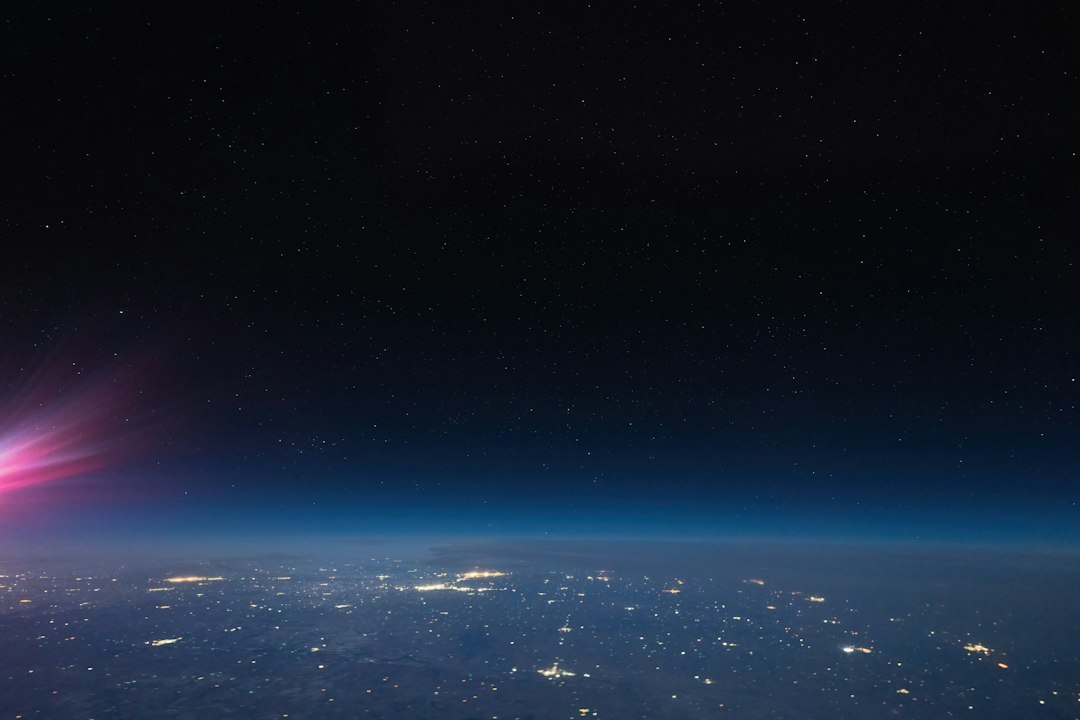
One of the most appealing aspects of meteor observing is its fundamental accessibility. Unlike many branches of amateur astronomy, no telescopes or binoculars are required — in fact, optical aids work against you by narrowing your field of view. The ideal setup involves nothing more sophisticated than:
- Dark skies: Drive or travel away from urban light pollution whenever possible. Even modest dark-sky sites dramatically increase your meteor count
- A reclining chair or blanket: Comfort is essential during long observing sessions; neck strain from staring upward can end a session prematurely
- Warm clothing: October nights can be bitterly cold; dress in layers and prepare for temperatures to drop significantly after midnight
- Patience and time: Allow at least 20–30 minutes for your eyes to fully dark-adapt, and commit to at least an hour of observing to appreciate the shower's true activity level
- A wide-angle camera and intervalometer: If you wish to capture meteors photographically, a camera with a wide-angle or fisheye lens mounted on a tripod and triggered automatically by an intervalometer can image the sky continuously while you observe visually
For those wishing to contribute scientifically, the International Meteor Organization accepts standardized visual reports from amateur observers worldwide, and these contribute meaningfully to the professional understanding of meteor shower activity and evolution. NASA's All Sky Fireball Network also maintains a real-time database of bright fireball events detected across the United States, which can help confirm particularly spectacular Taurid events.
A Moment of Cosmic Perspective
There is something profoundly moving about the spectacle of a meteor shower that transcends its visual beauty. Each streak of light represents a fragment of solar system history — debris shed by Halley's Comet during one of its ancient apparitions, perhaps observed by Roman emperors, Tang Dynasty astronomers, or Viking navigators, finally meeting its end in a brilliant flash of heat and light against our atmosphere. The Taurid fireballs may carry material even older, potentially originating from a progenitor body that broke apart before recorded human history.
As 1P/Halley begins its decades-long fall back toward the Sun and 2P/Encke approaches its own perihelion in early 2027, the meteors they have shed across the sky speak to the dynamic, evolving nature of our solar system — and to the remarkable fact that we can stand on a living world and watch the remnants of ancient wandering ice mountains burn up above our heads, right on schedule, year after year.
Each Orionid and Taurid meteor is a message from deep time — a fragment of cometary material that may have formed in the earliest epochs of the solar system, finally completing its journey by illuminating our autumn skies.
Be sure to get outside in late October, let your eyes adjust to the darkness, and watch the sky. Whether you witness a swift, green-tinged Orionid or a slow, majestic Taurid fireball painting a train across the constellation boundaries, you will be witnessing the solar system's long memory — written in light.