Plutonium in Earth Rocks Signals a Long-Ago Cosmic Collision
A small, unassuming lump of rock hauled up from the depths of the Pacific Ocean seafloor in 1976 has turned out to be one of the most scientifically remarkable geological specimens ever studied. Hidden within its dense, metallic matrix are a few hundred atoms of an extraordinarily rare isotope — plutonium-244 (Pu-244) — forged not on Earth, but in the cataclysmic merger of two neutron stars more than a hundred million years ago. This microscopic trace of cosmic history is now providing scientists with their strongest clues yet about the timing and nature of one of the universe's most violent and element-rich events: a kilonova.
The findings, produced by a collaborative team from the Helmholtz-Zentrum Dresden-Rossendorf (HZDR) institution in Germany and researchers at Australia's Nuclear Science and Technology Organisation (ANSTO), represent a landmark step forward in our understanding of r-process nucleosynthesis — the astrophysical mechanism responsible for forging roughly half of all elements heavier than iron in the universe.
A Rock From the Ocean Floor, a Message From the Cosmos
The specimen at the heart of this discovery is a ferromanganese crust — a type of slow-growing, metal-rich rock that forms on the ocean floor over tens of millions of years by the gradual accumulation of minerals from seawater. These crusts are essentially geological time capsules, faithfully recording the chemical environment of Earth's oceans — and, it turns out, of interstellar space — layer by layer over immense timescales.
What makes this particular sample so extraordinary is the presence of Pu-244, a plutonium isotope with a half-life of 81.3 million years. Unlike plutonium produced by nuclear reactors or weapons testing, Pu-244 can only originate from natural cosmic processes of extreme energy. Its detection in an ancient ocean rock is therefore an unambiguous fingerprint of an extraterrestrial event of staggering proportions. The researchers determined that the neutron star merger responsible for this material occurred approximately 100 million years ago — a conclusion derived not just from the presence of Pu-244, but critically, from the absence of another key isotope.
"The absence of the curium radioisotope Cm-247, which was also produced in the explosion, tells us it happened a very long time ago. But not more than about 1 billion years ago; otherwise the Pu-244 would also be undetectable." — Dr. Michael Hotchkis, ANSTO
Curium-247 (Cm-247), which theory predicts is produced simultaneously with Pu-244 in roughly equal proportions during neutron star mergers, has a much shorter half-life of only 16 million years. The fact that no Cm-247 was found in the sample — though some curium was present, just not the relevant isotope — means the event occurred long enough ago for essentially all of the Cm-247 to have decayed away to undetectable levels. Together, the presence of Pu-244 and the absence of Cm-247 act as a precise cosmic clock, bracketing the age of the merger between roughly 100 million and 1 billion years ago.
Drilling Into Deep Time: The Methodology
To extract and analyze the vanishingly small quantities of these exotic isotopes, the research team employed a sophisticated and painstaking analytical approach. Scientists drilled out three cylindrical cores from the ferromanganese crust, each measuring up to 3 centimeters in length. Given the extraordinarily slow growth rate of ferromanganese crusts — typically just a few millimeters per million years — each core effectively spanned more than ten million years of Earth and cosmic history.
The cores were first dated using the beryllium isotope Be-10, a well-established geochronological tool with a half-life of 1.5 million years that accumulates in seafloor crusts through interactions with cosmic rays. This provided a reliable temporal framework for each layer. The team also identified traces of iron-60 (Fe-60) in one of the cores — an isotope known to be produced in supernova explosions — lending additional validation to the method and the timeline.
The remaining crust material was subjected to computed X-ray tomography, creating detailed three-dimensional maps of the rock's internal structure before it was encased in resin. This allowed scientists to cut the specimen into ultra-thin layers, each corresponding to approximately one million years of growth. Every individual layer was then chemically processed to extract and measure plutonium content with extraordinary precision, using accelerator mass spectrometry (AMS) — one of the most sensitive analytical techniques available for detecting rare isotopes at the level of just hundreds of atoms.
This meticulous layer-by-layer analysis yielded a remarkable bonus discovery: within certain layers, the team identified traces of material from two known supernova events that occurred approximately 2 and 7 million years ago — events whose signatures had previously been detected in other geological records. The plutonium, however, was different. Unlike the supernova-linked isotopes, which appeared in discrete layers, the Pu-244 was distributed throughout all layers of the core, suggesting a continuous, steady influx of material rather than a single pulse — consistent with a source event that seeded a large volume of interstellar space long before the rock even began forming.
The Cosmic Forge: How Heavy Elements Are Born
To fully appreciate the significance of this discovery, it helps to understand the extraordinary astrophysical processes that create the elements we find around us — and inside us.
The lightest elements — hydrogen, helium, and trace amounts of lithium — were forged in the first few minutes after the Big Bang, in a process called Big Bang nucleosynthesis. Everything heavier was created inside stars through a process known as stellar nucleosynthesis. In stars like our Sun, nuclear fusion in the core converts hydrogen into helium, releasing the energy that powers the star. As a Sun-like star ages, it will eventually begin fusing helium into carbon and oxygen before shedding its outer layers to become a white dwarf, returning those elements to the interstellar medium.
In stars much more massive than the Sun, this process continues through a cascade of fusion reactions, building progressively heavier elements — carbon, neon, oxygen, silicon — all the way up to iron (Fe). Iron represents a fundamental boundary in stellar nucleosynthesis: fusing elements heavier than iron consumes energy rather than releasing it. Once an iron core accumulates, fusion halts, the core collapses catastrophically, and the star explodes as a supernova, scattering elements including gold, platinum, and uranium into space.
But even supernovae cannot account for all the heavy elements we observe. Approximately half of all elements heavier than iron — including thorium, uranium, and the transuranics such as plutonium and curium — are produced through a process called the rapid neutron-capture process, or r-process. In this process, atomic nuclei are bombarded with neutrons so rapidly that they don't have time to decay before capturing another neutron, building up extremely heavy, neutron-rich nuclei that then decay into stable heavy elements. The conditions required for the r-process — extreme densities of free neutrons at temperatures in the billions of degrees — are found in the most violent environments in the universe: the collisions of neutron stars.
- Neutron stars are the ultra-dense remnants of massive stellar explosions, packing roughly 1.4 times the mass of our Sun into a sphere only about 20 kilometers across.
- When two neutron stars in a binary system spiral together and merge, they produce a kilonova — an explosion roughly 1,000 times more energetic than a typical nova.
- The landmark detection of gravitational waves from the neutron star merger GW170817 in 2017, followed by electromagnetic observations across the spectrum, confirmed that kilonovae are prolific factories for r-process elements, including gold and platinum.
- Theoretical models predict that Cm-247 and Pu-244 are produced simultaneously in r-process events in roughly equal initial proportions — a prediction that this new research has now observationally tested using real geological evidence.
The periodic table itself tells this story visually: elements forged in stars, in supernovae, and exclusively in neutron star mergers each occupy distinct regions, a testament to the diverse cosmic crucibles required to build the chemical complexity of our universe. NASA provides an excellent overview of elemental origins for those wishing to explore further.
Continuous Rain: A Kilonova's Legacy Across 100 Million Years
One of the most striking and counterintuitive findings of this study is that the Pu-244 appears uniformly distributed across all temporal layers of the ferromanganese crust, rather than concentrated in a single layer as one might expect from a discrete event. This pattern strongly suggests that the debris from the ancient neutron star merger did not arrive at Earth in a single pulse, but rather as a continuous, diffuse flux of interstellar material spread across tens of millions of years.
This is consistent with our understanding of how interstellar material disperses. When a kilonova occurs, it ejects material at a significant fraction of the speed of light. As this material expands and mixes with the surrounding interstellar medium, it creates a vast, slowly dispersing cloud of r-process-enriched gas and dust. As our Solar System travels through the galaxy, it may gradually sweep through remnant clouds of this material over geological timescales — much like a ship sailing through a fog bank — resulting in a prolonged, steady accumulation of exotic isotopes on Earth's surface and ocean floors.
This contrasts markedly with the signatures of supernova events, which appear as distinct spikes in the geological record — sudden bursts of material that arrived when a nearby stellar explosion drove a shock wave of debris past our Solar System. The difference in deposition patterns is itself a powerful diagnostic tool, helping scientists distinguish between different types of cosmic events in the geological record.
"The only possible explanation is that the cosmic explosion responsible for the plutonium happened so long ago that the curium has already decayed away to practically nothing." — Dr. Michael Hotchkis, ANSTO
Implications: From Ocean Floors to the Moon and Beyond
The implications of this research extend far beyond the single ferromanganese sample studied. Scientists believe that ancient ocean crusts around the world may contain similar records of r-process events, and the research team is actively searching for additional samples to corroborate and expand upon their findings. Because ferromanganese crusts grow continuously and undisturbed over tens to hundreds of millions of years, they represent an unparalleled archive of the cosmic environment through which our Solar System has traveled.
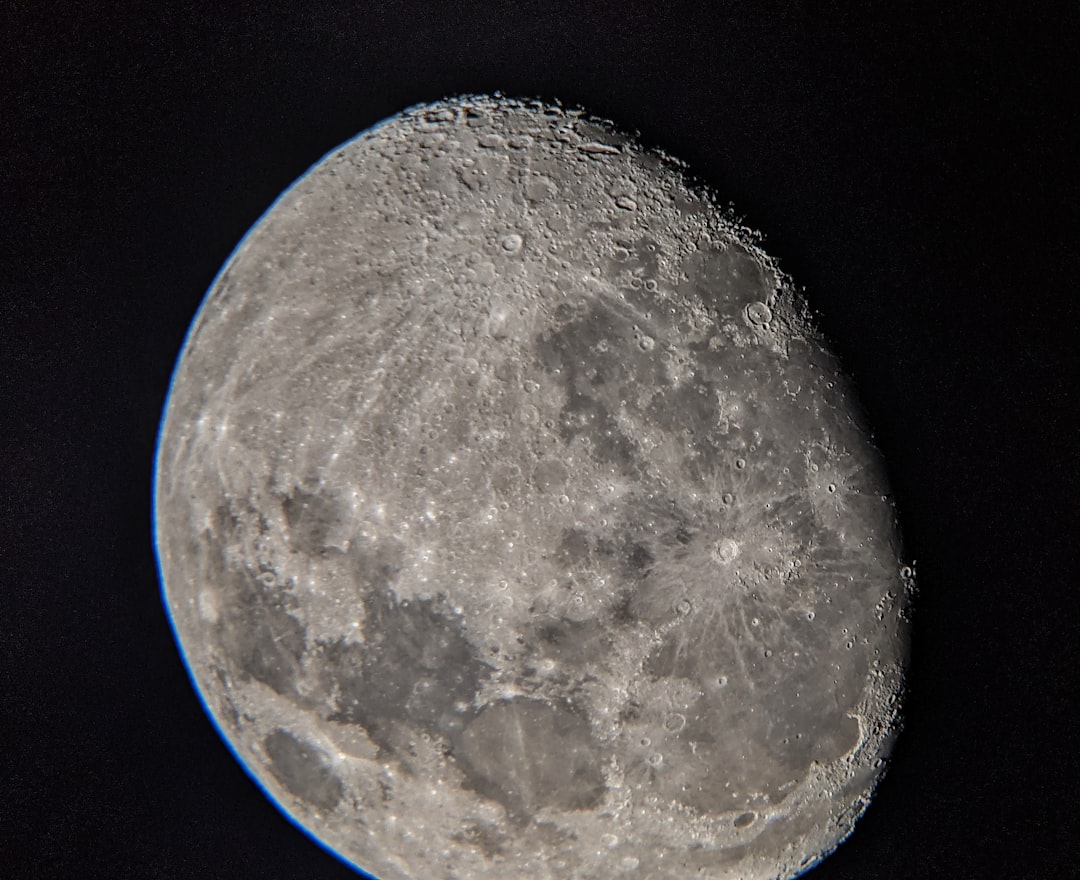
Moreover, the researchers suggest that the same kilonova debris that settled onto Earth's oceans almost certainly also landed on the Moon, Mars, and other bodies in our Solar System. The Moon is a particularly compelling target: lacking an atmosphere, ocean, and plate tectonics, the lunar surface preserves an even more pristine record of infalling interstellar material than Earth does. The Apollo lunar samples — hundreds of kilograms of rock and regolith brought back by NASA astronauts between 1969 and 1972 — represent an immediately accessible repository for such studies, and scientists are now considering whether they might yield detectable quantities of Pu-244 or other r-process isotopes. Learn more about NASA's Apollo program and its ongoing scientific legacy here.
Future lunar missions, including NASA's Artemis program and robotic sample return efforts, could provide access to even older, better-preserved lunar surface materials, potentially extending the geological record of r-process events further back in time. Similarly, deep-sea drilling programs on Earth could recover older ferromanganese crusts and sediments, pushing our observations of cosmic chemistry deeper into geological history.
Space Observatories and the Multi-Messenger Picture
This groundbreaking geological detective work complements — and is in turn illuminated by — observations made with modern space-based observatories. Telescopes such as the Chandra X-ray Observatory and the James Webb Space Telescope (JWST) have observed neutron star mergers and their kilonova afterglows across multiple wavelengths, providing real-time snapshots of the r-process in action in distant galaxies. The historic 2017 multi-messenger event GW170817 — detected simultaneously in gravitational waves by LIGO and Virgo and in light across the electromagnetic spectrum — confirmed that neutron star mergers do indeed produce the heavy elements predicted by r-process theory, including signatures consistent with strontium, gold, and platinum production.
What makes the current research unique and complementary is that it provides something no telescope observation can: a direct chemical sample of r-process material, preserved on Earth, available for laboratory analysis with extraordinary precision. While telescopes show us the light emitted by these events billions of light-years away, this ferromanganese crust gives us the actual atoms — the elemental products of cosmic nucleosynthesis that we can hold, weigh, and measure. This is the difference between watching a factory from afar and holding the finished product in your hand.
Together, these lines of evidence — gravitational wave astronomy, electromagnetic observations, and geological geochemistry — constitute a powerful multi-messenger, multi-disciplinary approach to understanding one of the universe's fundamental processes: the creation of the heavy elements that make up our world, our technology, and our very bodies.
Key Takeaways
- A ferromanganese ocean crust collected from the Pacific in 1976 contains hundreds of atoms of Pu-244 — a plutonium isotope that can only originate from cosmic r-process events.
- The presence of Pu-244 and the absence of Cm-247 together constrain the neutron star merger that produced these atoms to approximately 100 million years ago.
- The uniform distribution of Pu-244 across all rock layers suggests a continuous influx of interstellar r-process material over tens of millions of years, rather than a single pulse.
- The study provides the first direct geological evidence for the timing and products of a specific kilonova event near our Solar System.
- Future research targets include additional ocean floor crusts, Apollo lunar samples, and material retrieved by future lunar and planetary missions.
- This research powerfully complements space-based observations of neutron star mergers by providing actual laboratory access to their elemental products.