Primordial Black Holes Can Trigger Type Ia Supernovae, and Astronomers Should Be Able to Find Them
Theoretical cosmology and astrophysics have a remarkable capacity to transport researchers into strange and speculative territory — sustained, rigorous conversations about objects that may not even exist. Few hypothetical entities illustrate this better than primordial black holes (PBHs). Though they remain unconfirmed, these exotic remnants of the early Universe generate extraordinary scientific interest, sitting at the crossroads of two of the most profound unsolved problems in modern physics: the nature of dark matter and the origins of some of the Universe's most powerful explosions.
Now, a new study published in The Astrophysical Journal pushes this line of inquiry further than ever before, proposing that asteroid-mass primordial black holes may be capable of triggering Type Ia supernovae — and crucially, that the chemical fingerprints left behind in supernova remnants and in the stars of our own galaxy could serve as indirect evidence of their existence.
What Are Primordial Black Holes?
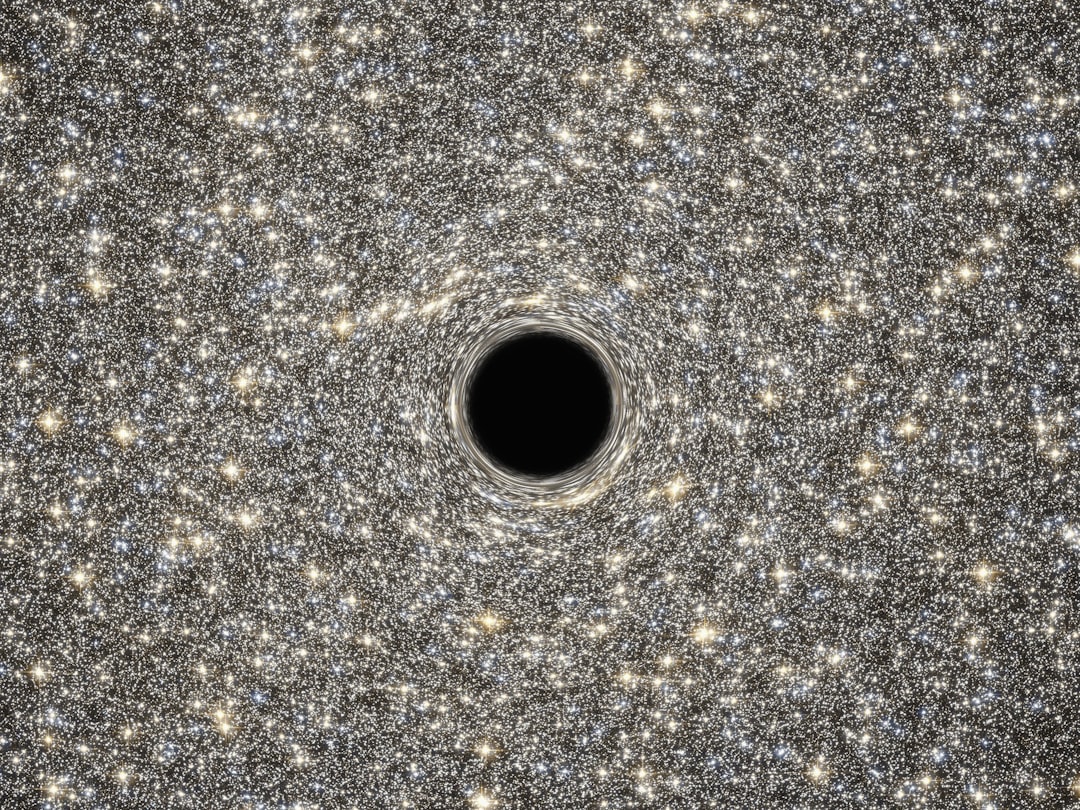
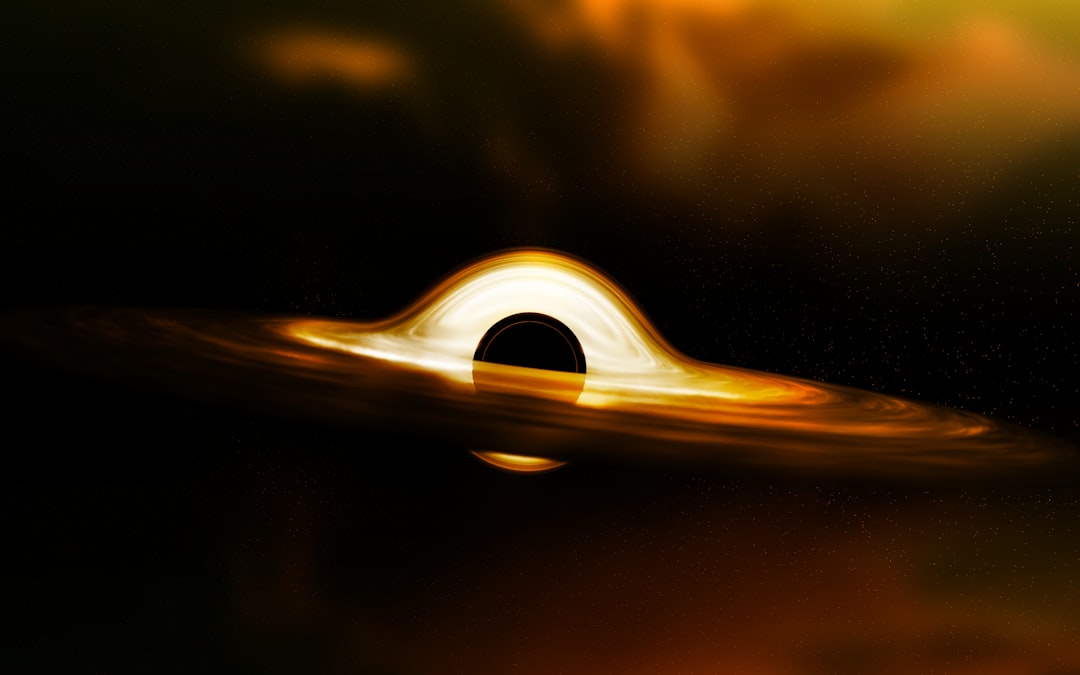
Unlike the stellar-mass black holes formed when massive stars collapse at the end of their lives, primordial black holes are hypothesized to have formed in the first fractions of a second after the Big Bang. During this epoch, the Universe was an extraordinarily dense, hot plasma of subatomic particles. In regions where density fluctuations exceeded a critical threshold, gravity could have caused matter to collapse directly into black holes — no stellar progenitor required.
This makes PBHs genuinely distinct from any black hole astronomers have ever directly observed. Their predicted masses span an enormous range, from less than a gram to thousands of solar masses, depending on when during the early Universe they formed. The particularly intriguing asteroid-mass class — with masses ranging from roughly that of a large asteroid up to a small moon or dwarf planet — occupies a window in parameter space where existing observational constraints are relatively weak, making them viable dark matter candidates.
"The asteroid-mass class of primordial black holes (PBHs) is one of the candidates for the dark matter in the Universe. The infall of these PBHs into a white dwarf could be one triggering mechanism of Type Ia supernovae."
For decades, researchers have explored whether PBHs could account for some or all of the Universe's dark matter — the invisible substance that makes up roughly 27% of the total energy content of the cosmos yet has never been directly detected. The NASA Hubble Space Telescope and other observatories have placed important constraints on PBH populations through gravitational microlensing surveys, but significant portions of the mass spectrum remain open. The asteroid-mass window, in particular, is notoriously difficult to probe observationally — which is precisely why indirect detection strategies, like the one proposed in this new research, are so valuable.
A Novel Trigger for Cosmic Explosions
The new research, titled "Primordial Black Hole Triggered Type Ia Supernovae. II. Comparison with Supernova Remnants and Galactic Chemical Evolution," is led by Shing-Chi Leung from the Department of Physics at SUNY Polytechnic Institute and the Kavli Institute for the Physics and Mathematics of the Universe (Kavli IPMU) at the University of Tokyo Institutes for Advanced Study. It builds on a previous paper by the same team, extending their theoretical framework to encompass a broader range of conditions and observable predictions.
To understand why PBHs might trigger supernovae, it helps to first understand what a Type Ia supernova is — and why astronomers care so deeply about them.
The Standard Picture of Type Ia Supernovae
Type Ia supernovae are among the brightest and most energetic events in the Universe. They are so luminous — briefly outshining entire galaxies of hundreds of billions of stars — that astronomers use them as standard candles to measure cosmic distances. It was precisely through observations of Type Ia SNe that astronomers discovered in 1998 that the expansion of the Universe is accelerating, a finding that earned the Nobel Prize in Physics in 2011 and revealed the existence of dark energy. You can learn more about this landmark discovery through the Nobel Prize official summary.
In the classical picture, Type Ia SNe occur in binary star systems where one component is a white dwarf (WD) — the dense, Earth-sized remnant of a star that was once similar to our Sun. The white dwarf gradually draws gas from its companion star, accumulating material on its surface. When the WD's mass approaches the Chandrasekhar limit of approximately 1.4 solar masses, the carbon-oxygen core can no longer support itself against gravity. A runaway thermonuclear fusion reaction ignites, obliterating the white dwarf entirely and leaving no compact remnant — only an expanding shell of radioactive debris with a characteristic chemical signature.
Yet despite their cosmological importance, the precise ignition mechanism for Type Ia SNe remains one of astrophysics' most debated open questions. The European Space Agency notes that multiple progenitor channels have been proposed, including double white dwarf mergers and variations of the classical accretion scenario. The PBH-triggered mechanism represents an entirely new and distinct channel.
How a Primordial Black Hole Ignites a White Dwarf
The mechanism proposed by Leung and colleagues is as elegant as it is exotic. When an asteroid-mass primordial black hole passes through a white dwarf, it does not simply punch a clean hole through the star. Instead, as the PBH traverses the stellar interior, its intense gravitational field creates tidal heating in the surrounding white dwarf material. This localized heating deposits enormous amounts of energy into the core region.
If this tidal heating raises the local temperature above a critical threshold of approximately 0.5 billion Kelvin (5 × 10⁸ K), it ignites uncontrolled nuclear burning. If the heated region is large enough, this burning cascades into a full thermonuclear runaway — the same catastrophic chain reaction that powers classical Type Ia supernovae — and the white dwarf is destroyed in a violent explosion. Crucially, this mechanism does not require the white dwarf to be near the Chandrasekhar limit, potentially explaining SNe that occur in sub-Chandrasekhar-mass white dwarfs, a long-standing puzzle for theorists.
The key phases of this process can be summarized as follows:
- Encounter: An asteroid-mass PBH, moving through the galaxy as part of the dark matter halo, enters the gravitational influence of a white dwarf star.
- Tidal Heating: As the PBH passes through the white dwarf's interior, its gravitational tidal forces heat the surrounding stellar material to extreme temperatures.
- Ignition Threshold: When the local temperature exceeds ~0.5 billion Kelvin, nuclear fusion reactions ignite in the heated region.
- Thermonuclear Runaway: If the ignited region is sufficiently large, a self-sustaining thermonuclear detonation propagates through the white dwarf.
- Supernova Explosion: The white dwarf is completely destroyed, producing an explosion broadly similar to a classical Type Ia supernova, but with subtle differences in its light curve and nucleosynthetic yields.
Reading the Chemical Fingerprints
In their previous paper, the team modeled the ignition process, explosion dynamics, radiative transfer, and post-explosion nucleosynthesis of PBH-triggered SNe Ia. In this new work, they push the analysis further in two critical directions: the light curves of these events and the metallicity of their remnants.
The researchers extended their simulations across a broader range of initial stellar metallicities — the abundance of elements heavier than hydrogen and helium in the progenitor white dwarf. Metallicity matters because it influences the nuclear reactions that occur during the explosion, shaping the final chemical yields. Their results show that, like ordinary Type Ia SNe, higher metallicity environments favor the production of manganese (Mn) and nickel (Ni). The resulting synthetic light curves from several of their PBH-triggered models match the observed properties of known supernova remnants, lending credibility to the physical scenario.
"We show that these PBH-triggered SNe Ia behave similarly to ordinary SNe Ia, where higher metallicity favors the production of Mn and Ni. We show that some of these observed SNe Ia could be the consequence of the PBH-triggered explosion."
This is a double-edged finding. On one hand, it means PBH-triggered SNe Ia would be difficult to distinguish individually from conventional Type Ia events — they look broadly similar. On the other hand, it means they could have been hiding in plain sight in existing supernova catalogs, contributing to the observed population without having been recognized as a distinct class.
Galactic Chemical Evolution: A New Probe
Perhaps the most far-reaching aspect of this research is its application to Galactic Chemical Evolution (GCE) — the study of how the chemical composition of the Milky Way has changed over cosmic time as successive generations of stars lived, died, and seeded the interstellar medium with newly forged elements.
The team incorporated their PBH-triggered SNe Ia models as a new chemical source within a GCE numerical code, tracing how these events would alter the elemental abundances in stars across billions of years of galactic history. The James Webb Space Telescope and large ground-based spectroscopic surveys are currently measuring stellar abundances with unprecedented precision, making predictions from GCE models more testable than ever before.
By comparing the GCE model outputs against real measurements of elemental abundances in observed stars, the researchers were able to constrain what fraction of all Type Ia supernovae throughout galactic history could plausibly have been triggered by PBHs. Their results are striking: PBH-triggered SNe Ia could have been a major contributor to the Type Ia rate, particularly in the early Universe, when the dark matter density was higher and encounters between PBHs and white dwarfs would have been more frequent.
The chemical signatures they identified are especially pronounced in high-metallicity stars — stars that formed from gas already enriched by previous generations of stellar explosions. The anomalous elemental ratios observed in these stars by large surveys such as the Sloan Digital Sky Survey (SDSS) and the GALAH survey could, according to this work, be partially explained by the chemical contribution of PBH-triggered supernovae.
"The PBH channel thus could be an alternative to explain the widespread elemental abundances in high-metallicity stars from various stellar surveys."
Implications for Dark Matter and Future Observations
The broader significance of this work extends well beyond supernovae. If PBHs in the asteroid-mass range are indeed a major component of dark matter, their interactions with white dwarfs should leave a statistically detectable imprint on the population of Type Ia supernovae and on the chemical composition of the Milky Way's stellar populations. Future large-scale astronomical surveys could potentially test this prediction.
Upcoming observatories such as the Vera C. Rubin Observatory's Legacy Survey of Space and Time (LSST) will detect supernovae at an unprecedented rate — potentially tens of thousands per year — providing a statistical sample large enough to search for subtle deviations in the Type Ia population that might be consistent with a PBH-triggered subclass. Similarly, next-generation spectroscopic surveys of stellar abundances will sharpen constraints on galactic chemical evolution models, making it possible to test whether the PBH chemical source is necessary to reproduce observed abundance patterns.
As lead author Leung explained in a press release accompanying the study:
"Our work suggests that some supernovae that we observe in the sky could be a result of the PBHs. Therefore, even though we cannot directly observe these evasive entities, they leave many interesting clues in nature for us to probe their properties."
This is, in essence, the power of indirect detection in astrophysics. Some of the most important objects in the Universe — from dark matter to the seeds of cosmic structure — may never be observed directly. But they interact with the visible Universe, and those interactions leave traces: in light curves, in chemical abundances, in the statistics of stellar populations. By reading these traces with ever-greater precision, astronomers may yet find the hidden hand of primordial black holes written into the history of our galaxy.
Key Takeaways
- Primordial black holes (PBHs) in the asteroid-mass range are hypothetical dark matter candidates that could have formed from density fluctuations in the very early Universe.
- When a PBH passes through a white dwarf, tidal heating can ignite a thermonuclear runaway, triggering a Type Ia supernova — even in sub-Chandrasekhar-mass white dwarfs.
- The synthetic light curves and nucleosynthetic yields of PBH-triggered SNe Ia are broadly consistent with observed supernovae, suggesting these events could be hiding in existing catalogs.
- When incorporated into Galactic Chemical Evolution models, PBH-triggered SNe Ia can help explain anomalous elemental abundances observed in high-metallicity stars.
- Future surveys, including the Vera C. Rubin Observatory's LSST, may provide the statistical power needed to identify a PBH-triggered subpopulation among Type Ia supernovae.
- This research demonstrates that even if PBHs can never be directly detected, their cosmological influence may be measurable through the chemical and explosive history of our galaxy.