In the cosmic drama of stellar evolution, the transformation of a star into a red giant marks one of the most violent and destructive phases in any planetary system's history. For billions of years, astronomers have understood that when stars exhaust their hydrogen fuel and begin their death throes, the planets orbiting them face an apocalyptic future. Yet emerging research reveals a surprising twist: some gas giant planets are remarkably resilient survivors, enduring conditions that would utterly annihilate smaller, rocky worlds.
This revelation comes from groundbreaking new research led by Alex Mauch-Soriano from the Departamento de Física at Universidad Técnica Federico Santa María in Valparaíso, Chile. Published in the prestigious journal Astronomy and Astrophysics, the study synthesizes our understanding of how Jupiter-like planets navigate the catastrophic transformation of their host stars from main-sequence objects to white dwarfs. The findings challenge our assumptions about planetary survival rates and offer crucial insights into the ultimate fate of our own solar system.
The Violent Death of Stars and Their Planetary Systems
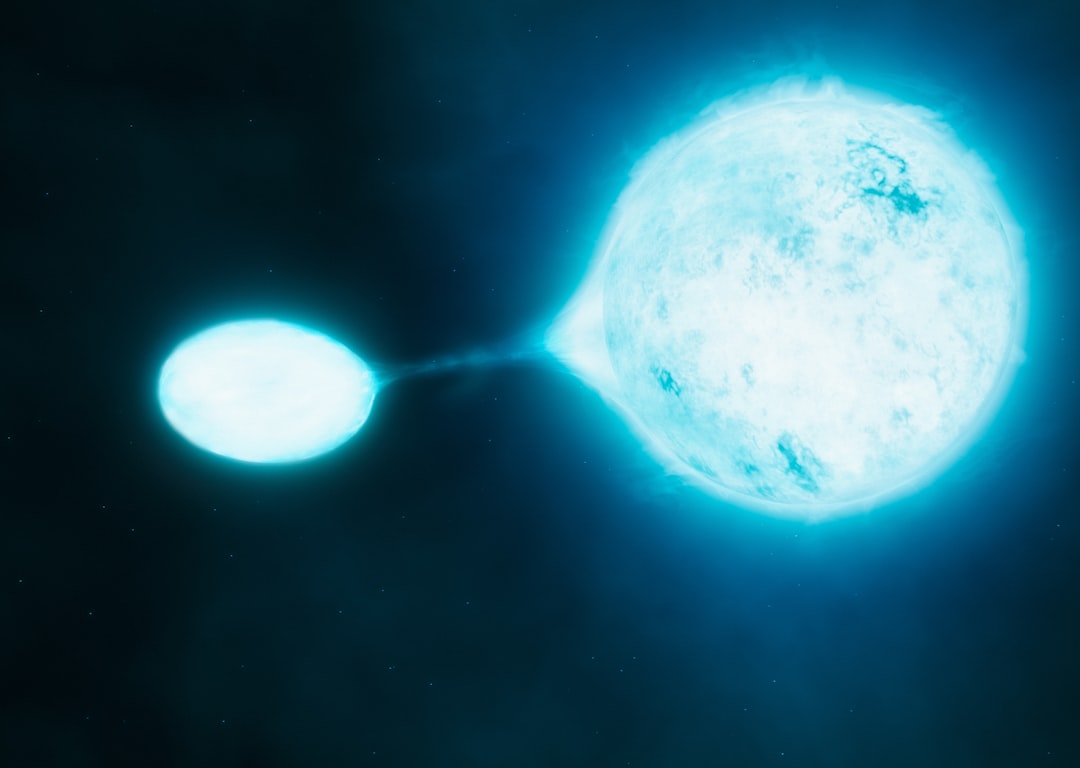
When a main-sequence star like our Sun approaches the end of its hydrogen-burning phase, it undergoes a dramatic metamorphosis that spells doom for nearby planets. As the star's core contracts and heats up, its outer layers expand enormously, transforming the star into a red giant that can swell to hundreds of times its original size. This expansion isn't merely a gentle inflation—it's accompanied by intense radiation, powerful stellar winds, and devastating tidal forces that can literally tear planets apart.
The physics behind this destruction is brutal and unforgiving. As the star loses mass through stellar winds during its asymptotic giant branch phase, its gravitational hold on both itself and its planets weakens. Meanwhile, the intense heat radiating from the bloated stellar surface can vaporize atmospheres and even melt rocky planetary crusts. For planets in close orbits, the star's expanding photosphere can engulf them entirely, incinerating them in stellar plasma reaching temperatures of thousands of degrees Kelvin.
Our own Sun's future evolution provides a sobering example of this process. In approximately 5 billion years, the Sun will begin its red giant phase, expanding to potentially consume Mercury, Venus, and possibly Earth. Mars exists in an uncertain zone where its fate remains unclear, while the gas giants—Jupiter, Saturn, Uranus, and Neptune—stand the best chance of survival due to their greater orbital distances.
Two Pathways to Planetary Survival
Astronomers have identified two distinct survival strategies that allow gas giant planets to endure their star's red giant phase and continue orbiting the remnant white dwarf. These pathways emerged from observations of rare exoplanetary systems where Jupiter-mass planets have been detected around white dwarfs.
The first pathway involves extreme orbital distance. In 2011, researchers discovered an exoplanet with approximately 8 Jupiter masses orbiting a white dwarf at the staggering distance of 2,500 astronomical units (au). At this vast separation—more than 60 times the distance between the Sun and Neptune—the planet remained completely unaffected by its star's violent transformation. It simply watched from a safe distance as its host star swelled, shed its outer layers, and contracted into a white dwarf.
The second pathway is more dramatic and involves planetary migration. In 2020, astronomers identified a Jupiter-sized gas giant on a remarkably tight orbit around a white dwarf. The research team concluded that this planet must have originally orbited at a much greater distance during the star's red giant phase, then migrated inward after the star had settled into its white dwarf state. This inward migration likely occurred due to gravitational interactions with debris disks or other planetary bodies in the system.
"Only a handful of gas giant planets orbiting white dwarfs are known. It remains unclear whether this paucity reflects observational challenges or the consequences of stellar evolution—a fundamental question that has profound implications for understanding planetary system demographics across the galaxy."
Synthesizing a Population: What the Models Reveal
To address the mystery of why so few gas giants are observed around white dwarfs, Mauch-Soriano and colleagues employed sophisticated stellar-evolution codes to synthesize a theoretical population of white dwarfs and their substellar companions. These computational models incorporated critical factors including mass loss rates during stellar evolution, the effects of stellar tides on planetary orbits, and the complex dynamics of the asymptotic giant branch phase.
The results paint a sobering picture of planetary survival rates. According to the research, the predicted fraction of white dwarfs in the Milky Way hosting substellar companions is below approximately 3 percent—a remarkably low survival rate that holds true regardless of uncertainties in initial orbital distributions, tidal prescriptions, or mass-loss mechanisms.
This finding suggests that the scarcity of observed gas giants around white dwarfs isn't primarily due to observational biases or detection limitations. Instead, it reflects the genuine rarity of planetary survival through stellar evolution—a testament to just how destructive the red giant phase truly is for planetary systems.
Characteristics of the Hardy Survivors
The surviving planets in the synthesized population share several distinctive characteristics that determined their fate:
- White Dwarf Mass: Survival rates peak when the white dwarf has a mass between 0.53 and 0.66 solar masses, corresponding to progenitor stars with initial masses between 1 and 3 solar masses according to the Initial-Final Mass Relation (IFMR)
- System Age: Younger systems between 1 and 6 billion years old show gas giant occurrence rates exceeding 3 percent, while older systems have lower survival rates
- Orbital Separation: Surviving companions orbit between 3 and 24 astronomical units from their white dwarf hosts—a "Goldilocks zone" for survival that's neither too close nor too far
- Companion Type: Approximately 95 percent of survivors are gas giants rather than brown dwarfs, reflecting the initial population demographics of substellar objects
- Stellar Metallicity: Progenitor stars with higher metallicities produce more planets initially, leading to higher survival numbers despite the same percentage survival rate
The Critical Role of Tidal Forces
One of the most significant variables affecting planetary survival is the strength of tidal interactions between the evolving star and its planets. The research team examined two different tidal regime models that represent the range of possibilities in current astrophysical understanding.
Under the weak-tides prescription developed by Villaver and Livio in 2009, approximately twice as many companions survive compared to the strong-tides model proposed by Rasio and colleagues in 1996. This dramatic difference highlights how sensitive planetary survival is to the precise nature of star-planet tidal interactions during the red giant phase.
The strong-tides scenario requires planets to orbit initially at somewhat larger semimajor axes and around less massive stars to have any chance of survival. The researchers note that even a modest increase in tidal strength beyond the strong-tides model would completely eliminate the small probability islands where survival remains possible—a stark reminder of how precarious planetary survival truly is.
Observational Challenges and Future Prospects
While synthesizing theoretical populations provides crucial insights, directly detecting and confirming these rare survivors presents formidable observational challenges. The ability to image these planets depends on multiple factors including the white dwarf's age, the total age of the system, and the orbital separation—which translates into specific requirements for contrast ratios and angular resolution that push the limits of current telescope technology.
The research also reveals intriguing variations based on stellar metallicity and the assumed age-metallicity relation for the local galactic neighborhood. Near the Sun, where more precise measurements of stellar populations are possible, the fraction of white dwarfs with companions might reach as high as 8 percent—significantly higher than the galaxy-wide average but still representing a small minority of systems.
Future observational campaigns using next-generation facilities like the Extremely Large Telescope and advanced space-based observatories will be essential for testing these predictions. These instruments will need to achieve unprecedented contrast ratios to directly image gas giants orbiting the faint remnants of dead stars, separating the planet's reflected light from the white dwarf's residual glow.
Implications for Our Solar System's Future
This research carries profound implications for understanding the ultimate fate of our own solar system. When the Sun enters its red giant phase in approximately 5 billion years, the inner rocky planets face certain destruction. However, Jupiter, Saturn, Uranus, and Neptune—orbiting at distances ranging from 5 to 30 au—fall within the survival zone identified by this study.
The gas giants' survival isn't guaranteed, however. Their fate will depend critically on the precise details of the Sun's mass loss during its asymptotic giant branch phase, the strength of tidal interactions during the red giant phase, and potential gravitational perturbations from interactions with expelled stellar material. The Sun's final white dwarf mass, predicted to be around 0.6 solar masses, places it squarely in the range where planetary survival is most likely.
Beyond our solar system, this research helps astronomers understand the long-term evolution of the thousands of exoplanetary systems discovered in recent decades. Systems with Jupiter-like planets orbiting Sun-like stars at distances of several astronomical units represent the most common architecture likely to produce white dwarf planetary systems—though even in these favorable cases, survival remains the exception rather than the rule.
Broader Significance for Galactic Evolution
The low survival rate of planets through stellar evolution has broader implications for understanding the chemical evolution of galaxies and the distribution of heavy elements throughout the cosmos. When planets are destroyed during their star's red giant phase, their constituent materials—including heavy elements forged in stellar cores and planetary interiors—are dispersed into the interstellar medium, where they can be incorporated into future generations of stars and planets.
The rare survivors, meanwhile, represent unique laboratories for studying planetary composition and evolution under extreme conditions. These hardy gas giants have endured radiation levels, temperature extremes, and gravitational perturbations far beyond anything experienced by planets around main-sequence stars, potentially leading to atmospheric chemistry and internal structures unlike anything in our solar system.
As our observational capabilities continue to advance and our theoretical models grow more sophisticated, the population of known gas giants around white dwarfs will undoubtedly grow. Each new discovery will refine our understanding of planetary survival mechanisms and provide crucial tests of stellar evolution models. The story of these cosmic survivors reminds us that even in the violent universe of dying stars and destroyed worlds, resilience and survival remain possible under the right circumstances.