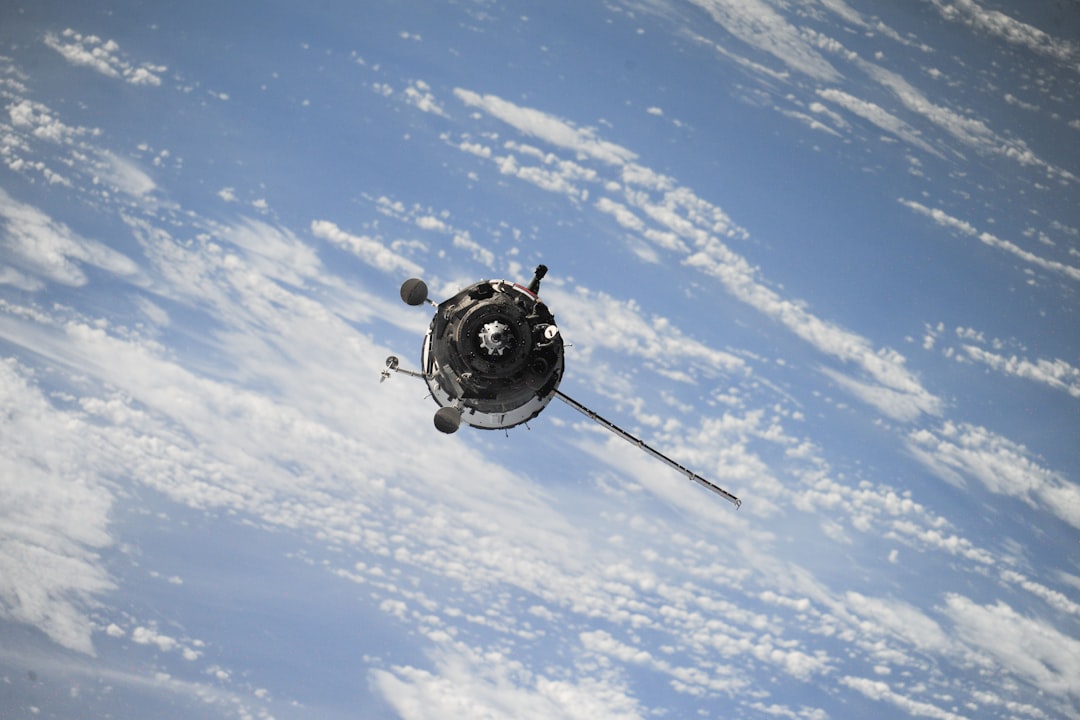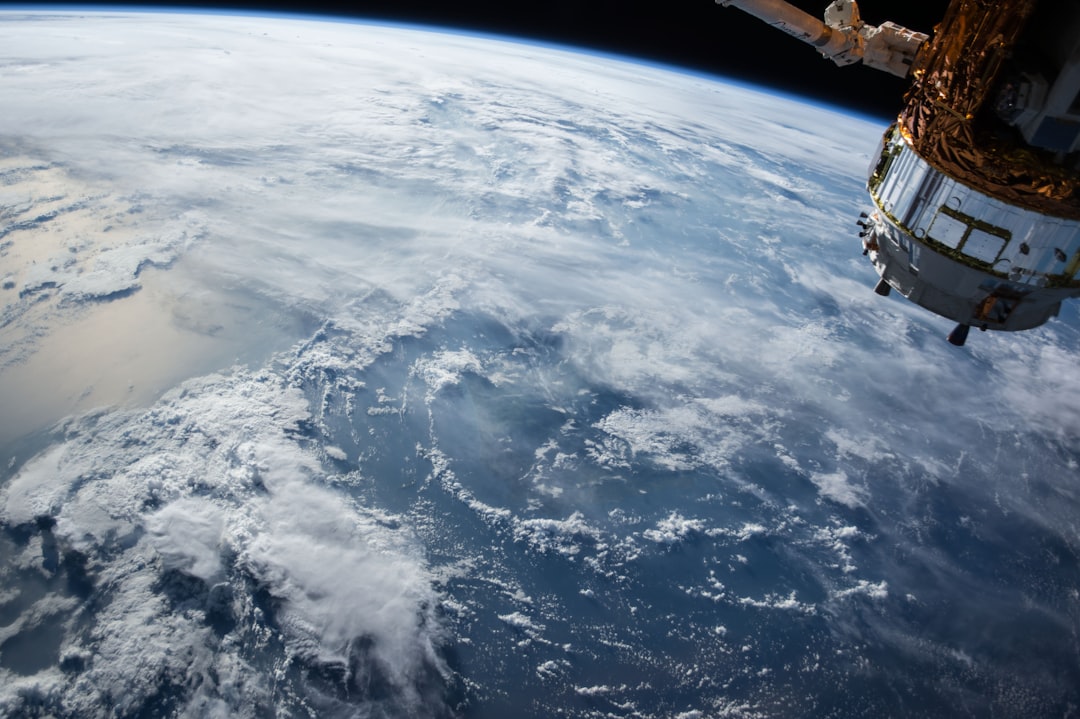
As humanity's presence in low Earth orbit continues to expand at an unprecedented rate, a critical environmental challenge is emerging that few people are aware of: the atmospheric consequences of satellite disposal. A groundbreaking analysis by aerospace engineers Antoinette Ott and Christophe Bonnal from MaiaSpace has revealed that our current approach to ending satellite missions—allowing them to burn up upon reentry—may be creating unintended atmospheric damage comparable to the ozone depletion crisis of the late 20th century. This research challenges the widely accepted Design for Demise (D4D) philosophy and raises urgent questions about the sustainability of mega-constellation satellite networks.
The timing of this research is particularly critical. With companies like SpaceX, Amazon, and OneWeb racing to deploy tens of thousands of satellites into orbit as part of global internet coverage networks, the cumulative atmospheric impact of satellite reentry is poised to increase exponentially. According to data from the European Space Agency's Space Debris Office, the number of active satellites has more than doubled in just the past five years, and projections suggest this trend will accelerate dramatically through the 2030s.
What makes this issue particularly insidious is that the damage occurs invisibly, high in the stratosphere where most people never look. Yet the chemical reactions triggered by burning satellites could fundamentally alter Earth's protective atmospheric layers, with consequences that may take decades to fully manifest.
The Hidden Chemistry of Satellite Destruction
When a satellite plunges back into Earth's atmosphere at speeds exceeding 25,000 kilometers per hour, it doesn't simply disappear in a harmless flash of light. Instead, it triggers a complex series of chemical reactions that release significant quantities of ozone-depleting compounds into the upper atmosphere. The two primary culprits identified by Ott and Bonnal are nitrogen oxides (NOx) and aluminum oxide particles, known as alumina.
The formation of nitrogen oxides during reentry occurs through what atmospheric chemists call the Zeldovich mechanism. As the satellite creates intense shockwaves during its hypersonic descent, these waves generate temperatures exceeding 2,000 degrees Celsius in the surrounding air. At these extreme temperatures, the normally stable nitrogen and oxygen molecules in the atmosphere are literally "cooked" together, forcing them to combine into various nitrogen oxide compounds. Research published in the Journal of Geophysical Research: Atmospheres indicates that approximately 40% of a spacecraft's kinetic energy is converted into NOx production during this violent process.
"The irony is striking—we've spent decades implementing catalytic converters on vehicles to reduce NOx emissions at ground level, yet we're now creating massive quantities of the same pollutants directly in the stratosphere where they can do the most damage to the ozone layer," explains Dr. Martin Ross, an atmospheric scientist who has studied the environmental impacts of space activities.
Nitrogen oxides are particularly destructive to ozone because they act as catalytic agents, meaning a single NOx molecule can destroy thousands of ozone molecules before being neutralized. This catalytic destruction was one of the key mechanisms behind the infamous ozone hole over Antarctica, which was primarily caused by chlorofluorocarbons (CFCs) released from refrigerants and aerosol cans.
The Aluminum Problem: Trading One Crisis for Another
While nitrogen oxides present a direct threat to ozone, the aluminum oxide particles released during satellite burnup create a more complex environmental challenge. Aerospace engineers have long favored aluminum alloys for spacecraft construction due to their excellent strength-to-weight ratio and relatively low melting point of around 660 degrees Celsius. This low melting point was actually considered an advantage under the D4D philosophy—it meant satellites would more completely disintegrate during reentry, reducing the risk of debris reaching the ground.
However, when aluminum burns in the oxygen-rich environment of the upper atmosphere, it produces fine particles of aluminum oxide (Al₂O₃) that accumulate in the stratosphere at altitudes around 20 kilometers. Unlike gases that disperse relatively quickly, these solid particles can persist in the stratosphere for years, creating multiple environmental problems simultaneously.
Research data from NOAA's SABRE (Sounding of the Atmosphere using Broadband Emission Radiometry) mission has detected a concerning trend: approximately 10% of sulfuric acid aerosol particles in the stratosphere now contain aluminum contamination, a proportion that has increased measurably over the past decade. Climate models project that alumina concentrations could increase by as much as 650% over current levels by 2050 if satellite deployment continues at projected rates without changes to disposal methods.
The Dual Climate Impact of Stratospheric Alumina
The presence of aluminum oxide particles in the stratosphere creates what scientists call a bifurcated climate forcing effect. In the lower atmosphere, these reflective particles scatter incoming solar radiation back into space, producing a cooling effect. However, they simultaneously absorb infrared radiation in the upper atmosphere, causing warming at stratospheric levels. This differential heating disrupts the normal temperature gradient of the atmosphere, potentially affecting everything from jet stream patterns to the formation of polar stratospheric clouds.
Perhaps even more concerning is alumina's role as a heterogeneous reaction surface for chlorine activation. While international agreements like the Montreal Protocol have successfully reduced atmospheric chlorine levels from CFCs, residual chlorine compounds still exist in the stratosphere. Aluminum oxide particles provide an ideal surface for chemical reactions that convert these relatively benign chlorine reservoirs into active, ozone-destroying forms—essentially reactivating a threat we thought we had under control.
Design for Non-Demise: A Controversial Alternative
In response to these atmospheric concerns, Ott and Bonnal propose a paradigm shift toward Design for Non-Demise (D4ND), where satellites are engineered to remain largely intact during reentry and be directed to controlled impact zones. This approach would dramatically reduce the chemical pollution released into the upper atmosphere, but it introduces its own set of challenges and risks.
The most obvious concern with D4ND is the increased risk of ground casualties or property damage. Current international standards, including ISO 27875, mandate that the probability of a deorbiting space object causing a casualty must not exceed 1 in 10,000. While this might seem like a comfortable safety margin, the mathematics become troubling when applied to mega-constellations.
Consider SpaceX's Starlink network alone, which plans to eventually operate more than 42,000 satellites with operational lifespans of approximately five years. This means roughly 8,400 satellites would need to deorbit annually at full deployment. Even with a 1 in 10,000 casualty risk per satellite, the cumulative annual risk approaches near-certainty levels—a statistical reality that has not escaped the attention of safety regulators at agencies like the Federal Aviation Administration.
The SpaceX Debris Controversy
Recent incidents have already demonstrated that current D4D implementations are imperfect. Multiple confirmed cases of Starlink satellite debris surviving to ground level have been documented in the United States, Australia, and Canada. In one notable 2024 incident, a section of spacecraft hardware weighing several kilograms crashed through the roof of a home in Florida, narrowly missing the occupants. These incidents have sparked intense regulatory discussions about whether the theoretical models used to predict satellite disintegration match real-world outcomes.
"We're essentially conducting a large-scale atmospheric experiment without fully understanding the consequences. The precautionary principle would suggest we should pause and reassess our approach before deploying tens of thousands more satellites," notes Dr. Hugh Lewis, an orbital debris expert at the University of Southampton.
Controlled Reentry: The High-Cost Solution
A middle-ground approach involves controlled reentry to designated ocean impact zones, such as the South Pacific Ocean Uninhabited Area (SPOUA), colloquially known as the "spacecraft cemetery." This region, centered approximately 2,700 kilometers southeast of New Zealand, has been the final resting place for over 260 spacecraft, including Russia's Mir space station and numerous cargo vehicles servicing the International Space Station.
However, controlled reentry comes with significant design and operational penalties. Satellites must be engineered with more robust structures to survive the initial heating phase of reentry while maintaining control authority. They require additional propellant reserves—often 10-15% more than minimum deorbit requirements—to perform the precise targeting maneuvers needed to hit specific ocean zones. Enhanced thermal protection systems add further mass, and more sophisticated guidance and control systems increase both weight and cost.
For a typical 260-kilogram Starlink satellite, these modifications could add 30-50 kilograms of additional mass. At current launch costs of approximately $3,000 per kilogram to low Earth orbit, this translates to an extra $90,000 to $150,000 per satellite. Multiplied across a 42,000-satellite constellation, the total additional cost could exceed $6 billion—a substantial but perhaps necessary investment for environmental protection.
Emerging Solutions and Future Directions
In an exclusive interview, Antoinette Ott emphasized that the satellite industry stands at a critical decision point. "There is no single 'right' answer to this problem," she explained. "What we need is a comprehensive risk assessment framework that weighs atmospheric environmental impacts against ground casualty risks, and incorporates these considerations into the earliest stages of satellite design."
Several innovative approaches are currently under investigation:
- Design for Containment (D4C): A hybrid philosophy that uses specialized containment structures to prevent the most harmful materials from vaporizing during reentry while still allowing controlled breakup of less problematic components.
- Alternative Materials: Research into spacecraft construction materials that produce less harmful byproducts during atmospheric reentry. Composite materials and magnesium alloys are being evaluated as potential aluminum replacements.
- Active Debris Removal: Technologies being developed by companies like ESA's ClearSpace initiative could capture defunct satellites and return them to Earth in a controlled manner, though the economics of such services remain challenging.
- Extended Operational Orbits: Placing satellites in higher orbits where natural orbital decay takes centuries rather than years, effectively postponing the reentry problem for future generations—though this approach has obvious ethical limitations.
- On-Orbit Servicing: Developing the capability to refuel, repair, and upgrade satellites in orbit could dramatically extend their operational lives, reducing the frequency of replacements and reentries.
The Path Forward: Balancing Innovation and Environmental Stewardship
The satellite reentry dilemma represents a microcosm of broader challenges facing humanity's expansion into space. As we increasingly depend on space-based infrastructure for communications, navigation, Earth observation, and scientific research, we must grapple with the environmental costs of maintaining this orbital ecosystem.
International cooperation will be essential. Organizations like the United Nations Office for Outer Space Affairs are working to develop updated guidelines for sustainable space activities, but progress has been slow due to the competing interests of spacefaring nations and commercial operators. The lack of binding international agreements means that environmental considerations often take a back seat to economic and strategic priorities.
What's needed is a fundamental shift in how we conceptualize satellite operations—moving from a "deploy and dispose" mentality to a more circular economy approach that considers the full lifecycle environmental impact of space systems. This transition will require:
- Enhanced Modeling Capabilities: More sophisticated atmospheric chemistry models that can accurately predict the cumulative impacts of satellite reentries under various scenarios.
- Transparent Reporting: Mandatory disclosure of satellite composition, mass, and planned disposal methods to enable better environmental impact assessments.
- Economic Incentives: Regulatory frameworks that reward environmentally responsible satellite design and penalize approaches that externalize atmospheric costs.
- Research Investment: Increased funding for studies on atmospheric impacts of space activities and development of mitigation technologies.
The irony of the current situation is profound: satellites enable crucial climate monitoring and environmental research, yet their disposal may be contributing to atmospheric changes that could take decades to reverse. As Christophe Bonnal notes in the research paper, "We cannot allow the tools we use to study and protect our planet to become instruments of its degradation."
With mega-constellations continuing their rapid expansion—Amazon's Project Kuiper alone plans to launch over 3,200 satellites in the coming years—the window for implementing more sustainable disposal practices is narrowing. The decisions made by satellite operators and regulators in the next few years will determine whether Earth's orbital infrastructure becomes a model of sustainable engineering or another cautionary tale of unintended environmental consequences.
The challenge is clear: we must find ways to maintain and expand our beneficial uses of space while minimizing harm to the atmospheric systems that make life on Earth possible. As we've learned from past environmental crises, prevention is far more effective and economical than remediation. The satellite industry has an opportunity—perhaps an obligation—to get this right before the problem becomes irreversible.