Saturn's South Pole Features Newly Formed Atmospheric Decagon
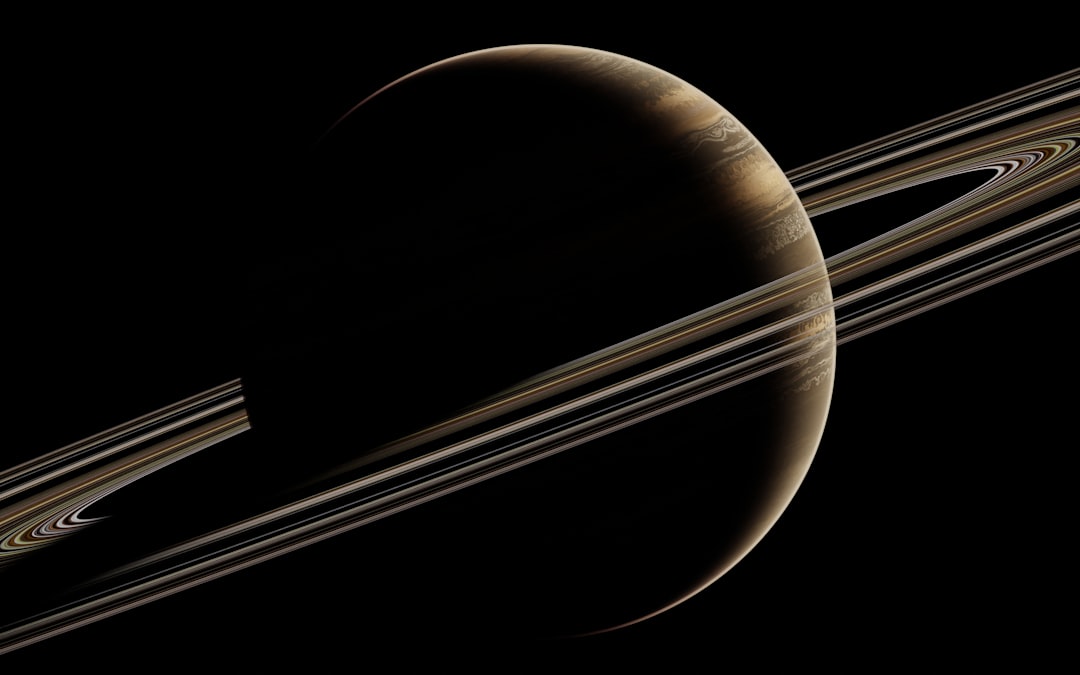
Saturn is arguably the most recognizable planetary object in the entire solar system, its sweeping ring system an icon of elementary school science classrooms and space exploration posters alike. Yet while those magnificent rings — composed of billions of ice particles and rocky debris spanning nearly 282,000 kilometers — capture the public's imagination, the gas giant harbors a wealth of other extraordinary features that rarely receive the same level of attention. Among the most scientifically compelling are Saturn's polar atmospheric structures, dynamic and geometrically precise formations that have puzzled and fascinated planetary scientists for decades.
Now, an international team of researchers has announced what may be one of the most striking atmospheric discoveries of the decade: a newly formed, decagon-shaped (10-sided) atmospheric structure at Saturn's south pole. The findings, published in a recent study in Science Advances, represent a landmark moment in our understanding of giant planet meteorology and raise profound questions about the forces shaping planetary atmospheres across the solar system.
The Long History of Saturn's Polar Mysteries
To fully appreciate the significance of this discovery, it helps to understand what was already known about Saturn's poles. The planet's north polar hexagon — a persistent, six-sided jet stream structure spanning roughly 32,000 kilometers across — was first detected by NASA's Voyager spacecraft during its flybys in 1980 and 1981. In the four decades since, this hexagonal vortex has become one of the most studied atmospheric phenomena in the solar system. Its six nearly equal sides and remarkably stable geometry have made it a natural laboratory for understanding fluid dynamics on a planetary scale.
Saturn's south pole, by contrast, was long known primarily for a colossal hurricane-like polar vortex — a massive cyclone with a well-defined eye and towering eyewall clouds — but without any comparable polygonal structure. Crucially, NASA's Cassini spacecraft, which conducted an extraordinarily detailed 13-year orbital survey of Saturn and its moons from 2004 until its deliberate atmospheric plunge in 2017, detected no geometric polygon whatsoever at the southern pole during its entire mission. This absence was itself scientifically significant, suggesting that any such structure, if it existed, had either not yet formed or was too faint to detect at the time.
"We've never seen anything quite like this in Saturn's southern hemisphere. The northern hexagon has been there every time we've looked for more than 40 years. This feature is different — it appears to be strengthening, giving us the rare opportunity to watch a giant atmospheric pattern develop." — Dr. Amy Simon, Senior Scientist for Planetary Atmospheres Research, NASA Goddard Space Flight Center
How the Discovery Was Made
The new research draws on observations gathered between 2023 and 2025 using two complementary observational platforms. The first and primary source of data was NASA's Hubble Space Telescope (HST), whose images were collected as part of the Hubble Outer Planet Atmospheres Legacy (OPAL) program. Founded in 2014 and led by Dr. Amy Simon of NASA's Goddard Space Flight Center, OPAL systematically captures annual wide-field images of the solar system's four outer planets — Jupiter, Saturn, Uranus, and Neptune — with the explicit goal of building a long-term record of their atmospheric compositions, behaviors, and evolution. This longitudinal approach makes OPAL an invaluable resource for detecting subtle changes that might be missed in one-off observations.
The second observational platform was the Calar Alto Observatory, situated in the Sierra de los Filabres mountains of southeastern Spain. As the largest astronomical observatory on the European continent, Calar Alto provided critical ground-based corroboration that strengthened the confidence of the research team in their findings. The combination of space-based Hubble imagery and ground-based confirmation exemplifies the collaborative, multi-instrument approach increasingly central to modern planetary science.
Anatomy of the Southern Decagon
The newly identified structure is a decagonal (10-sided) atmospheric pattern situated within Saturn's southern polar region, making it both the first polygon ever detected at Saturn's south pole and the first 10-sided polar atmospheric structure observed on any planet in our solar system. Like its northern counterpart, the decagon is fundamentally a product of Saturn's powerful polar jet streams — high-velocity bands of wind that encircle the planet at high latitudes. However, the similarities between the two structures largely end there.
- Northern Hexagon Jet Stream Speed: Approximately 320 to 354 km/h (200 to 220 mph)
- Southern Decagon Jet Stream Speed: Approximately 400 to 420 km/h (roughly 250 mph)
- Northern Hexagon Position: Largely fixed and stationary over time
- Southern Decagon Position: Actively migrating in an eastward direction
- Southern Decagon Corner Oscillation Period: Approximately every 32 days
- Detection by Cassini (2004–2017): No equivalent structure observed at the south pole
- Current status: Appears to be actively strengthening
The decagon's faster jet stream speed relative to the northern hexagon is itself a notable finding. In fluid dynamics, the number of sides in a polar polygon is closely related to the velocity of the jet stream relative to background atmospheric flows — a relationship first explored in laboratory experiments using rotating fluid tanks and later validated through computational modeling. The higher wind speeds at the south pole may therefore be directly responsible for producing a 10-sided structure rather than a 6-sided one, though researchers are still working to confirm this interpretation through detailed atmospheric modeling.
A Wandering Wave, Not a Fixed Wall
Perhaps the most intriguing dynamical difference between the two polar structures lies in their behavior over time. While the northern hexagon acts as a remarkably stable, quasi-stationary wave anchored at a fixed longitude, the southern decagon behaves in a fundamentally different manner. The researchers found that the decagon is undergoing eastward migration, drifting gradually around the planet rather than remaining anchored in place.
The mechanism driving this migration appears to be tied to the oscillatory behavior of the decagon's 10 corners, each of which swings back and forth — oscillates — on an approximate 32-day cycle. This rhythmic swaying causes the entire structure to propagate eastward over time. As a result, the researchers describe the southern decagon as behaving more like a meandering Rossby wave — a large-scale atmospheric wave driven by the planet's rotation — that penetrates multiple atmospheric layers simultaneously, rather than a rigid, surface-anchored feature like the northern hexagon.
Rossby waves are well known in Earth's own atmosphere, where they manifest as the large, undulating meanders of the polar jet stream that play a crucial role in shaping weather patterns at mid-latitudes. Their identification in Saturn's southern polar atmosphere suggests that similar wave-driven dynamics may be far more universal across planetary atmospheres than previously appreciated, offering a powerful bridge between terrestrial meteorology and giant planet science.
Broader Implications for Planetary Science
The discovery of Saturn's southern decagon arrives at a particularly exciting moment in planetary atmospheric research. Scientists have long grappled with a fundamental question: why do the polar regions of giant planets organize themselves into such precise geometric shapes, rather than simply forming symmetric circular vortices? Saturn's contrasting northern hexagon and southern decagon, existing simultaneously on the same planet yet differing in shape, speed, and behavior, provide an unprecedented natural experiment for testing competing theoretical models.
The implications extend well beyond Saturn itself. Jupiter's polar regions, famously imaged in extraordinary detail by NASA's Juno spacecraft, host clusters of massive cyclones arranged in precise geometric configurations — pentagons, hexagons, and octagons — around a central polar cyclone at both the north and south poles. The mechanisms governing how these Jovian cyclone clusters maintain their rigid geometric arrangements despite the chaotic turbulence of Jupiter's atmosphere remain poorly understood. Saturn's newly discovered decagon, with its active formation and dynamic behavior, may offer critical new clues.
Specifically, the researchers suggest that computer atmospheric models calibrated against Saturn's southern decagon could help disentangle the roles of competing factors — including differential wind shear, solar radiation forcing, and internal heat flux — in determining not only how many sides a polar polygon develops, but also whether it remains stationary or migrates over time. Comparative planetology of this kind, using one planet's atmospheric behavior to illuminate another's, is increasingly recognized as one of the most powerful tools available to planetary scientists.
The Role of Saturn's Seasonal Cycle
One factor that may be particularly relevant to the decagon's recent emergence is Saturn's long seasonal cycle. With an orbital period of approximately 29.5 Earth years, Saturn experiences each of its seasons for roughly 7 Earth years at a time. During the Cassini mission's operational period (2004–2017), Saturn's southern hemisphere was transitioning from summer into autumn and then toward winter, with diminishing solar illumination reaching the south pole. The researchers note that the decagon appears to have formed — or at least become detectable — only recently, suggesting that Saturn's changing solar radiation environment as it progresses through its current orbital position may play a key role in triggering or sustaining the new atmospheric structure.
This seasonal dimension adds yet another layer of complexity and intrigue to an already remarkable discovery, and underscores the importance of long-term, continuous monitoring programs like Hubble's OPAL program that can capture atmospheric changes unfolding over timescales of years to decades.
Looking Ahead
The coming years promise to be exceptionally fruitful for Saturn atmospheric science. As the southern decagon continues to evolve — and possibly strengthen further — researchers will be watching closely for signs of how it interacts with the polar vortex already known to exist at Saturn's south pole, and whether any additional geometric structures emerge at lower latitudes. Continued observations with Hubble, combined with data from ground-based facilities and the potential for future dedicated Saturn missions, will be essential to building a complete picture of this extraordinary phenomenon.
Ultimately, the discovery of Saturn's southern decagon is a powerful reminder that even the most studied objects in our solar system still hold profound surprises. In a universe of extraordinary complexity, a 10-sided storm on a ringed world 1.4 billion kilometers away invites us to look deeper, ask harder questions, and marvel at the elegant physics woven into the fabric of planetary atmospheres everywhere.