In a groundbreaking observation that promises to reshape our understanding of interstellar visitors, the Subaru Telescope has unveiled remarkable new insights into the internal composition of 3I/ATLAS, the third confirmed interstellar object to traverse our Solar System. On January 7th, 2026, as this cosmic wanderer completed its closest solar approach, astronomers captured unprecedented data that reveals a surprising chemical signature—one that differs dramatically from what outer-layer observations had previously suggested.
The discovery centers on a critical measurement: the carbon dioxide-to-water ratio within the comet's coma, the glowing envelope of gas and dust surrounding its nucleus. What makes this finding particularly intriguing is that the ratio detected by Subaru's ground-based observations was significantly lower than measurements obtained by space-based telescopes during the same observational window. This discrepancy isn't an error—it's a scientific treasure trove, offering compelling evidence that 3I/ATLAS possesses a layered structure with distinct chemical compositions at different depths, and that its chemistry is actively evolving as it interacts with our Sun's radiation.
Published in The Astrophysical Journal, this research represents a milestone in our ability to study objects originating from beyond our cosmic neighborhood. Led by Yoshiharu Shinnaka from the Koyama Space Science Institute at Kyoto Sangyo University, the international team has demonstrated that decades of expertise in observing Solar System comets can be successfully applied to these rare interstellar visitors, opening new pathways for comparative planetary science across stellar systems.
The Remarkable Journey of 3I/ATLAS
Comet 3I/ATLAS (C/2025 N1) first announced its presence to humanity on June 1st, 2025, when the Asteroid Terrestrial-impact Last Alert System (ATLAS) detected its distinctive motion against the stellar background. Unlike the enigmatic 1I/'Oumuamua—which caught astronomers by surprise as it was already departing the Solar System—scientists had a precious four-month advance warning before 3I/ATLAS reached perihelion, its closest point to the Sun.
This extended observation window proved invaluable. Where 2I/Borisov, discovered in 2019, provided our first confirmed interstellar comet for study, 3I/ATLAS offered something even more spectacular: it was both larger and significantly brighter than its predecessor. This increased luminosity translated directly into enhanced scientific returns, allowing astronomers worldwide to deploy an unprecedented array of instruments—from ground-based observatories to space telescopes—in a coordinated observation campaign.
The timing of the Subaru observations was particularly strategic. As 3I/ATLAS swung around the Sun, solar heating intensified outgassing from the comet's nucleus, liberating volatile materials that had been locked within its icy matrix for billions of years. This outgassing created an expanding coma whose spectral signature could be analyzed to determine the chemical composition of material from the comet's interior—material that had been shielded from cosmic radiation throughout its long journey through interstellar space.
Peering Beneath the Surface: Advanced Spectroscopic Analysis
The Subaru team's methodology represents a sophisticated application of spectroscopic techniques refined through decades of cometary research. When sunlight interacts with molecules in a comet's coma, these molecules absorb and re-emit light at characteristic wavelengths, creating a unique spectral fingerprint. By analyzing these fingerprints, astronomers can identify specific chemical compounds and determine their relative abundances.
What distinguishes this research is its focus on interior composition rather than surface chemistry. Previous observations of interstellar objects have primarily characterized their outer layers—regions that have been bombarded by cosmic rays and interstellar radiation for potentially billions of years. This prolonged exposure can fundamentally alter surface chemistry through a process called space weathering, creating a radiation-processed mantle that may bear little resemblance to the pristine material within.
The intense outgassing triggered by solar heating provided a rare opportunity to sample material from deeper within the nucleus. As volatiles sublimated and escaped, they carried with them a chemical record of the comet's interior. The Subaru observations captured this material in the coma, where it could be analyzed before further photochemical processing occurred.
The Carbon Dioxide Puzzle
The team's most striking finding concerns the CO₂-to-H₂O ratio—a fundamental parameter that reveals much about a comet's formation environment and thermal history. Space-based telescopes observing 3I/ATLAS during the same period detected relatively high carbon dioxide abundances, suggesting a CO₂-rich composition. However, Subaru's ground-based spectroscopy told a different story, revealing a significantly lower ratio of carbon dioxide to water.
This apparent contradiction is actually a scientific goldmine. The most plausible explanation is that 3I/ATLAS possesses a stratified internal structure, with different chemical compositions at various depths. The outer layers, having experienced prolonged cosmic irradiation, may have accumulated or retained different volatile species compared to the pristine interior. Alternatively, the coma chemistry itself may be evolving rapidly as outgassed material undergoes photodissociation and other chemical transformations in sunlight.
"With the full-scale operation of survey telescopes in the coming years, many more interstellar objects are expected to be discovered. By applying the observational and analytical techniques we have developed through studies of Solar System comets to interstellar objects, we can now directly compare comets hailing from both inside and outside the Solar System and explore differences in their composition and evolution."
Windows into Alien Planetary Systems
The scientific significance of studying interstellar objects extends far beyond mere curiosity about cosmic visitors. Comets and asteroids are essentially planetary building blocks—leftover material from the epoch of planet formation that has remained largely unchanged for billions of years. By analyzing their composition, scientists can reconstruct the conditions that prevailed in protoplanetary disks, the swirling clouds of gas and dust from which planets coalesce.
When we study comets from our own Solar System, we learn about the conditions in our protoplanetary disk 4.6 billion years ago. But interstellar objects like 3I/ATLAS offer something far more extraordinary: they provide direct samples from alien planetary systems, allowing us to compare planet-formation processes across different stellar environments without the need for interstellar spacecraft missions.
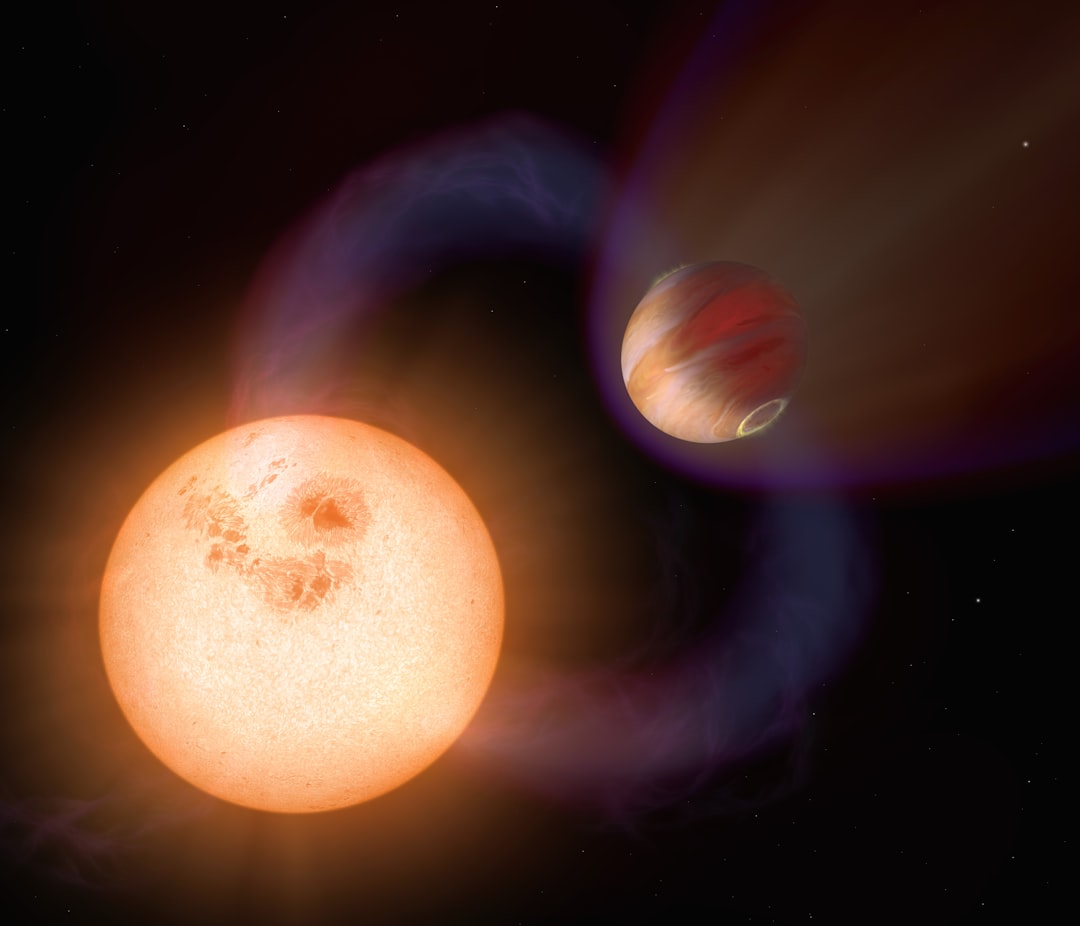
The diversity of exoplanetary systems discovered by missions like Kepler and TESS has revealed that planetary architectures vary widely across the galaxy. Some systems contain hot Jupiters—massive gas giants orbiting perilously close to their stars. Others feature super-Earths or mini-Neptunes with no analogs in our Solar System. The chemical compositions of interstellar comets can help us understand how these diverse systems formed and whether the processes that built our Solar System are universal or exceptional.
Implications for Future Interstellar Object Research
The methodological advances demonstrated by Shinnaka's team arrive at a pivotal moment in astronomy. Next-generation survey telescopes, including the Vera C. Rubin Observatory with its Legacy Survey of Space and Time (LSST), are poised to revolutionize interstellar object detection. Current estimates suggest that LSST alone could discover one interstellar object per year—potentially more if these visitors are more common than current models predict.
Each new detection will present a limited observational window. Unlike Solar System objects that remain accessible for repeated observations, interstellar visitors pass through quickly, offering only a brief opportunity for study. The ability to rapidly deploy proven analytical techniques—like those validated on 3I/ATLAS—will be crucial for maximizing scientific returns from these fleeting encounters.
Key Research Priorities for Future Observations
- Chemical Diversity: Determining whether interstellar comets exhibit greater compositional variation than Solar System comets, which would indicate diverse formation conditions across stellar systems
- Structural Characterization: Using multi-wavelength observations to probe internal layering and differentiation within interstellar objects, revealing their thermal and collisional histories
- Isotopic Ratios: Measuring deuterium-to-hydrogen and other isotopic ratios that serve as thermometers for formation temperatures in alien protoplanetary disks
- Organic Complexity: Searching for complex organic molecules that might indicate the potential for prebiotic chemistry in other stellar systems
- Dynamical Origins: Combining compositional data with orbital analysis to trace interstellar objects back to their parent systems and understand ejection mechanisms
The Broader Context: Comparative Planetology on a Galactic Scale
The study of 3I/ATLAS exemplifies how modern astronomy is transitioning toward comparative planetology on a galactic scale. For decades, planetary scientists have learned about Earth by comparing it to Mars, Venus, and other Solar System bodies. Now, we're beginning to place our entire planetary system in context by comparing it to the thousands of exoplanetary systems discovered in recent years.
Interstellar objects provide crucial ground truth for this comparison. While exoplanet observations reveal masses, orbits, and atmospheric compositions, they cannot directly sample the solid materials from which planets formed. Interstellar comets and asteroids fill this gap, delivering actual physical samples from alien systems to our astronomical instruments.
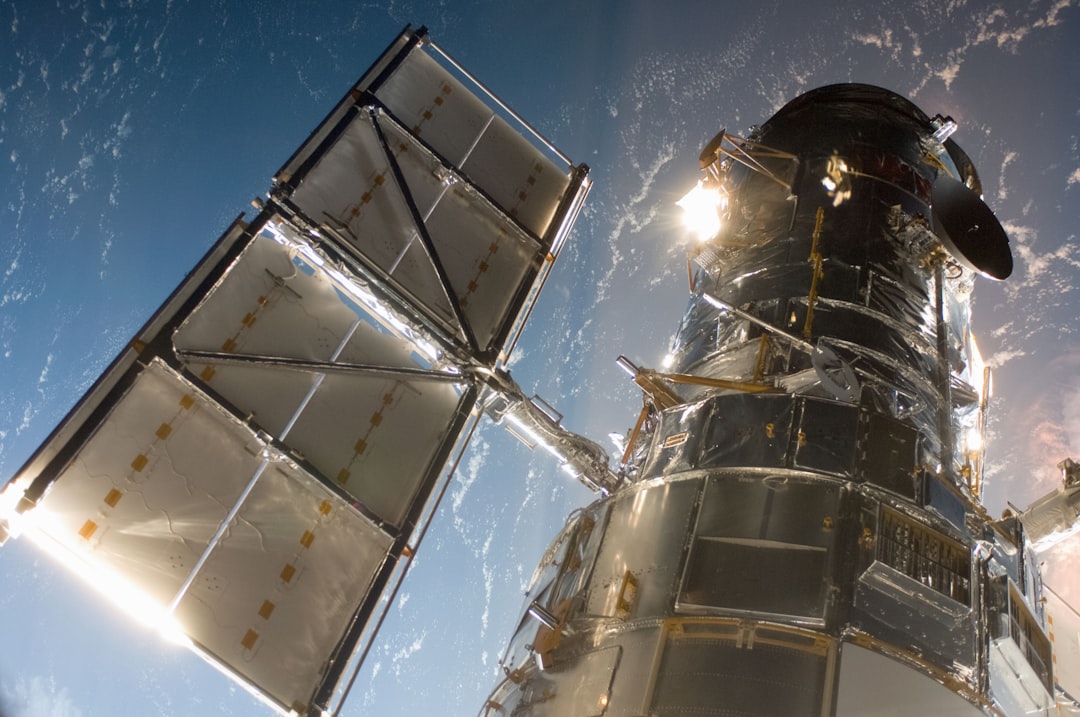
The European Southern Observatory's Very Large Telescope and other major facilities have already demonstrated their capability to obtain detailed spectra of interstellar objects. As these facilities are joined by next-generation instruments like the Extremely Large Telescope, our ability to characterize interstellar visitors will increase dramatically, potentially allowing us to detect even faint organic signatures or unusual mineral compositions that would reveal exotic formation conditions.
Looking Ahead: A New Era of Interstellar Science
The Subaru observations of 3I/ATLAS represent more than a single successful measurement—they demonstrate a mature observational framework ready to capitalize on the coming wave of interstellar object discoveries. As Shinnaka and his colleagues note, the techniques developed through decades of Solar System comet research are directly applicable to these exotic visitors, creating a powerful synergy between traditional planetary science and the emerging field of interstellar object studies.
The discovery that 3I/ATLAS's coma chemistry appears to evolve during its solar passage also highlights the dynamic nature of these objects. Rather than being static time capsules, interstellar comets actively respond to their changing environment, with surface and interior materials mixing and reacting as solar heating drives outgassing. Understanding these processes will be essential for correctly interpreting observations and extracting accurate information about formation conditions in alien systems.
Perhaps most exciting is the prospect that 3I/ATLAS is merely the beginning. With improved detection capabilities and validated analysis methods, the next decade could see humanity studying dozens of interstellar objects, building a statistical sample that reveals patterns in galactic planet formation. Each new visitor will add another piece to the puzzle, gradually revealing whether our Solar System's composition and architecture are typical or unusual in the broader galactic context.
As we stand on the threshold of this new era, the work of Shinnaka's team reminds us that scientific progress often comes from combining new opportunities with established expertise. The interstellar objects now within our reach represent messengers from distant stellar systems, and we are finally developing the tools and techniques to read the messages they carry about the diversity of planetary systems throughout our galaxy.