The Flavor of Neutrinos Could Determine How a Large Star Dies
Among the most dramatic events in the universe, the death of a massive star stands in a class of its own. In a matter of seconds, a stellar core containing more mass than our entire Sun can collapse, triggering a cataclysmic explosion that briefly outshines an entire galaxy. Yet not every giant star goes out with such a spectacular bang. Some simply vanish — collapsing silently into black holes with barely a whisper of light to mark their passing. A compelling new study suggests that the key to understanding this cosmic fork in the road may lie in one of the most elusive and ghostly particles known to physics: the neutrino, and specifically, its ability to change flavor.
When Giants Fall: The Core-Collapse Supernova
A core-collapse supernova represents the terminal chapter in the life story of a massive star — typically one exceeding eight times the mass of our Sun. For millions to tens of millions of years, such a star sustains itself through a delicate balance: the outward pressure generated by nuclear fusion in its core pushing back against the relentless inward pull of gravity. Stars like these burn through hydrogen first, then helium, carbon, neon, oxygen, and silicon in successive shells, each fusion stage producing progressively less energy while demanding progressively higher temperatures and pressures.
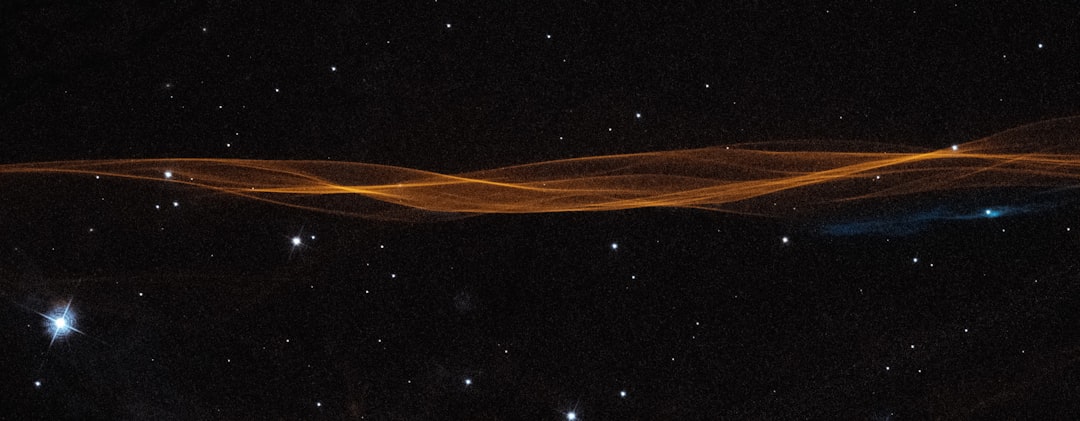
The process accelerates catastrophically near the end. When the star's core is dominated by iron — the most tightly bound of all atomic nuclei — fusion can no longer release energy. In fact, fusing iron actually consumes energy rather than producing it. With no outward pressure to resist gravity, the iron core collapses in a fraction of a second, reaching nuclear densities. The inner core rebounds in what is known as a core bounce, sending a powerful shockwave outward through the infalling stellar envelope. When this shock successfully propagates through the star's outer layers, it rips the star apart in a supernova explosion visible across cosmic distances.
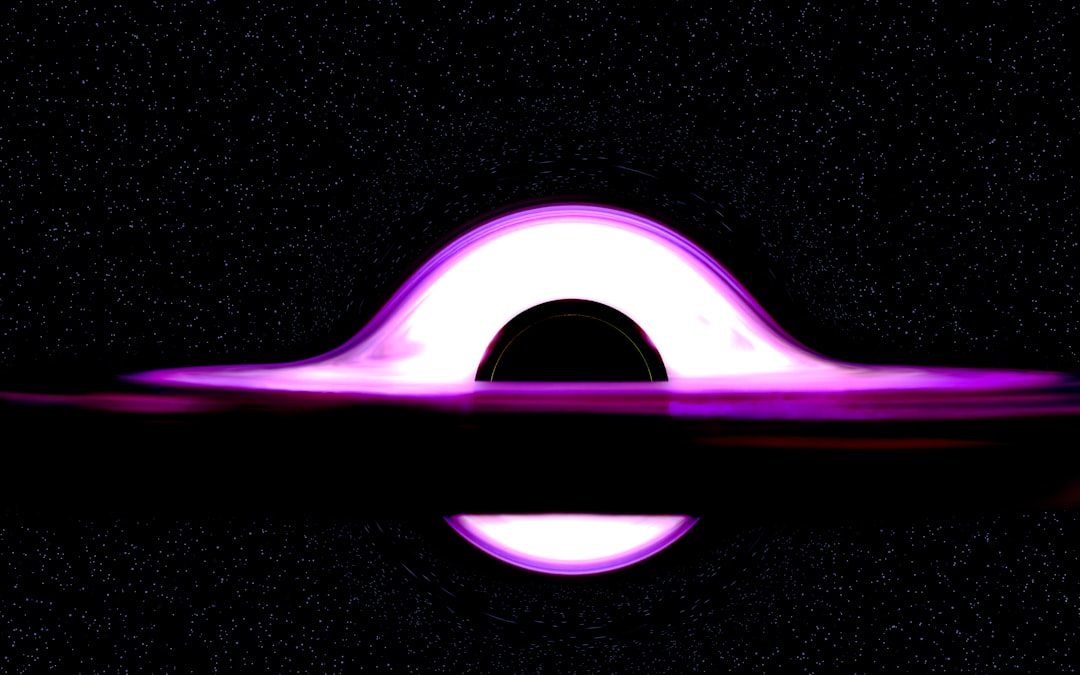
But this triumphant explosion is not a guaranteed outcome. For a subset of massive stars, the collapsing core is so dense and the conditions so extreme that the shock wave stalls and the entire stellar mass plunges inward, forming a black hole in what astronomers call a failed supernova — or more technically, a failed core-collapse supernova (FCSN). Instead of a blaze of glory, these stars simply disappear, leaving behind little more than an absence where once a star existed. Astronomers have even tentatively observed such events, most famously the 2009 disappearance of a red supergiant candidate in the galaxy NGC 6946.
"What exactly causes this difference? Why do some stars explode and others not?" The answer, according to a striking new study, could lie in an aspect of neutrinos known as flavor — and the ability of these particles to spontaneously transform from one type into another.
The Ghost Particles at the Heart of the Explosion
To understand the new research, it helps to appreciate just how central neutrinos are to the core-collapse process. Neutrinos are subatomic particles with no electric charge and an almost vanishingly small mass. They are the chargeless, lightweight cousins to charged leptons — particles like the familiar electron. In the Standard Model of particle physics, every charged lepton has a corresponding neutrino partner. The electron is paired with the electron neutrino (νe), the heavier muon with the muon neutrino (νμ), and the heaviest charged lepton, the tauon, with the tau neutrino (ντ). These three distinct types are referred to as the three neutrino flavors.
During a core collapse, an almost incomprehensible number of neutrinos are produced — on the order of 1058 particles — carrying away approximately 99% of the gravitational energy released by the collapsing core, an amount of energy equivalent to roughly 1046 joules. This neutrino burst is so intense that even these extraordinarily weakly interacting particles can become momentarily trapped within the densest regions of the collapsing core, forming what is known as a neutrino sphere. The brief surge of neutrinos escaping from this sphere is so powerful that it may be the primary mechanism by which the stalled shock wave is re-energized and the supernova explosion is launched — a process known as the neutrino-driven explosion mechanism.
Indeed, the detection of 24 neutrinos from Supernova 1987A by underground detectors on Earth remains one of the most celebrated achievements in observational astrophysics, confirming the theoretical picture of neutrino emission and inaugurating the era of neutrino astronomy.
Neutrino Flavor Oscillation: A Quantum Identity Crisis
For decades, physicists assumed that neutrinos were massless, which would mean that each flavor was fixed and permanent. A muon neutrino would remain a muon neutrino forever. However, a landmark discovery — recognized by the 2015 Nobel Prize in Physics awarded to Takaaki Kajita and Arthur B. McDonald — revealed that neutrinos do in fact possess a tiny but nonzero mass. This seemingly small fact has enormous consequences.
Because neutrinos have mass, quantum mechanics allows them to exist as superpositions of different mass eigenstates. As a neutrino travels through space, these mass eigenstates evolve at slightly different rates, causing the neutrino's flavor identity to oscillate over time — a phenomenon known as neutrino flavor oscillation. An electron neutrino produced in the core of a star may, after traveling some distance, be detected as a muon or tau neutrino. This quantum mechanical "identity crisis" is well established in laboratory experiments and solar neutrino observations, but its implications in the extreme environment of a collapsing stellar core have remained poorly understood.
In the dense, hot environment of a collapsing stellar core, flavor oscillations can be dramatically enhanced or suppressed by interactions with surrounding matter and by neutrino–neutrino interactions, a phenomenon called collective neutrino oscillations. These effects make modeling neutrino flavor transformation in supernovae extraordinarily challenging — and potentially critically important. You can learn more about neutrino physics and oscillations at the Fermi National Accelerator Laboratory.
The New Study: Flavor Changes and the Fate of 195 Stars
A new paper by Mariam Gogilashvili and Irene Tamborra, published in Physical Review D, takes direct aim at this question: can neutrino flavor conversion alter the fundamental outcome of a stellar core collapse, determining whether it becomes a brilliant supernova or a silent black hole? Their approach is both innovative and pragmatic.
Because the full, self-consistent modeling of neutrino flavor oscillations in a collapsing stellar environment remains computationally intractable, the authors adopted a parameterized approach. Rather than attempting to simulate the microscopic details of flavor conversion, they introduced different levels — or thresholds — of flavor mixing into their models, effectively asking: "If neutrinos convert flavors to this degree, what happens?" This allowed them to systematically map out the sensitivity of the collapse outcome to the extent of flavor transformation.
The team ran simulations of stellar core collapse for 195 progenitor stars, spanning a wide range of initial masses from 9 solar masses to 120 solar masses. Each simulation was executed under multiple different flavor-changing scenarios, creating a comprehensive grid of outcomes. The central question for each simulation was binary: does the star ultimately explode as a supernova, or does it collapse directly into a black hole? For further context on stellar evolution and the fate of massive stars, the HubbleSite offers excellent educational resources.
Simulations show how different flavor conversion thresholds determine whether a collapsing stellar core explodes as a supernova or implodes into a black hole. Credit: Gogilashvili & Tamborra
Key Findings: A Small Change with Enormous Consequences
The results are striking. The study found that even a modest degree of neutrino flavor conversion can be sufficient to flip the outcome for a star — pushing it from the "supernova" column into the "failed supernova / black hole" column. The physical mechanism is rooted in the differences in mass and interaction properties among neutrino flavors. Because different flavors carry different energies and interact with stellar matter differently, a shift in the neutrino flavor content of the core can alter the energy deposition rate behind the shock wave — the very process that determines whether the explosion succeeds or fails.
- Stars in the 16–30 solar mass range are most sensitive to neutrino flavor conversion. Even moderate levels of flavor changing push the majority of these stars toward direct black hole formation rather than a successful supernova explosion.
- Lower-mass progenitors (closer to 9 solar masses) tend to explode as supernovae regardless of flavor conversion, unless the degree of flavor mixing is particularly extreme.
- The most massive stars (those above roughly 30–40 solar masses) also tend toward black hole formation, though the exact mass boundary is modulated by the degree of flavor conversion.
- The transition between the "exploding" and "failing" regimes is not simply a monotonic function of stellar mass — there are islands of stability and instability across the mass spectrum, highlighting the complex interplay of stellar structure and neutrino physics.
- The results suggest that the fraction of massive stars undergoing failed supernovae may be significantly higher than current models — which typically neglect flavor conversion — would predict.
Solving the Missing Supernovae Problem
One of the most tantalizing implications of this work concerns what astronomers call the "supernova rate problem". Observations of the rate at which massive stars form across the universe — derived from measurements of ultraviolet and infrared starlight — suggest that there should be considerably more supernova explosions occurring in nearby galaxies than we actually observe. The discrepancy is significant: some estimates suggest we may be missing up to 20–30% of expected supernovae.
Several explanations have been proposed, including dust obscuration of supernovae in star-forming regions and the possibility that a substantial fraction of massive stars undergo failed supernovae — collapsing quietly into black holes without a visible explosion. If neutrino flavor conversion systematically pushes intermediate-mass stars (16–30 solar masses) toward failed collapse, this could represent a major contribution to the missing supernova count. The work of Gogilashvili and Tamborra thus connects the quantum mechanical behavior of elementary particles to a long-standing mystery in observational cosmology. The European Space Agency (ESA) maintains ongoing programs to study stellar populations that are relevant to understanding this problem.
Looking Ahead: How Do We Test This?
Science demands more than compelling theoretical predictions — it demands observational tests. The authors and the broader astrophysics community have identified several pathways to probe whether neutrino flavor conversion is indeed a decisive factor in stellar death.
Next-generation neutrino detectors represent perhaps the most direct route. Facilities such as DUNE (Deep Underground Neutrino Experiment) and the proposed Hyper-Kamiokande detector in Japan are designed to detect neutrinos from a core-collapse supernova in our own Milky Way galaxy with extraordinary precision. A future galactic supernova would yield thousands to tens of thousands of detected neutrinos — enough to potentially measure the neutrino flavor ratios in real time and directly test the predictions of models like Gogilashvili and Tamborra's.
Large-scale sky surveys also offer a powerful complement. Modern time-domain astronomy facilities, including the Vera C. Rubin Observatory and its Legacy Survey of Space and Time (LSST), will monitor billions of stars simultaneously, capturing images of stellar progenitors before they explode — or before they vanish. By cataloging the mass and properties of stars that disappear without an observed supernova, astronomers can empirically constrain the failed supernova rate and its dependence on stellar mass, providing a direct test of the flavor-conversion scenario.
Additionally, advances in gravitational wave astronomy via detectors like LIGO and Virgo may eventually allow the detection of the gravitational wave signal from nearby core-collapse events, providing yet another independent probe of the internal dynamics of stellar collapse.
Conclusion: The Universe's Fate, Written in Quantum Mechanics
The story told by Gogilashvili and Tamborra is one of remarkable cross-scale physics: the quantum mechanical identity of a subatomic particle — whether a neutrino is an electron-type, muon-type, or tau-type — could determine whether a star containing a hundred times the mass of our Sun explodes spectacularly or collapses into a black hole in near-total silence. It is a reminder that the universe operates as a seamless web in which the physics of the infinitesimally small can dictate the drama of the astronomically large.
As our observational tools grow sharper and our theoretical models grow richer, we stand on the threshold of answering one of the most fundamental questions in stellar astrophysics: what decides the fate of a dying star? It would be a fitting irony if the answer turns out to be the particles with the smallest mass in the known universe — particles that pass through the entire Earth as if it were not there, yet may hold the power to determine whether a giant star lives its final moments in fire or in silence.
Study Reference
Gogilashvili, Mariam, and Irene Tamborra. "Neutrino flavor conversion shapes the rate of failed core-collapse supernovae." Physical Review D 114.6 (2026): L061304.