The Black Holes That Burp Years After They Eat
What happens to a star after a black hole eats it? You might assume the answer is simple: a brief, brilliant flare as the star is torn apart, then silence as the black hole settles back into the dark. For years, that is exactly what astronomers thought. But it turns out these cosmic giants have appalling table manners, and the meal is far from over when the lights go down. Many of them, it seems, belch — and the scientific implications of that belch are reshaping our understanding of how black holes grow and interact with the universe around them.
The Anatomy of a Stellar Feast
The feast begins when an unfortunate star drifts too close to a supermassive black hole — the kind that lurks at the center of nearly every large galaxy — and strays within the gravitational point of no return known as the tidal radius. At this threshold, the difference in gravitational pull across the star's diameter becomes so extreme that no internal force can hold the star together. It is shredded in a violent, luminous process that astronomers call a tidal disruption event (TDE).
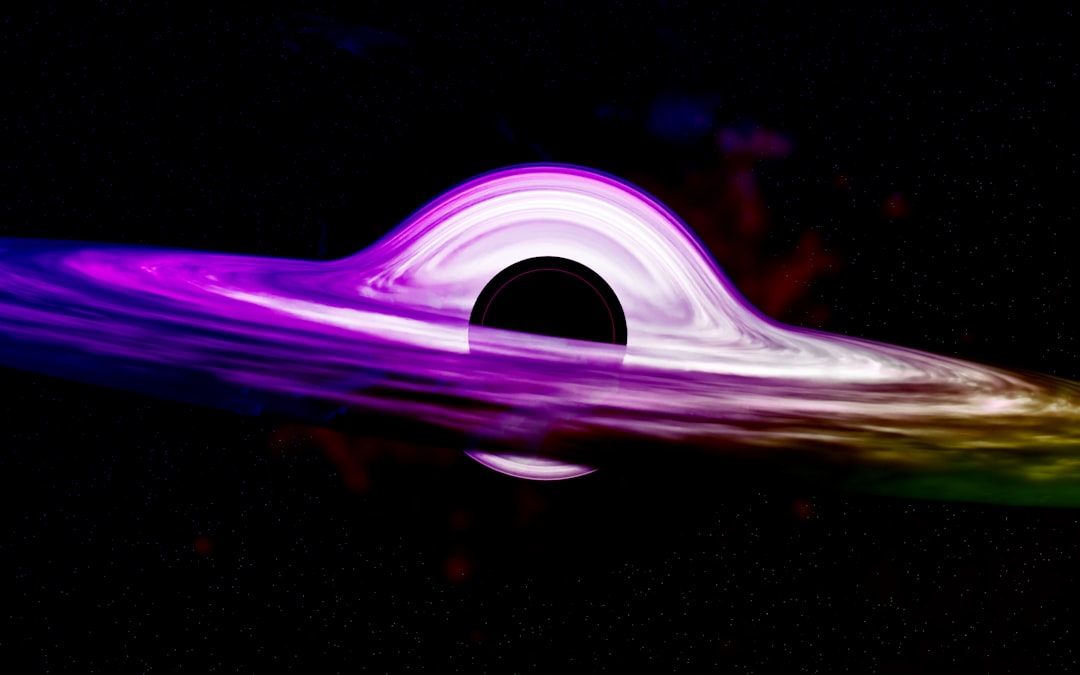
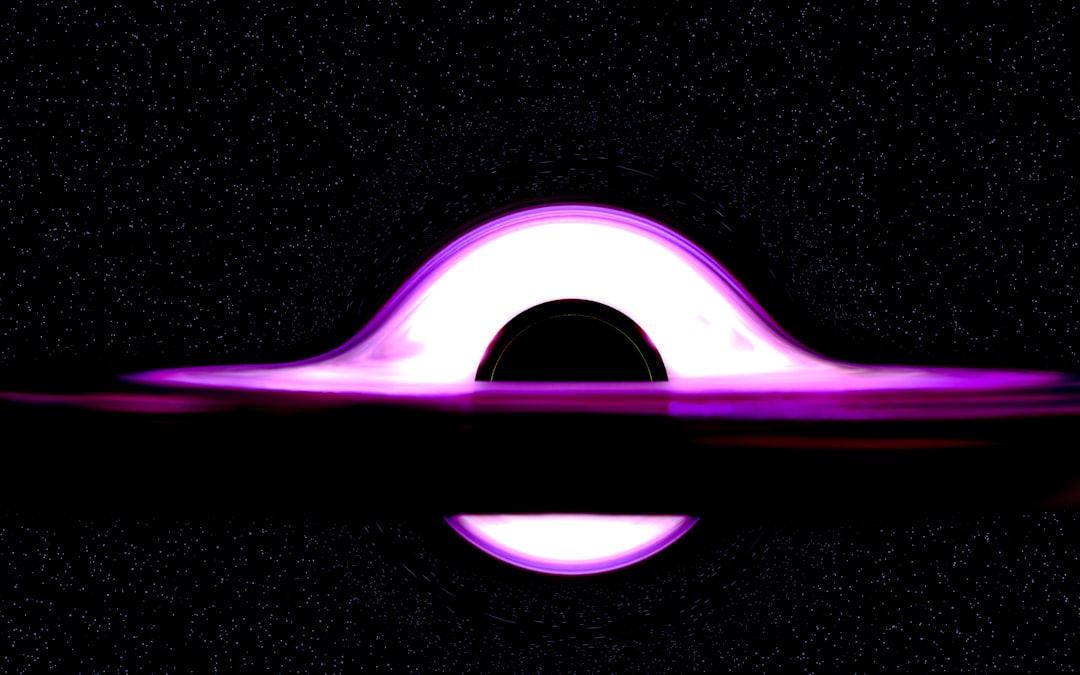
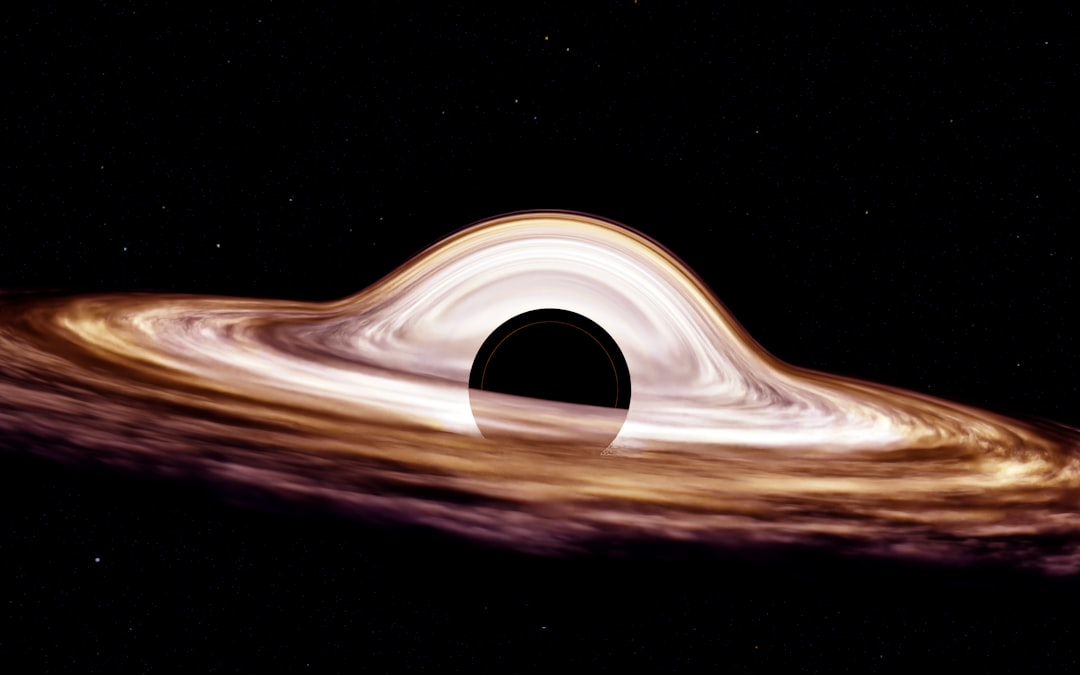
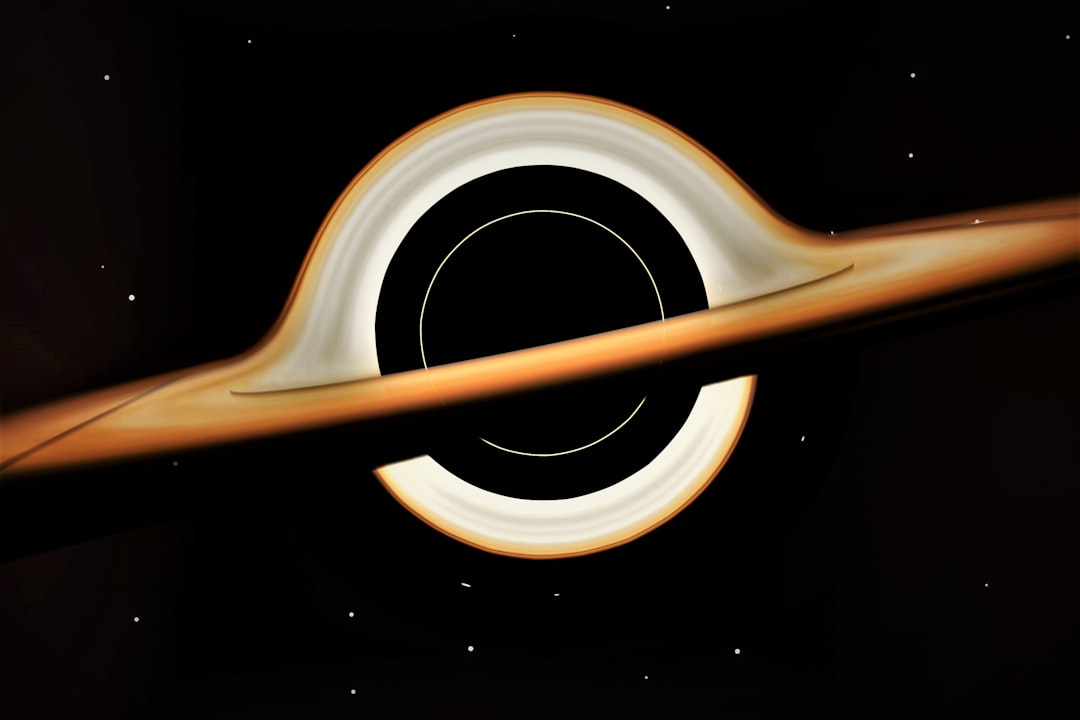
As the star's remains spiral inward, roughly half the stellar debris is flung outward into space while the other half forms a swirling accretion disk around the black hole. This infalling material blazes with a brilliant flash of visible, ultraviolet, and X-ray light from the center of a galaxy that was otherwise quiet and unremarkable. Peak luminosities can briefly rival those of entire galaxies, making TDEs detectable across billions of light-years. Then, over weeks to months, the flare fades, the black hole slips back into obscurity, and the show appears to be over.
"Except, at radio wavelengths, it is only just beginning."
Astronomers have been cataloguing tidal disruption events with increasing frequency since the 1990s, helped enormously by wide-field survey telescopes that monitor large swaths of the sky for sudden brightening events. Yet until recently, the post-flare behavior of these systems remained poorly understood, largely because sustained, multi-wavelength follow-up observations are both costly and time-intensive. A new study is changing that picture dramatically.
Catching the Belch: The VLA Survey
Watching 31 of these stellar killings with the Karl G. Jansky Very Large Array (VLA) in New Mexico, a team led by Kate Alexander of the University of Arizona found that a surprising number of TDEs flare again in radio waves — months, or even years, after the original optical and X-ray outburst. Having swallowed most of the star, the black hole lets out a powerful burst of radio emission that the array can detect from billions of light-years away. The researchers are calling these delayed radio outbursts "burps" — and the analogy is more scientifically apt than it might first appear.
What that radio glow reveals is that the black hole does not swallow its meal cleanly. Some of the infalling gas is flung back outward in relativistic jets or wide-angle accretion-driven winds, launched from perilously close to the event horizon — the boundary beyond which not even light can escape. When that expelled material slams into the diffuse gas and dust surrounding the black hole, it drives powerful shock waves that accelerate electrons to near-light speeds. Those electrons, spiraling around magnetic field lines, emit synchrotron radiation — the characteristic radio glow that the VLA can detect across cosmic distances. The burp, in other words, is the sound of a messy eater spitting part of its dinner back into the room.
The Very Large Array, an iconic collection of 27 radio antennas spread across the Plains of San Agustin in New Mexico, is uniquely suited to this kind of detective work. Its sensitivity and angular resolution allow astronomers to detect and localize faint radio transients at cosmological distances, making it one of the premier instruments in the world for studying the dynamic radio sky. Learn more about ongoing VLA science at the National Radio Astronomy Observatory (NRAO).
Two Varieties of Cosmic Indigestion
Stranger still, the radio burps appear to come in two distinct flavors, hinting at fundamentally different physical mechanisms at work:
- Prompt radio flares: In some TDEs, the radio emission switches on within a few hundred days of the initial optical flare, while the black hole is still gorging quickly on the accreting stellar wreckage. These events are thought to be driven by a powerful, collimated relativistic jet launched during the peak of the accretion episode — analogous to the jets seen in active galactic nuclei (AGN) and gamma-ray bursts.
- Delayed radio flares: In other cases, the radio outburst appears only much later — sometimes years after the original event — once the feeding rate has slowed to a trickle and the accretion disk has begun to dissipate. These late-time flares are more consistent with a decelerated, wide-angle outflow or wind that takes much longer to plow through the surrounding interstellar medium and generate detectable synchrotron emission.
The existence of both flavors within a single survey is significant. It confirms that wildly different feeding rates and physical geometries can drive the same observable outcome — a bright radio outburst — making TDEs a remarkably versatile laboratory for studying black hole accretion physics across a wide range of conditions. These findings align with theoretical work being done at institutions such as the NASA Black Hole research program and the European Space Agency's Black Hole research division.
Predicting the Belch: A New Forecasting Tool
Perhaps the most practically valuable finding from the study is that the team identified a way to predict which black holes are likely to burp. TDEs that later produce delayed radio flares tend to display subtly different spectral and photometric properties in visible and ultraviolet light from the very earliest stages of the event — before any radio emission is detected. These early optical signatures may reflect differences in the geometry of the initial debris stream, the spin of the black hole, or the density of the surrounding galactic nucleus, all of which influence whether a powerful outflow is eventually launched.
This predictive capability is enormously useful for planning follow-up observations. Radio telescope time is precious and competitive, and monitoring dozens of TDE candidates for years at a time would be prohibitively expensive. By identifying a shortlist of the most promising events from their early optical behavior, astronomers can focus their radio resources where they are most likely to be rewarded. It is a classic example of multi-wavelength astronomy paying dividends: observations in one part of the spectrum informing and optimizing observations in another.
Why These Belches Matter for Galaxy Evolution
Beyond their intrinsic interest as dramatic astronomical events, TDE outflows and jets have implications that extend to the largest scales of cosmic structure. Supermassive black holes are believed to play a critical role in regulating star formation in their host galaxies through a process called AGN feedback — the injection of energy, momentum, and turbulence into the surrounding gas by active black holes. When a black hole belches, it is not merely a curiosity; it is a mechanism by which energy is deposited into the interstellar and intergalactic medium, potentially suppressing the cooling of gas that would otherwise collapse to form new stars.
Tidal disruption events offer a rare and uniquely valuable window into this feedback process because they activate otherwise dormant black holes — ones that would never be classified as AGN — on human timescales. By studying TDE outflows in real time, astronomers can directly measure the energy and momentum injected into the galactic environment by a single feeding episode, providing crucial data for refining theoretical models of galaxy evolution. The Hubble Space Telescope's extensive archive of galaxy observations continues to provide essential context for interpreting these events in their broader galactic settings.
A Long, Unfolding Story
Far from being isolated, instantaneous catastrophes, tidal disruption events are now understood to be long, multi-stage narratives playing out across months and years — complete with an opening act in visible and X-ray light, and a sometimes-delayed, often-surprising conclusion written in radio waves. Each new event we monitor in detail adds another chapter to our understanding of how black holes feed, how they grow over cosmic time, and how they shape the galaxies they inhabit.
The Alexander et al. survey represents a milestone in this effort, demonstrating for the first time in a statistically meaningful sample that delayed radio outbursts are not rare exceptions but a common feature of the TDE population. As next-generation radio facilities such as the ngVLA and optical survey telescopes like the Vera C. Rubin Observatory come online in the coming years, the rate at which we discover and characterize these events is set to accelerate dramatically. The cosmic kitchen is messier than we ever imagined — and astronomers are only now learning to listen for all of its sounds.
Source: Astronomers Catch Black Holes "Burping" in Radio with the NSF VLA — NRAO Press Release