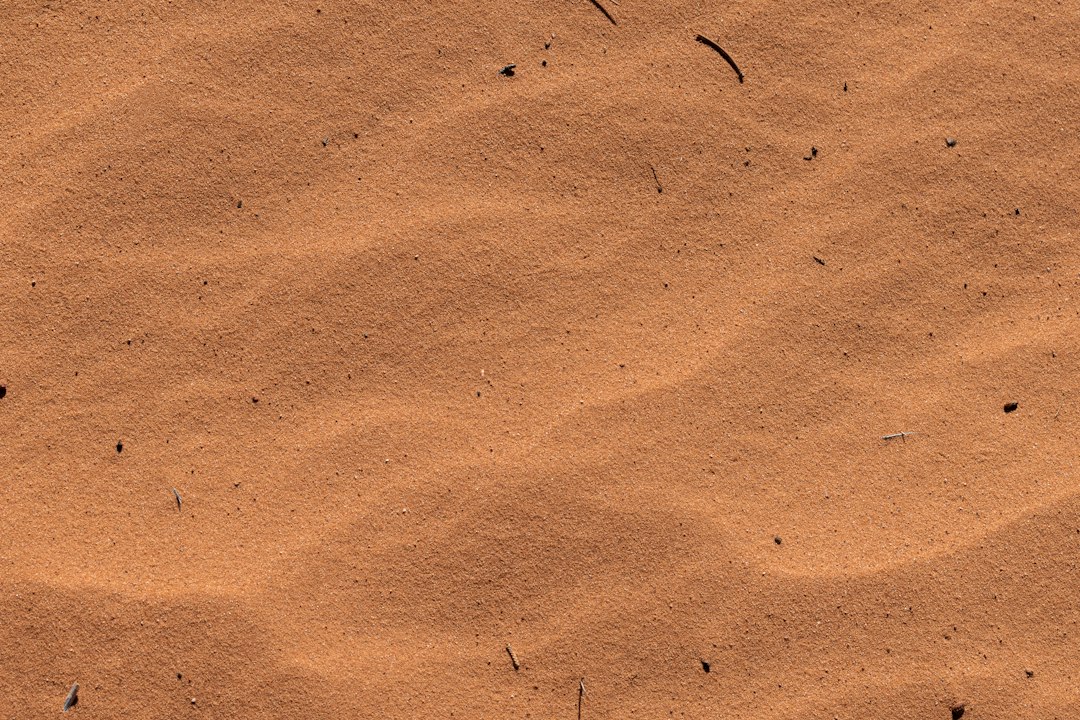
Tiny Grains of Sand Act as Cosmic Speedometers for Alien Winds
Across the vast and varied landscapes of our solar system, one geological feature appears with surprising regularity: sand dunes. From the rust-colored plains of Mars to the hydrocarbon seas of Titan and even the frozen surface of a comet, these elegant, wind-sculpted formations have captivated planetary scientists for decades. Now, a groundbreaking new study suggests that these ancient landforms are hiding a remarkable secret — they don't just tell us which way the wind blows on alien worlds, they can tell us how fast.
According to a new paper published in the Proceedings of the National Academy of Sciences by researchers at Stanford University's Department of Earth and Planetary Sciences, the size of individual sand grains within a dune encodes a precise record of the wind speeds that built it — turning these seemingly simple geological structures into sophisticated natural instruments, or what scientists are now calling cosmic speedometers.
A Solar System Full of Dunes
When we think of sand dunes, Earth's great deserts typically come to mind — the sweeping Sahara, the ancient Namib, the vivid red sands of the American Southwest. But high-resolution orbital imaging has revealed that dune fields are far from an exclusively terrestrial phenomenon. Mars and Earth are the most commonly cited examples, but Venus, Saturn's moon Titan, and even Comet 67P/Churyumov-Gerasimenko all host these remarkable formations.
Each of these worlds sports dunes made of vastly different materials:
- Earth: Silica and quartz-based mineral grains, shaped by atmospheric winds.
- Mars: Basaltic volcanic particles, sculpted by thin but persistent winds in a low-pressure carbon dioxide atmosphere.
- Venus: Likely composed of basaltic rock fragments, though the extreme surface conditions make direct study exceedingly difficult.
- Titan: Organic hydrocarbon particles — essentially grains of complex carbon-based chemistry — shaped by winds in a dense nitrogen atmosphere.
- Comet 67P/Churyumov-Gerasimenko: Dust and volatile-rich grains moved by localized vapor flows rather than a traditional planetary atmosphere.
Despite their wildly different compositions and the vastly different environments in which they form, all of these structures share one crucial characteristic: they are built from small, loosely bound grains of similar particles that can be mobilized by flowing gas. This shared physics is precisely what makes the new research so powerful and so universal in its implications.
"Sand dunes are nature's own anemometers — patient, planetary-scale instruments that record the history of wind in their very structure." — Concept central to the findings of M. Colin Marvin et al., PNAS 2024
The Physics of Moving Sand: Saltation and Transport Thresholds
To understand why grain size is such a powerful diagnostic tool, it is necessary to appreciate the elegant and somewhat counterintuitive physics of aeolian transport — the scientific term for the movement of sediment by wind. When airflow passes over a granular surface, individual grains remain stationary until the wind speed climbs to a critical value known as the fluid transport threshold. Below this speed, grains sit inert; above it, they begin to move.
The primary mode of grain movement is a process called saltation — derived from the Latin saltare, meaning "to leap." In saltation, grains are lifted briefly into the air by aerodynamic lift and drag forces, travel a short ballistic arc, and then crash back down onto the surface. Each impact is not merely destructive — it is generative. A landing grain kicks up additional surrounding particles, triggering a self-sustaining cascade of movement that can persist even if the wind speed drops slightly below the initial transport threshold. This secondary, lower speed is known as the impact threshold, and the difference between the two thresholds is a fundamental characteristic of granular transport physics.
Critically, the transport threshold is not a fixed value. It depends strongly on the size, density, and shape of the grains, as well as the density of the surrounding atmosphere. This dependency is precisely the mathematical bridge that connects grain size to wind speed — and it is the bridge that the Stanford researchers have now carefully mapped across both terrestrial and extraterrestrial environments. For further reading on the fundamentals of planetary aeolian processes, NASA's Mars Exploration Program provides extensive resources on how wind shapes the Martian surface.
The Study: From Utah's Pink Dunes to the Namib Desert
Lead author M. Colin Marvin, a PhD student in Stanford's Department of Earth and Planetary Sciences, led an ambitious observational campaign that forms the empirical backbone of the new study. His team collected detailed wind speed data and precise grain-size measurements from twenty-four different dune fields distributed across the globe, spanning an enormous range of environmental conditions, dune morphologies, and sediment types.
The field sites ranged from the vivid vermilion sands of the Coral Pink Sand Dunes State Park in Utah — a relatively young dune field formed from eroded Navajo Sandstone — to the ancient, towering dunes of the Namib Sand Sea in Namibia, some of the oldest and tallest dunes on Earth, rising more than a hundred meters above the desert floor and dating back millions of years. The global diversity of the dataset was intentional: by sampling dune systems across a wide range of climates, latitudes, and grain compositions, the researchers sought to identify universal patterns that transcend local conditions.
What they found was both elegant and striking. Across every single terrestrial site studied, the greatest volume of sand transport occurred not during rare, violent storms, but when wind speeds were only slightly above the threshold required to initiate grain movement. The distribution of transport events was strongly skewed toward these moderate, commonly occurring winds rather than extreme gusts. The data painted a clear picture: dune building is an everyday affair, driven by the routine rather than the exceptional.
As a concrete example of the mathematical relationship their data revealed, a dune composed of grains approximately 0.2 millimeters in diameter — roughly the combined width of two sheets of standard printer paper — is predominantly shaped by winds blowing at just 26 kilometers per hour, measured at a standard reference height of 10 meters above the ground. This is a moderate breeze by any meteorological standard, not a raging storm.
What About Violent Dust Storms?
One of the most significant questions the research addresses is a longstanding debate in planetary aeolian science: are dunes primarily built by rare, high-energy storm events, or by frequent, moderate winds? This distinction matters enormously for how scientists interpret dune morphologies on other worlds, where direct wind speed measurements are either sparse, non-existent, or confined to a single point in time.
On Mars, for instance, global dust storms occur periodically and can shroud the entire planet for weeks or months, dramatically altering atmospheric dynamics. It was an open question whether these spectacular events were the primary architects of Martian dune fields, or whether the more subdued, day-to-day winds carried the greater cumulative burden of sand transport. The new study's finding — that moderate, threshold-velocity winds do the bulk of the work — has profound implications for how we model Martian climate history and interpret its surface geology. NASA's Curiosity rover, which continues to explore the Gale Crater region, has provided invaluable ground-truth data on Martian wind patterns and sediment behavior.
Cometary "Wind": An Unexpected Connection
Perhaps the most surprising entry in the solar system's catalog of dune-bearing worlds is Comet 67P/Churyumov-Gerasimenko. The idea of a comet having "wind" might seem absurd at first glance — after all, comets are small, airless bodies composed of ice, rock, and organic material. Yet a 2017 study analyzing data from ESA's Rosetta mission revealed that the rippled surface features observed on 67P were indeed created by localized flows of gas and dust. As the comet's icy surface sublimates — transitioning directly from solid ice to gas — during its approach to the Sun, the escaping vapor carries fine particles along with it, creating transient but powerful localized flows that act, in a physical sense, very much like wind. These sublimation-driven vapor flows are strong enough to redistribute surface material and sculpt ripple patterns analogous to those formed by wind on planetary bodies.
This remarkable finding extends the applicability of the new grain-size-to-wind-speed relationship to some of the smallest and most exotic bodies in our solar system, suggesting that aeolian-like physics may be even more widespread than previously appreciated.
Simulating Alien Dunes: The ReSCAL Model
Armed with their extensive observational dataset, the Stanford team moved to the theoretical and computational domain to validate and extend their findings. Using a sophisticated modeling tool called ReSCAL (Real-Space Cellular Automaton Laboratory), the researchers grew virtual dunes computationally, starting from flat beds of sand and allowing simulated wind to shape them under a range of different speed regimes.
The simulations confirmed the core finding from the field data: in any environment where two specific conditions are met — an abundance of loosely bound granular material and a wind speed distribution that becomes rarer as it grows stronger (a statistical property shared by virtually all planetary atmospheres studied to date) — the resulting dunes will be predominantly built by winds operating near the transport threshold for the dominant grain size. This is not merely a terrestrial quirk; it appears to be a universal principle of dune formation applicable wherever granular material and flowing gas coexist.
The validation of this relationship on a Martian sand dune — using grain size data returned from orbital observations and rover measurements — was a particularly significant milestone for the study, demonstrating that the mathematics developed from terrestrial field data translates directly to another planetary body.
Implications for Planetary Science: Reading History in the Sand
The practical implications of this research extend far beyond academic curiosity. The ability to infer historical wind speeds from grain size measurements transforms dune fields from passive geological features into active archives of paleoclimatic history. On worlds where direct atmospheric measurements are unavailable — which describes the vast majority of bodies in our solar system — this technique could become an invaluable tool for reconstructing past atmospheric states.
Mars offers an immediate and compelling application. NASA's Curiosity rover has already drilled into the Stimson Formation, a layer of cemented sandstone within Gale Crater that geologists believe was once an ancient windblown dune field, now lithified into rock over billions of years. The grain sizes preserved within this ancient sandstone now carry, according to the new study's framework, a direct record of the wind speeds that shaped Mars's surface in the distant past — potentially providing new constraints on the history of the Martian atmosphere, including its dramatic transition from a warmer, wetter state to the cold, thin environment we observe today.
Looking further into the future, the Dragonfly mission — a NASA rotorcraft lander scheduled to touch down on Titan sometime in the 2030s — will land in the vicinity of Titan's vast equatorial dune fields, which are composed of complex organic hydrocarbon particles. By combining in-situ grain size measurements from Dragonfly with the mathematical framework established by Marvin and colleagues, scientists will be able to reconstruct wind speed histories on this enigmatic moon of Saturn, shedding light on its complex atmospheric dynamics and potentially its astrobiological significance. More information on this exciting mission can be found at the Johns Hopkins Applied Physics Laboratory's Dragonfly mission page.
Venus also looms large as a future target. Despite its crushing atmospheric pressure and extreme surface temperatures, orbital radar imaging has revealed what appear to be dune-like structures on the Venusian surface. Future Venus lander missions, several of which are currently in various stages of planning and proposal, could return grain size data that, combined with this new research, would provide the first direct estimates of near-surface wind speeds in Venus's hellish lower atmosphere.
Key Takeaways
- Sand dunes exist on Earth, Mars, Venus, Titan, and even Comet 67P, making aeolian processes one of the most universal geological phenomena in the solar system.
- The grain size of dune sand is mathematically linked to the wind speed that built the dune, through the physics of the fluid transport threshold.
- Field data from 24 global dune sites confirms that the majority of sand transport — and therefore dune building — occurs at moderate, near-threshold wind speeds, not during rare violent storms.
- Computational simulations using ReSCAL validated this relationship and confirmed its applicability to Martian dunes.
- The technique can be applied to past dune fields preserved as ancient sandstone formations, such as Mars's Stimson Formation, to reconstruct paleoclimate wind histories.
- Future missions including Dragonfly (Titan) and potential Venus landers will generate grain size data that can be directly analyzed using this new framework.
A New Way to Read the Story Written in Sand
For millennia, human cultures have understood that sand carries stories — of time, of movement, of the restless energy of the natural world. Now, planetary scientists have added a new chapter to that understanding. By decoding the relationship between grain size and wind speed, researchers have transformed one of the solar system's most common geological features into a precision instrument for reading the atmospheric histories of worlds we may never directly visit.
From the ancient dunes of Namibia to the hydrocarbon sands of Titan, from the basaltic plains of Mars to the vapor-swept surface of a comet, the same elegant physics writes the same fundamental story — one grain of sand at a time. As our fleet of orbiters, rovers, and landers continues to return ever more detailed surface data from across the solar system, scientists will increasingly be able to decode that story, reconstructing billions of years of planetary atmospheric history from the silent testimony of sand.
In the words of the research itself, the future of planetary wind science may be found not in complex meteorological instruments, but in something far simpler and far more ancient: a handful of dust, patiently waiting to tell its tale.