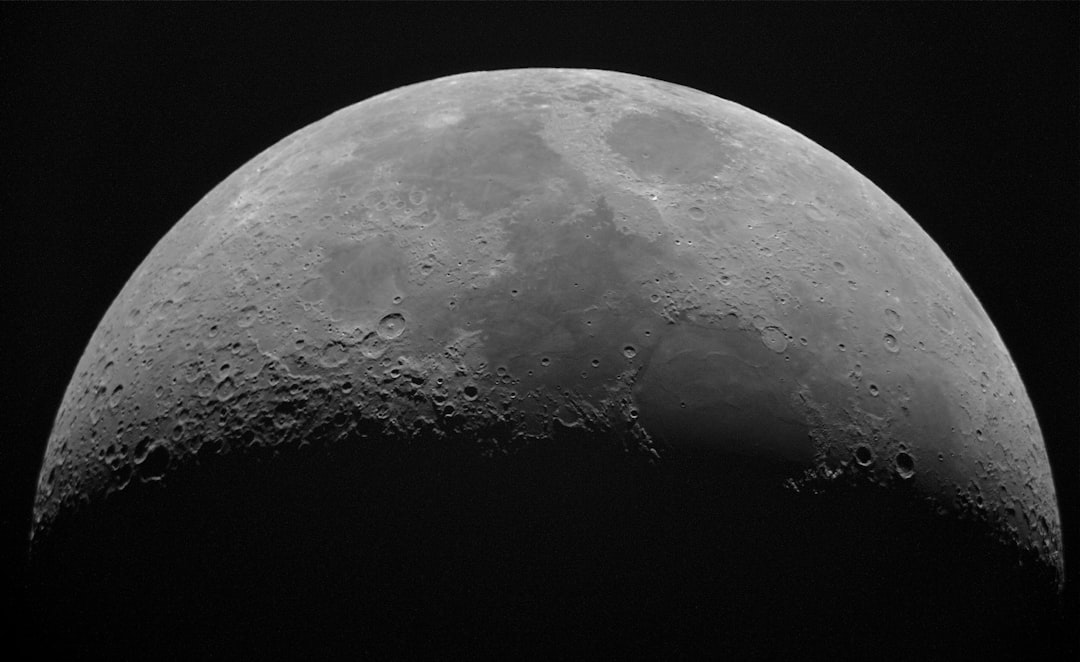
In a groundbreaking achievement that marks a pivotal moment in lunar exploration, China's Chang'e-6 mission successfully returned to Earth in June 2024 with an unprecedented cargo: 1,935.3 grams of pristine lunar material collected from the Moon's enigmatic far side. This historic feat represents humanity's first-ever sample return from the lunar hemisphere that perpetually faces away from Earth, offering scientists an extraordinary window into one of our celestial neighbor's most profound mysteries. The Moon's far side, often mischaracterized as the "dark side," has remained largely unexplored despite decades of lunar research, making these samples invaluable for understanding our satellite's complex geological narrative.
Recent comprehensive analyses conducted by researchers at the Institute of Geology and Geophysics (IGG) within the Chinese Academy of Sciences have unveiled remarkable insights into the fundamental differences between the Moon's two hemispheres. These findings are revolutionizing our understanding of how catastrophic impact events shaped not just the lunar surface, but also transformed materials deep within the Moon's interior. As international space agencies including NASA's Artemis program, the European Space Agency, and commercial partners accelerate plans for permanent lunar installations, this research provides critical baseline data for future exploration initiatives targeting the far side's resource-rich regions.
The South Pole-Aitken Basin: A Window into Lunar Catastrophe
The South Pole-Aitken Basin stands as one of the solar system's most spectacular impact structures, stretching approximately 2,500 kilometers across the Moon's southern far side. Created roughly 4.25 billion years ago during the solar system's tumultuous youth, this colossal impact excavated material from unprecedented depths, potentially reaching into the lunar mantle itself. The basin's importance extends far beyond its impressive dimensions; its numerous permanently shadowed regions (PSRs) harbor substantial deposits of water ice, making it a prime candidate for future lunar base construction and sustainable human presence on the Moon.
Understanding the geological consequences of such massive impact events has remained one of planetary science's most challenging questions. Unlike Earth, where plate tectonics and atmospheric weathering continuously reshape the surface, the Moon preserves an ancient record of bombardment spanning billions of years. Each impact event left an indelible signature in the lunar crust and potentially deeper structures, creating a geological archive that scientists are only now beginning to decipher with the precision required to reconstruct the Moon's evolutionary history.
Revolutionary Isotopic Analysis Reveals Hidden Thermal History
The Chinese research team employed high-precision isotope analysis techniques to examine basalt samples retrieved by Chang'e-6, focusing particularly on elements that serve as sensitive indicators of extreme thermal conditions. Their investigation centered on moderately volatile elements—specifically potassium, zinc, and gallium—which exhibit distinctive behavioral patterns when subjected to the intense heat and pressure generated by massive impact events. These elements possess a crucial characteristic: they readily volatilize and undergo isotopic fractionation at elevated temperatures, essentially creating measurable "fingerprints" that reveal the thermal history experienced by lunar materials.
"The isotopic signatures we've detected in these far-side samples tell a story of extreme violence and transformation. The South Pole-Aitken impact didn't just crater the surface—it fundamentally altered the chemical composition of materials deep within the Moon's mantle, with consequences that persisted for billions of years."
The analytical results revealed something extraordinary: the basalts from the far side contained a significantly elevated proportion of potassium-41, the heavier isotope of potassium, compared to samples returned by Apollo astronauts from the near side. This isotopic anomaly provided the research team with a quantitative measure of the thermal conditions that prevailed in the aftermath of the basin-forming impact. The preferential loss of lighter potassium-39 isotopes and corresponding enrichment of heavier potassium-41 isotopes indicated that materials in the deep lunar mantle experienced temperatures sufficient to drive selective volatilization over extended periods.
Distinguishing Impact Signatures from Other Processes
Determining the precise origin of isotopic variations requires careful consideration of multiple potential mechanisms. The research team systematically evaluated several competing hypotheses that could explain the observed potassium isotope ratios, including exposure to cosmic ray bombardment, fractionation during volcanic eruptions, and direct deposition of isotopically distinct material from the impacting body itself. Through rigorous geochemical modeling and comparison with samples from various lunar missions, including NASA's Apollo program and China's earlier Chang'e-5 mission, the scientists conclusively demonstrated that the isotopic signature originated from the ancient mega-impact event.
The implications of this finding extend well beyond simple thermal history. The volatile element depletion caused by the South Pole-Aitken impact appears to have had long-lasting consequences for subsequent volcanic activity on the far side. By removing significant quantities of volatile elements from the deep mantle, the impact event effectively suppressed the Moon's capacity for extensive volcanism in this region. This discovery helps explain one of lunar science's enduring puzzles: why the far side exhibits far fewer of the dark volcanic maria that characterize the near side's appearance.
Hemispheric Asymmetry: Unraveling the Moon's Dual Personality
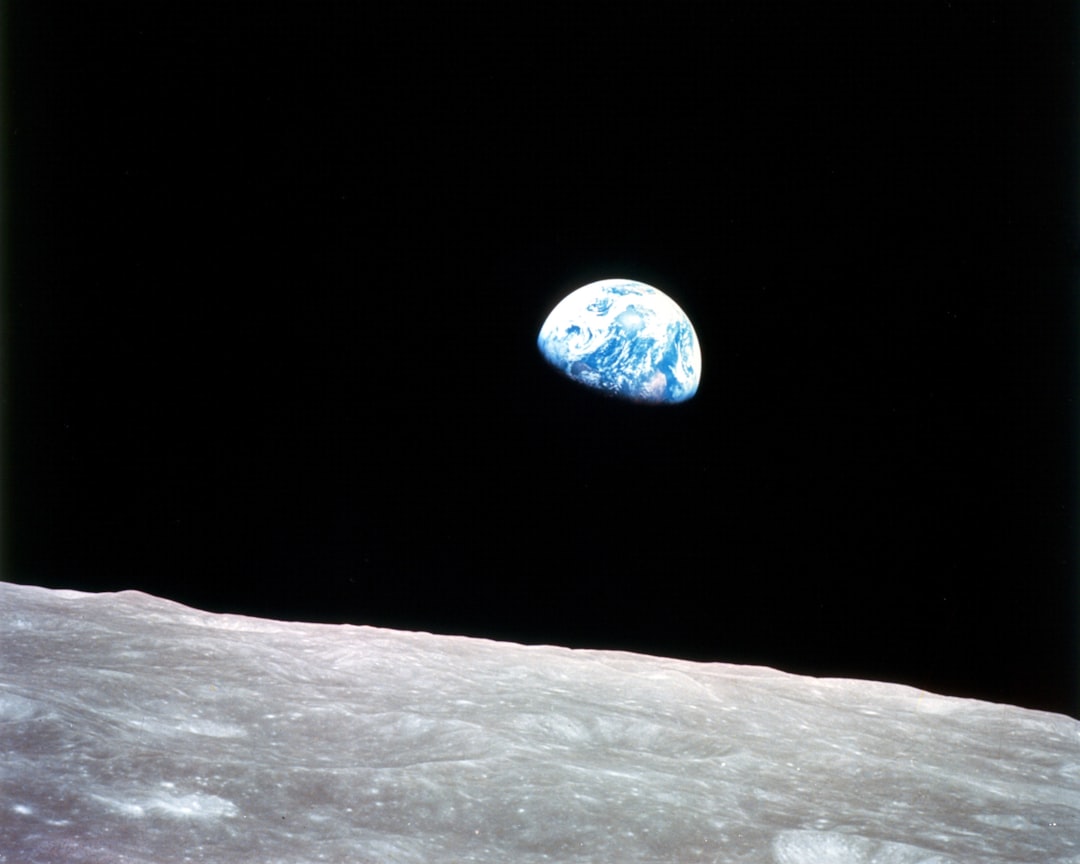
The stark differences between the Moon's near and far sides have intrigued astronomers since the first photographs of the far side were obtained by Soviet spacecraft in 1959. The near side's surface is dominated by vast, dark basaltic plains known as maria, while the far side presents a heavily cratered, highland-dominated terrain with relatively little volcanic resurfacing. The Chang'e-6 sample analysis provides compelling evidence that these hemispheric differences reflect fundamentally distinct evolutionary paths shaped by early impact events.
The research reveals that the South Pole-Aitken impact created conditions that diverged significantly from those on the near side. The extreme temperatures generated by the collision—potentially exceeding several thousand degrees Celsius in the impact zone—drove a complex series of chemical and physical transformations. As volatile elements were preferentially lost from the far-side mantle, the region's capacity for generating basaltic magmas through partial melting was substantially reduced. This volatile depletion mechanism offers a coherent explanation for the observed scarcity of volcanic features on the far side.
Comparative Analysis with Apollo Samples
The availability of samples from both lunar hemispheres enables unprecedented comparative studies. Apollo missions returned approximately 382 kilograms of lunar material, virtually all from near-side locations. The Chang'e-6 samples, though more modest in quantity, provide an essential counterpoint that reveals the Moon's geological diversity. Key differences identified through isotopic analysis include:
- Potassium Isotope Ratios: Far-side basalts show enrichment in potassium-41 by several parts per thousand compared to near-side samples, indicating more extensive volatile loss
- Trace Element Abundances: Reduced concentrations of volatile and moderately volatile elements in far-side materials reflect the thermal processing associated with the South Pole-Aitken impact
- Crystallization Ages: Far-side basalts exhibit distinct age distributions, suggesting different volcanic evolution timelines between the two hemispheres
- Mineral Compositions: Subtle but measurable differences in mineral chemistry provide additional evidence for divergent thermal histories
Implications for Lunar Base Planning and Future Exploration
These scientific findings carry significant practical implications for upcoming lunar exploration initiatives. Understanding the geochemical characteristics and resource distribution on the far side is essential for planning sustainable human presence. The confirmation of water ice in permanently shadowed regions, combined with detailed knowledge of the underlying geology, enables more informed site selection for future bases. The South Pole-Aitken Basin's unique geological history suggests that valuable scientific and potentially economic resources may be accessible through careful exploration.
International collaboration in lunar science is intensifying, with China's space program making increasingly significant contributions to our collective understanding. The success of Chang'e-6 demonstrates advanced capabilities in sample return technology, paving the way for even more ambitious missions. Future Chinese lunar missions, including the planned Chang'e-7 and Chang'e-8 missions, will build upon these findings to establish a more comprehensive picture of lunar resources and geology. Meanwhile, NASA's Artemis program aims to establish a sustained presence at the lunar south pole, where American astronauts will conduct complementary research.
Broader Context: Understanding Earth-Moon Co-Evolution
The Moon serves as more than just Earth's companion; it represents a crucial archive of early solar system history that has been largely erased from Earth's geological record. By studying the Moon's impact history and chemical evolution, scientists gain insights into the conditions that prevailed during the first billion years after planetary formation. The Late Heavy Bombardment—a period of intense asteroid and comet impacts occurring approximately 4.1 to 3.8 billion years ago—left its mark primarily on airless bodies like the Moon, where the evidence remains preserved.
Understanding how massive impacts affected the Moon's deep interior has implications for comprehending similar processes on early Earth. During Earth's formative period, our planet undoubtedly experienced comparable bombardment, but subsequent geological activity has obliterated most direct evidence. The isotopic techniques pioneered in analyzing Chang'e-6 samples may eventually be applied to rare terrestrial rocks from the Hadean eon, potentially revealing how impact events influenced Earth's early habitability and the emergence of conditions suitable for life.
Future Research Directions and Unanswered Questions
While the Chang'e-6 sample analysis has answered several fundamental questions about far-side geology, it has simultaneously raised new inquiries that will drive future research. Scientists are particularly interested in obtaining samples from even deeper within the South Pole-Aitken Basin, where material excavated from the lunar mantle might be accessible. Such samples could provide direct evidence about the Moon's internal structure and composition, testing models of lunar formation and differentiation.
Additional questions requiring investigation include the precise timing and sequence of volcanic activity on the far side, the distribution of volatile elements in permanently shadowed regions, and the potential presence of materials from the impacting body that created the South Pole-Aitken Basin. Answering these questions will require continued sample return missions, advanced remote sensing observations, and eventually, human exploration with the capability to conduct detailed field geology on the lunar surface.
The Chang'e-6 mission represents a watershed moment in lunar science, demonstrating that the Moon still holds profound secrets waiting to be discovered. As analysis of these precious samples continues and new missions prepare for launch, our understanding of Earth's closest celestial neighbor—and by extension, our own planet's history—will continue to deepen and evolve. The far side of the Moon, once completely unknown, is gradually revealing its story, written in the chemical signatures of ancient impacts and preserved in rocks that have remained unchanged for billions of years.