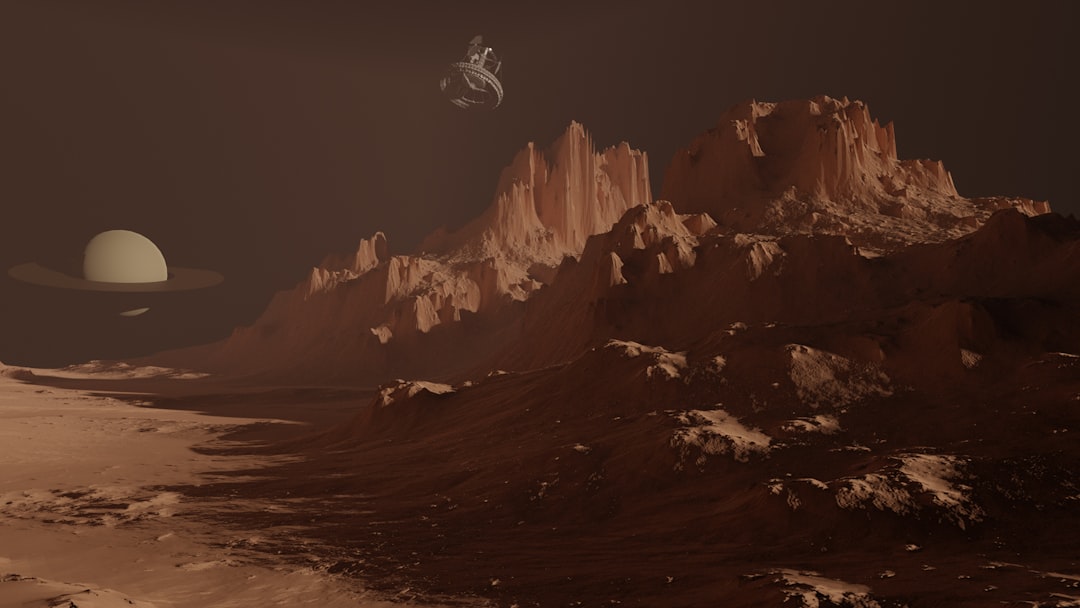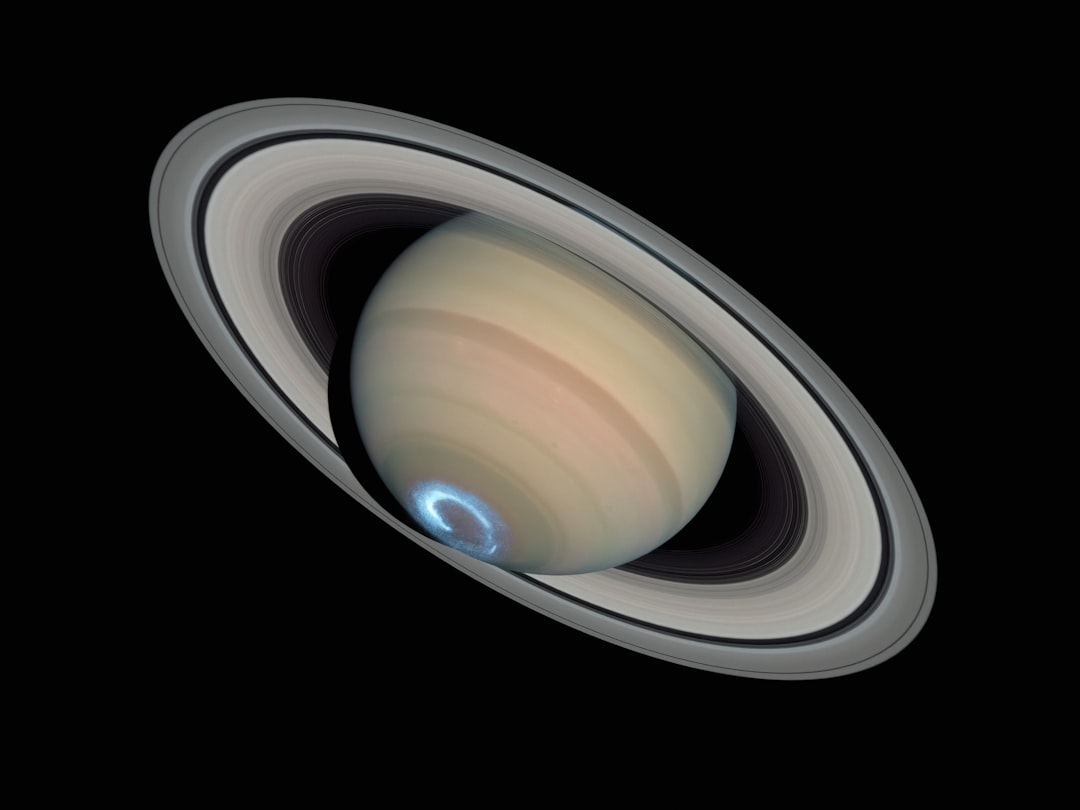
For four centuries, Saturn has mesmerized humanity with its spectacular ring system—a cosmic crown so stunning that first-time observers through even modest telescopes often question whether what they're witnessing could possibly be real. Yet beyond this iconic visual spectacle lies a planetary giant of staggering proportions and extreme physics: a world eleven times wider than Earth, rotating so rapidly that a complete day passes in merely 10.7 hours, all while generating a magnetic field powerful enough to dominate millions of kilometers of surrounding space. Now, scientists analyzing data from NASA's legendary Cassini mission have discovered something unexpected about this magnetic realm—a finding that fundamentally challenges our understanding of how giant planets interact with the cosmic environment around them.
Published in the prestigious journal Nature Communications, research from Lancaster University reveals that a critical structural feature of Saturn's magnetosphere—the vast protective bubble generated by the planet's magnetic field—sits in a location that defies conventional planetary science models. This discovery not only reshapes our understanding of the ringed giant but also suggests that rapidly rotating gas giants operate under fundamentally different physical rules than Earth-like worlds, forcing a reconsideration of decades of theoretical assumptions.
The Invisible Architecture of Planetary Defense Systems
Every planet with a magnetic field possesses an invisible shield—a protective cocoon called a magnetosphere that serves as the first line of defense against the relentless bombardment of charged particles streaming outward from the Sun in what scientists call the solar wind. This magnetospheric barrier is not merely a curiosity of planetary physics; it's a fundamental requirement for habitability. Without Earth's magnetosphere, the solar wind would systematically strip away our atmosphere over geological timescales, expose the surface to dangerous radiation, and render our planet inhospitable to complex life as we know it.
For decades, planetary scientists have relied on Earth as the primary template for understanding how magnetospheres function across the solar system. This Earth-centric model has proven remarkably useful for studying terrestrial planets and has guided mission planning for spacecraft exploring Mars, Venus, and Mercury. However, the assumption that all planetary magnetic environments operate according to the same fundamental principles may have been a critical oversimplification—one that the Cassini data has now dramatically exposed.
Discovering the Displaced Magnetic Gateway
At the heart of this discovery lies a feature known as the magnetospheric cusp—funnel-shaped openings in the magnetic shield located near the polar regions where the protective barrier is at its weakest. These cusps represent critical vulnerabilities in a planet's magnetic defense system, allowing solar wind particles to penetrate directly into the upper atmosphere. On Earth, the cusp positioning follows a predictable pattern: it sits near "local noon," the point on the polar region directly facing the Sun at any given moment. This location makes intuitive sense because it represents the balance point where solar wind pressure pushing inward meets the outward pressure of Earth's magnetic field.
The Lancaster University team, led by researchers analyzing the treasure trove of data collected by NASA's Cassini spacecraft between 2004 and 2010, expected to find Saturn's cusp in a similar noon-facing position. What they discovered instead was far more intriguing. Saturn's magnetospheric cusp doesn't sit where conventional models predicted. Instead of clustering near the 12:00 local time position, the cusp is dramatically displaced toward the planet's afternoon side, typically positioned between 13:00 and 15:00 local time, and in some cases pushed as far as 20:00—well into the evening sector of Saturn's magnetosphere.
"This displacement of the cusp represents a fundamental departure from Earth-based magnetospheric models. What we're seeing at Saturn is a magnetic environment where rotational dynamics dominate over solar wind pressure in ways we simply don't observe at terrestrial planets," explained the research team in their published findings.
The Physics Behind Saturn's Magnetic Anomaly
The explanation for this dramatic displacement lies in Saturn's extraordinary rotational velocity and the unique composition of its magnetosphere. With a day lasting just 10.7 hours—less than half the length of an Earth day—Saturn spins at a furious pace that generates powerful rotational forces throughout its magnetic environment. But rotation alone doesn't tell the whole story. Saturn's magnetosphere is packed with ionized material, much of it originating from the tiny moon Enceladus, which continuously erupts plumes of water vapor and ice particles from its subsurface ocean through dramatic geysers at its south pole.
This combination of rapid rotation and abundant plasma creates a magnetospheric regime unlike anything we experience on Earth. The centrifugal forces generated by Saturn's spin, acting on the dense plasma population within the magnetosphere, become the dominant influence on magnetic field structure. These rotational forces effectively drag the magnetospheric cusp away from its expected noon position, pulling it toward the afternoon and evening sectors as the magnetic field lines are swept around by the planet's rotation. The solar wind pressure, which dominates cusp positioning at Earth, becomes a secondary player in Saturn's magnetic drama.
Implications for Auroral Physics and Magnetic Reconnection
The displaced position of Saturn's cusp has profound implications for understanding the planet's spectacular auroral displays—the ethereal light shows that dance across its polar skies. The cusp location directly influences where magnetic reconnection occurs, a violent process in which magnetic field lines break apart and reconnect in new configurations, explosively accelerating charged particles to enormous energies in the process. These accelerated particles, when they collide with atmospheric gases, generate the brilliant auroral emissions that have been captured in stunning detail by both Cassini and the Hubble Space Telescope.
On Earth, auroral activity is predominantly concentrated in oval-shaped regions centered on the magnetic poles, with the most intense displays occurring on the nightside where reconnection in the magnetotail drives particles earthward. At Saturn, the displaced cusp and rotation-dominated dynamics create a different auroral geography. The afternoon-to-evening displacement of the cusp means that magnetic reconnection events and their associated auroral signatures occur in different local time sectors than Earth-based models would predict, creating asymmetric auroral patterns that reflect Saturn's unique magnetospheric configuration.
A New Framework for Understanding Giant Planet Magnetospheres
This discovery confirms a theoretical prediction that has circulated among planetary magnetosphere researchers for years: rapidly rotating giant planets operate in a fundamentally different physical regime than slower-rotating terrestrial worlds. The key lies in understanding the relative importance of different forces acting on the magnetosphere:
- Solar Wind Pressure: The dynamic pressure of charged particles streaming from the Sun, which compresses the sunward side of the magnetosphere and shapes its overall structure
- Magnetic Field Pressure: The intrinsic pressure generated by the planet's own magnetic field, which pushes outward against the solar wind
- Rotational Dynamics: The centrifugal forces generated by planetary rotation acting on plasma within the magnetosphere, which become dominant at rapidly rotating giants like Saturn and Jupiter
- Plasma Loading: The continuous addition of ionized material from moons, rings, and other internal sources, which fills the magnetosphere with mass that responds to rotational forces
At Earth, the first two factors—solar wind pressure and magnetic field pressure—dominate the magnetospheric configuration. Rotational effects are present but secondary. At Saturn, and likely at Jupiter and the ice giants Uranus and Neptune as well, rotational dynamics take center stage, creating magnetospheric structures that behave according to different physical principles.
Cassini's Enduring Scientific Legacy
The Cassini spacecraft concluded its remarkable 13-year mission in September 2017 with a dramatic plunge into Saturn's atmosphere, a finale designed to prevent any possibility of contaminating potentially habitable moons like Enceladus with terrestrial microbes. Yet even years after its mission ended, Cassini continues to revolutionize our understanding of the Saturnian system. The spacecraft's comprehensive suite of instruments collected an unprecedented dataset spanning more than a decade of continuous observations, capturing Saturn's magnetosphere through multiple seasonal cycles and a complete range of solar wind conditions.
This latest discovery exemplifies the value of long-duration planetary missions and the importance of thorough data analysis that can continue for years or even decades after a spacecraft's operational lifetime ends. The Planetary Data System, NASA's long-term archive for planetary mission data, ensures that future researchers can continue mining Cassini's observations for new insights, applying advanced analytical techniques and theoretical frameworks that may not have existed when the data was originally collected.
Broader Implications for Comparative Planetology
The recognition that rapidly rotating giant planets possess fundamentally different magnetospheric configurations has important implications extending well beyond Saturn itself. As astronomers discover thousands of exoplanets orbiting distant stars, many of them gas giants comparable to or larger than Saturn and Jupiter, understanding the diversity of possible magnetospheric configurations becomes crucial for assessing their potential to host habitable moons or retain atmospheres over billions of years.
Giant planets in close orbits around their host stars—so-called "hot Jupiters"—may experience extreme versions of the rotation-dominated regime observed at Saturn, with magnetospheres shaped almost entirely by centrifugal forces and internal plasma sources rather than stellar wind pressure. Conversely, slowly rotating giants might more closely resemble the solar wind-dominated configuration we observe at Earth. This diversity of magnetospheric physics adds another layer of complexity to the already challenging task of characterizing exoplanetary environments and assessing their habitability potential.
Future missions to the outer solar system, including NASA's Europa Clipper and the ESA's JUICE mission to Jupiter's icy moons, will build upon Cassini's legacy, carrying advanced instruments specifically designed to map magnetospheric structures in unprecedented detail. These missions will test whether Jupiter's magnetosphere exhibits similar cusp displacement and rotation-dominated dynamics, further refining our understanding of how giant planet magnetic environments truly function.
Saturn's displaced magnetospheric cusp serves as a powerful reminder that the universe consistently defies our expectations and that even well-established theoretical frameworks must be continuously tested against observational reality. As we venture deeper into the solar system and peer ever farther into the cosmos, discoveries like this one ensure that our understanding of planetary physics remains dynamic, evolving, and full of surprises waiting to be uncovered in datasets both new and archival.