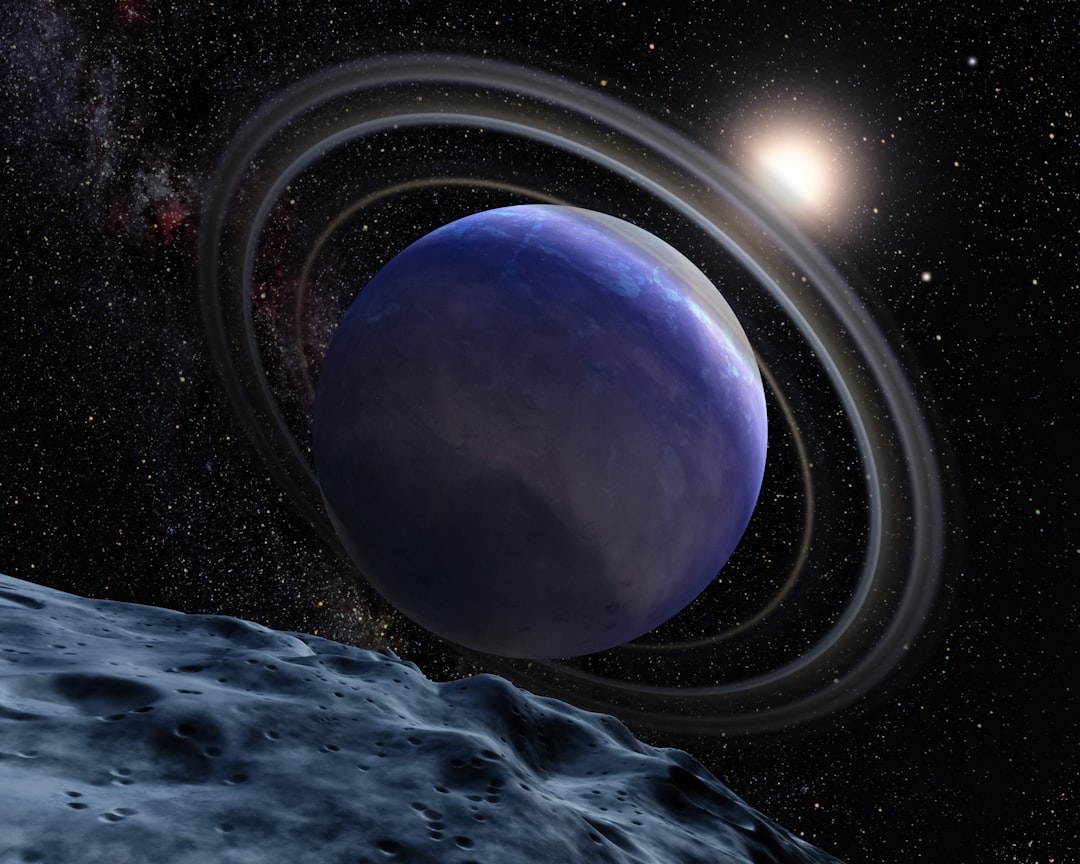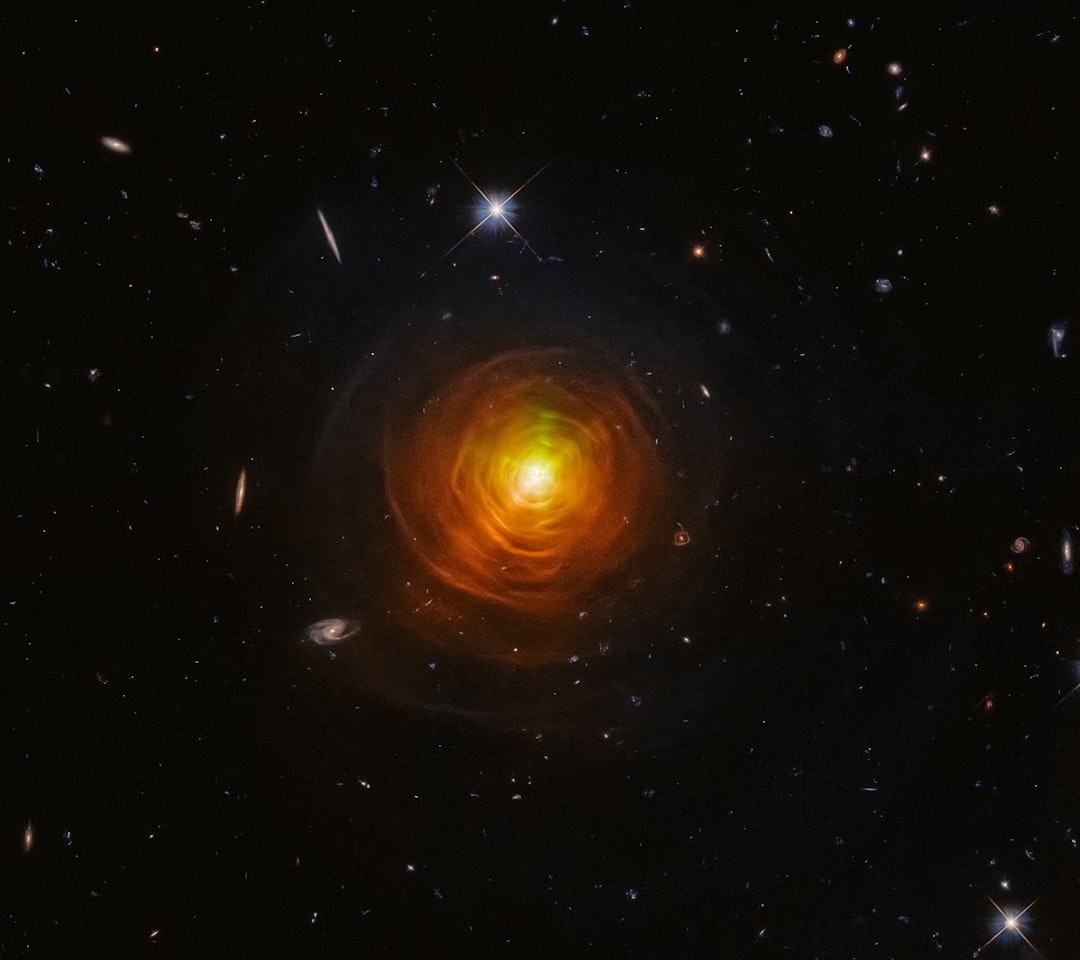
In a groundbreaking astronomical observation, researchers have captured the first detailed X-ray images of an astrosphere—a protective bubble of stellar wind—surrounding a young, Sun-like star known as HD 61005. This remarkable achievement, made possible by NASA's Chandra X-ray Observatory, offers scientists an unprecedented window into our own Sun's tumultuous youth, providing insights that could reshape our understanding of stellar evolution and the complex relationship between stars and their cosmic environments.
The discovery represents a significant milestone in astrophysics, as it marks the first time scientists have been able to observe and resolve the astrosphere of a main sequence G-type star from an external vantage point. While we've studied our Sun's protective bubble—called the heliosphere—for decades using spacecraft like NASA's Voyager probes, our position inside this cosmic cocoon has limited our ability to understand its true structure and evolution. HD 61005, located approximately 100 light-years from Earth, provides the perfect laboratory for studying these phenomena from the outside looking in.
Led by Dr. Carey Lisse from the Johns Hopkins University Applied Physics Laboratory, the research team's findings are set to be published in The Astrophysical Journal, with preliminary results already available on the preprint server arXiv. This study not only illuminates the dynamic processes occurring around young stellar systems but also helps us understand how our own Solar System's protective shield has evolved over billions of years—a critical factor in understanding Earth's habitability and the potential for life elsewhere in the universe.
Understanding Stellar Bubbles: The Science Behind Astrospheres
Stars are far from passive celestial objects; they are dynamic, powerful engines that continuously reshape their cosmic neighborhoods through stellar winds and intense radiation. These stellar winds—streams of charged particles flowing outward from a star's superheated corona—create expanding bubbles in the surrounding interstellar medium (ISM), the diffuse matter that exists between star systems. These protective bubbles, termed astrospheres, serve as crucial barriers between the star's domain and the harsh galactic environment beyond.
The mechanism behind astrosphere formation involves a complex interplay of plasma physics and magnetohydrodynamics. As the ionized, high-pressure stellar wind rushes outward from a star's corona, it collides with the cooler, denser material of the ISM. This collision creates a shock wave—similar to the sonic boom created by a supersonic aircraft—that generates detectable X-ray emissions. These X-rays provide astronomers with a powerful diagnostic tool for studying the structure and dynamics of astrospheres.
"Stars shine in the X-ray due to photon emission from the hot collisional plasmas in their surrounding coronal atmospheres," the research team explains. "However, stars also produce a low level of X-ray emission over a large volume, as the ionized, high-pressure stellar winds flowing out from their coronae blow a bubble/cavity in the local galactic ISM."
This dual-source X-ray emission—one from the star's corona and another from the expanding astrosphere boundary—allows scientists to distinguish between the star itself and its surrounding bubble. Using Chandra's Advanced CCD Imaging Spectrometer (ACIS-S), combined with infrared observations from the Hubble Space Telescope, researchers successfully mapped the three-dimensional structure of HD 61005's astrosphere, revealing details about its shape, size, and the physical processes driving its expansion.
HD 61005: A Young Sun Caught in the Act
HD 61005 is what astronomers classify as a Zero-Age Main Sequence (ZAMS) star—a stellar object that has just settled into the stable hydrogen-burning phase that will characterize most of its lifetime. At approximately 100 million years old, HD 61005 is remarkably young compared to our 4.6-billion-year-old Sun, making it an ideal subject for studying the early stages of stellar evolution and astrosphere development.
The physical characteristics of HD 61005's stellar wind are dramatically different from our Sun's current output. Measurements reveal that this young star's particle wind velocity is approximately three times faster than the solar wind we experience today, while simultaneously being about 25 times more dense. This combination of high velocity and density creates an exceptionally powerful stellar wind that inflates the astrosphere more vigorously than our Sun's present-day heliosphere.
Because stars move through the galaxy at significant velocities—HD 61005 is traveling at approximately 50 kilometers per second relative to the local ISM—their astrospheres are not perfectly spherical. Instead, they take on a distinctive comet-like morphology, with a compressed, rounded "bow shock" on the leading edge where the stellar wind plows into the ISM, and an elongated tail streaming behind. This asymmetric structure provides valuable information about the star's motion and the properties of the surrounding interstellar environment.
The Moth Connection: Circumstellar Dust and Stellar Evolution
HD 61005 has earned the evocative nickname "The Moth" due to its spectacular circumstellar disk, which appears in infrared observations as wing-like structures extending from the central star. This disk, composed of dust and debris leftover from the planet formation process, is analogous to our Solar System's Kuiper Belt—the region beyond Neptune containing countless icy bodies and the source of many short-period comets.
However, HD 61005's debris disk is far more substantial than our Sun's current Kuiper Belt, containing approximately one thousand times more material. The distinctive "wings" visible in Hubble images are created by our edge-on viewing angle, which allows us to see the swept-back dust structures in cross-section rather than projected flat against the sky. These wings contain significantly smaller dust particles than the main disk, suggesting they may be a transient phenomenon—unless they are continuously replenished by collisions among larger bodies in the disk.
Peering Into Our Sun's Ancient Past
The significance of observing HD 61005 extends far beyond understanding a single distant star. This young stellar system serves as a cosmic time machine, allowing scientists to observe conditions similar to those that existed around our Sun approximately 4.5 billion years ago, during the epoch when Earth and the other planets were forming.
"We have been studying our Sun's astrosphere for decades, but we can't see it from the outside," said Dr. Carey Lisse. "This new Chandra result about a similar star's astrosphere teaches us about the shape of the Sun's, and how it has changed over billions of years as the Sun evolves and moves through the galaxy."
Understanding the evolution of the Sun's heliosphere has profound implications for planetary habitability and the development of life on Earth. The heliosphere acts as a shield, deflecting a significant portion of galactic cosmic rays—high-energy particles that can damage DNA and strip away planetary atmospheres. A young, more vigorous heliosphere would have provided stronger protection during Earth's formative years, potentially creating more favorable conditions for the emergence of life.
The research reveals systematic changes in stellar behavior as Sun-like stars age. Young stars like HD 61005 rotate much more rapidly than older stars, generating stronger magnetic fields through dynamo processes in their interiors. These enhanced magnetic fields drive more vigorous magnetic reconnection events in the stellar corona, producing both the intense stellar winds and the elevated X-ray emissions observed by Chandra.
Practical Applications: Space Weather and Human Exploration
Beyond its purely scientific value, understanding astrospheres and stellar wind evolution has immediate practical applications for humanity's expanding presence in space. As we develop plans for sustained human presence on the Moon and eventual missions to Mars, comprehending the Sun's behavior and its protective heliosphere becomes increasingly critical for astronaut safety and mission planning.
"We are impacted by the Sun every day, not only through the light it gives off, but also by the wind it sends out into space that can affect our satellites and potentially astronauts traveling to the Moon or Mars," explained co-author Dr. Scott Wolk of the Center for Astrophysics | Harvard & Smithsonian.
Solar storms and coronal mass ejections can pose significant hazards to both spacecraft electronics and human health. By understanding how the Sun's wind and heliosphere have evolved over time, scientists can better model current space weather patterns and predict future solar activity. This knowledge is essential for designing adequate radiation shielding for spacecraft and habitats, timing deep-space missions to avoid periods of elevated solar activity, and protecting critical satellite infrastructure in Earth orbit.
The Rarity of Observable Astrospheres: Why HD 61005 Is Special
One of the most intriguing questions raised by this research is why observable astrospheres like HD 61005's are so rare. Given that all young, Sun-like stars should generate powerful stellar winds early in their evolution, scientists expected to find many more examples of detectable astrospheres. The answer lies in the specific environmental conditions required for these structures to become visible in X-ray observations.
The key factor is the density of the local interstellar medium. For an astrosphere to produce detectable X-ray emissions, the stellar wind must collide with a sufficiently dense region of the ISM. Most young stars have moved away from the dense molecular clouds where they formed by the time they reach the main sequence, finding themselves in regions of much lower ISM density. In these environments, the stellar wind expands into a near-vacuum, producing little to no observable X-ray emission at the boundary.
HD 61005's fortuitous location in a region of enhanced neutral hydrogen density creates the perfect conditions for X-ray generation. The combination of its powerful stellar wind and the dense surrounding medium produces a bright, high-contrast boundary that Chandra can resolve from Earth. This same dense ISM also plays a crucial role in sculpting the star's distinctive "moth wing" dust structures, as the resistance of the interstellar medium shapes and sweeps back the circumstellar material.
Implications for Heliospheric Models and Future Research
The detailed observations of HD 61005's astrosphere provide a unique opportunity to test and refine theoretical models of heliospheric physics. Scientists can apply the same computational models developed to understand our Sun's heliosphere—models informed by direct spacecraft measurements from missions throughout the Solar System—to this external view of a similar stellar system.
Key findings from the research include:
- Astrosphere morphology: The comet-like shape with a distinct bow shock and extended tail confirms theoretical predictions about how stellar motion shapes these structures
- X-ray emission mechanisms: Dual-source X-ray production from both the corona and the wind-ISM interaction boundary provides new constraints on plasma physics models
- Stellar wind properties: Direct measurements of wind velocity and density in a young solar analog offer unprecedented insights into early stellar evolution
- ISM interaction: The relationship between astrosphere visibility and local ISM density helps explain the rarity of detectable examples
- Temporal evolution: Comparison with our Sun's current heliosphere reveals how these structures change over billions of years as stars age and slow their rotation
Future Observations and the Search for More Stellar Bubbles
The successful observation of HD 61005's astrosphere opens new avenues for research and sets the stage for systematic surveys of young stellar systems. The research team suggests that "Mothian behavior"—the combination of strong stellar winds, dense circumstellar disks, and enhanced ISM density—should be relatively common in young stellar systems, but only detectable under specific conditions.
Future X-ray missions, including potential upgrades to existing observatories and next-generation instruments, could conduct targeted surveys of young stars in dense molecular cloud regions, where conditions are most favorable for astrosphere detection. Such surveys would allow astronomers to study how astrosphere properties vary with stellar mass, age, rotation rate, and environmental conditions, building a comprehensive picture of stellar wind evolution across different types of stars.
The research also highlights the importance of multi-wavelength observations in modern astronomy. By combining X-ray data from Chandra with infrared observations from Hubble and potentially future observations from the James Webb Space Telescope, scientists can construct a complete picture of young stellar systems, from their hot coronae to their cool dust disks and everything in between.
"Thus, models of our heliosphere that are informed by spacecraft measurements and drive the requirements for the future exploration of the heliosphere, can be used to study this system as well, and our new Chandra measurements can be used to test and calibrate these models," the authors conclude.
Broader Implications for Stellar and Planetary Science
The observation of HD 61005's astrosphere represents more than just a technical achievement in observational astronomy—it provides fundamental insights into the co-evolution of stars and their planetary systems. The intense stellar winds and radiation from young stars play crucial roles in dispersing the gas from protoplanetary disks, potentially limiting the formation of gas giant planets in the inner regions of stellar systems while simultaneously delivering energy that could drive atmospheric escape from young terrestrial planets.
Understanding how astrospheres evolve also informs our search for habitable exoplanets. Planets orbiting young, active stars face significantly different radiation environments than planets around older, quieter stars like our present-day Sun. The strength and extent of a star's astrosphere directly affects how much galactic cosmic radiation reaches the inner planetary system, influencing both atmospheric chemistry and the potential for life to emerge and persist.
As our catalog of exoplanets continues to grow, with missions like TESS (Transiting Exoplanet Survey Satellite) discovering thousands of new worlds, understanding the stellar wind environments around different types of stars becomes increasingly important for assessing planetary habitability. Young stellar systems like HD 61005 provide the observational data needed to model how planetary atmospheres evolve under different stellar wind conditions throughout a star's lifetime.
This groundbreaking research demonstrates the power of modern space telescopes to reveal the hidden structures and processes that shape stellar systems. As we continue to push the boundaries of observational astronomy, each new discovery brings us closer to understanding our place in the cosmic story—from the violent birth of stars in molecular clouds to the quiet maturity of systems like our own Solar System, and ultimately to the question of whether life exists elsewhere among the stars.