In the depths of the southern celestial hemisphere, Omega Centauri reigns as the Milky Way's most spectacular globular cluster, a gravitationally bound congregation of approximately ten million stars packed into a relatively compact sphere. This ancient stellar metropolis has captivated astronomers for centuries, but recent investigations have revealed tantalizing hints of something far more enigmatic lurking within its densely populated core: an intermediate-mass black hole that may represent a crucial missing piece in our understanding of cosmic evolution. Now, in a surprising twist, the most sensitive radio telescope observations ever conducted of this region have yielded a remarkable result—the complete absence of any detectable signal.
The search for this elusive gravitational behemoth represents more than just an astronomical curiosity. Intermediate-mass black holes (IMBHs), with masses ranging from hundreds to hundreds of thousands of times that of our Sun, occupy a mysterious gap in the black hole mass spectrum. While astronomers have catalogued numerous stellar-mass black holes formed from collapsing massive stars, and observed countless supermassive black holes anchoring the centers of galaxies, the intermediate category remains frustratingly underpopulated. The recent radio observations of Omega Centauri, conducted by Angiraben Mahida and her research team, provide critical new constraints on the nature of these enigmatic objects—even if those constraints come from what wasn't detected rather than what was.
The Evidence for a Hidden Gravitational Giant
The story of Omega Centauri's suspected black hole began earlier this year when astronomers analyzing Hubble Space Telescope data made a startling discovery. Over the course of two decades, the space telescope meticulously tracked the positions and velocities of 1.4 million individual stars within the cluster. This unprecedented census revealed seven stars in the cluster's innermost regions exhibiting velocities so extreme that they should have achieved escape velocity long ago, breaking free from the cluster's gravitational embrace and wandering into interstellar space.
Yet these stellar speedsters remain gravitationally bound, their trajectories suggesting the presence of an unseen massive object exerting powerful gravitational influence. The calculations are compelling: to keep these fast-moving stars corralled within the cluster's core requires a concentrated mass of at least 8,200 solar masses, with some models suggesting the hidden object could be as massive as 47,000 times the mass of our Sun. Such a concentration of mass, invisible to optical telescopes yet betraying its presence through gravitational effects, points strongly toward an intermediate-mass black hole.
Understanding the Missing Link in Black Hole Evolution
To appreciate the significance of finding an IMBH in Omega Centauri, we must understand the broader context of black hole formation and growth. The universe contains black holes across an enormous range of masses, but our understanding of how they grow from stellar remnants to galactic anchors remains incomplete.
Stellar-mass black holes, the smallest category, form from the gravitational collapse of massive stars at the end of their lives. These objects typically range from about three to perhaps 200 solar masses. At the opposite extreme, supermassive black holes weighing millions or even billions of solar masses dominate the centers of most large galaxies, including our own Milky Way, which harbors Sagittarius A*, a black hole of approximately 4 million solar masses.
The critical question that has puzzled astrophysicists for decades is: how do stellar-mass black holes grow to become supermassive? The most plausible scenario involves intermediate steps—intermediate-mass black holes that serve as evolutionary bridges. These IMBHs could form through multiple mechanisms: the merger of stellar-mass black holes in dense stellar environments, the direct collapse of massive gas clouds in the early universe, or the remnant cores of small galaxies consumed by larger ones.
"Intermediate-mass black holes represent one of the most important missing pieces in our understanding of cosmic structure formation. Finding and characterizing these objects helps us understand how the supermassive black holes we observe in galactic centers came to exist in the first place," explains research from the Space Telescope Science Institute.
The Radio Telescope Hunt: Methodology and Expectations
When black holes actively feed on surrounding material—a process called accretion—they typically produce distinctive electromagnetic signatures across multiple wavelengths. As gas and dust spiral inward toward the black hole's event horizon, gravitational energy converts into heat, creating an accretion disk that can shine brilliantly in X-rays, optical light, and radio waves. This multi-wavelength emission provides astronomers with powerful tools for detecting and studying black holes.
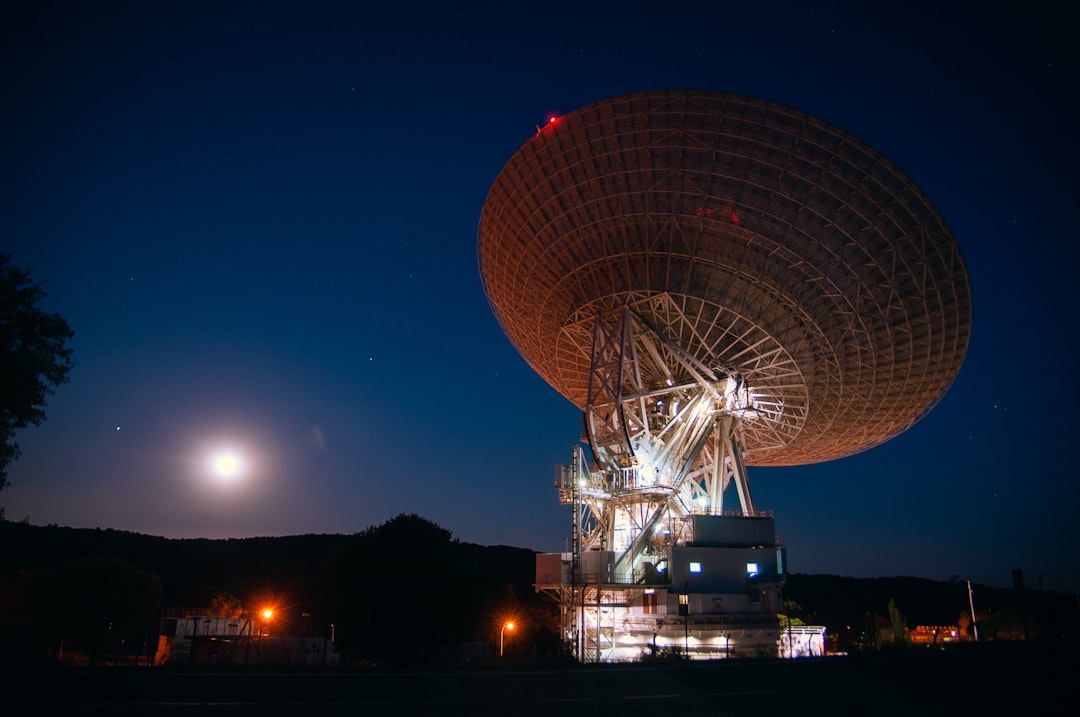
Mahida's team employed the Australia Telescope Compact Array (ATCA), a sophisticated radio interferometer located near Narrabri in New South Wales, to search for radio emissions from Omega Centauri's core. The observations were extraordinarily thorough, accumulating approximately 170 hours of integration time—far exceeding typical radio astronomy observations. This extensive observing campaign achieved unprecedented sensitivity, reaching down to 1.1 microjanskys at a frequency of 7.25 gigahertz, making it the most sensitive radio image ever obtained of this globular cluster.
The team systematically surveyed multiple proposed locations for the cluster's center, each representing a potential home for the suspected black hole. Radio telescopes are particularly valuable for this type of search because radio emission from accreting black holes can penetrate the dense stellar environments that might obscure optical or X-ray observations. The researchers expected that if an intermediate-mass black hole were actively accreting material, even at relatively low rates, it should produce detectable radio emission.
The Significance of Silence
The result was unambiguous: no radio emission whatsoever appeared at any of the candidate locations. This non-detection, rather than being a disappointing null result, actually provides crucial scientific information about the nature of Omega Centauri's suspected black hole.
Using the fundamental plane of black hole activity—a well-established relationship that connects a black hole's mass, radio luminosity, and X-ray luminosity—the research team calculated stringent limits on how efficiently the black hole could be converting infalling matter into radiation. Their analysis revealed that any IMBH residing in Omega Centauri must have an extraordinarily low accretion efficiency, with an upper limit of approximately 0.004, or 0.4 percent.
To put this in perspective, this means that less than half of one percent of the rest-mass energy of infalling material is being converted into detectable radiation. This is remarkably inefficient compared to actively feeding black holes in other environments, which can convert up to 10-40 percent of infalling matter's mass-energy into radiation through the accretion process.
Why Is Omega Centauri's Black Hole So Quiet?
The extreme quietness of Omega Centauri's suspected black hole isn't entirely unexpected when we consider the cluster's unique history and environment. Modern astronomical evidence strongly suggests that Omega Centauri is not a typical globular cluster at all, but rather the stripped core of a dwarf galaxy that was gravitationally shredded and consumed by the Milky Way several billion years ago.
This origin story has profound implications for the black hole's feeding habits. When the dwarf galaxy was torn apart by tidal forces during its merger with our galaxy, most of its gas—the fuel that black holes need to grow and shine—would have been stripped away, leaving behind primarily the dense stellar core we now observe as Omega Centauri.
The Fuel Starvation Problem
Unlike supermassive black holes in active galactic nuclei, which often reside in gas-rich environments with abundant material to accrete, or stellar-mass black holes in binary systems that can feed on material from companion stars, Omega Centauri's IMBH exists in what might be described as a cosmic desert. The cluster's central regions contain primarily old stars with minimal gas and dust available for accretion.
The key factors contributing to this radio silence include:
- Depleted gas reservoir: The cluster lost most of its interstellar medium during the galactic merger that created it, leaving little material for the black hole to consume
- Low stellar mass loss: The ancient stars in Omega Centauri are past their most active phases and shed minimal material through stellar winds
- Inefficient capture: In the absence of a dense accretion disk, any available material may fall directly into the black hole without generating significant radiation
- Radiatively inefficient accretion: The black hole may be accreting in a mode that produces minimal electromagnetic emission, converting most of the gravitational energy into outflows rather than radiation
Implications for Black Hole Physics and Future Research
The radio non-detection at Omega Centauri provides valuable insights into the diversity of black hole accretion states. Not all black holes are actively feeding and shining brightly; many may exist in quiescent states, detectable only through their gravitational influence on surrounding matter. This finding suggests that traditional electromagnetic surveys may be missing a significant population of intermediate-mass black holes that happen to reside in fuel-poor environments.
The research also demonstrates the power of multi-wavelength astronomy. While radio observations didn't directly detect the black hole, they provided crucial constraints on its properties and behavior. Combined with the kinematic evidence from Hubble's optical observations, astronomers can now paint a more complete picture of this enigmatic object.
Future observations will likely focus on even more sensitive searches across multiple wavelengths, including deeper X-ray observations and potentially gravitational wave detection if the black hole happens to merge with another compact object. The upcoming Square Kilometre Array (SKA), when completed, will provide radio sensitivity orders of magnitude greater than current facilities, potentially revealing faint emission that current telescopes cannot detect.
Broader Context for Intermediate-Mass Black Hole Searches
The Omega Centauri investigation highlights both the challenges and opportunities in the search for intermediate-mass black holes. These objects appear to be genuinely rare, or at least rarely detectable, requiring creative observational strategies and patient, systematic surveys. The fact that even a suspected IMBH in one of the Milky Way's most prominent stellar clusters produces no detectable radio emission underscores the difficulty of this cosmic treasure hunt.
However, each non-detection, properly analyzed and interpreted, contributes valuable information to our understanding of black hole populations and their environments. As observational techniques improve and new instruments come online, astronomers expect to uncover more of these elusive intermediate-mass objects, gradually filling in the missing chapter in the story of black hole evolution from stellar remnants to galactic giants.
The silence from Omega Centauri's heart, rather than ending the story, simply adds another intriguing chapter to our ongoing quest to understand these fascinating gravitational monsters and their role in shaping the universe we observe today.