Dead Planets Orbiting a Dead Star: A Rare Double Debris Disk Reveals the Violent Future of Planetary Systems
All stars die eventually, but they do not all die the same way. A star's ultimate fate is determined by its mass — the single most important parameter governing stellar evolution. Only the most massive stars, those exceeding roughly eight to ten times the mass of our Sun, meet their end in the spectacular, catastrophic fury of a supernova explosion. These calamitous events announce a star's death in a blinding burst of energy, an exclamation point marking the end of billions of years of nuclear fusion.
Our Sun, a more moderately-sized G-type main-sequence star, is destined for a far quieter — though no less dramatic — conclusion. As it exhausts its hydrogen fuel over the next approximately five billion years, it will begin to slowly lose its gravitational hold on its outer layers of gas. It will first swell into a red giant, expanding to perhaps 100 to 200 times its current radius, before ultimately shedding those outer layers into the surrounding space. This expelled material forms one of nature's most breathtaking structures: a planetary nebula. Despite the name — a historical misnomer dating back to early astronomers who thought these glowing shells resembled the disks of planets through primitive telescopes — planetary nebulae have nothing to do with planets. They are, in fact, the luminous funeral shrouds of dying stars, and they rank among the most visually stunning phenomena in the cosmos.
A planetary nebula persists for only tens of thousands of years on cosmic timescales — a fleeting, ephemeral beauty. After the nebula disperses, all that remains is a dense, Earth-sized remnant called a white dwarf: a stellar corpse supported not by fusion, but by the quantum mechanical pressure of electrons. With no ongoing nuclear reactions, a white dwarf slowly radiates its stored heat into the void. Over hundreds of billions of years, it is theorized to eventually cool into a cold, dark black dwarf. However, because the current age of the Universe — approximately 13.8 billion years — is far too short for any white dwarf to have cooled sufficiently, no black dwarfs are believed to exist yet. They remain a theoretical endpoint, a ghost of the deep future.
The Violent Transition: Planets Destroyed, Planets Reborn?
There is another, deeply destructive dimension to a star's transition into a white dwarf. When a Sun-like star expands into its red giant phase, it engulfs and obliterates the planets closest to it. In our own Solar System, the expanding Sun will almost certainly vaporize Mercury and Venus, and the fate of Earth itself hangs in an uncertain balance — most models suggest our planet, too, will be consumed or rendered utterly uninhabitable. The outer planets — Jupiter, Saturn, Uranus, and Neptune — may survive, their orbits shifting outward as the Sun loses mass, but the inner Solar System as we know it will cease to exist.
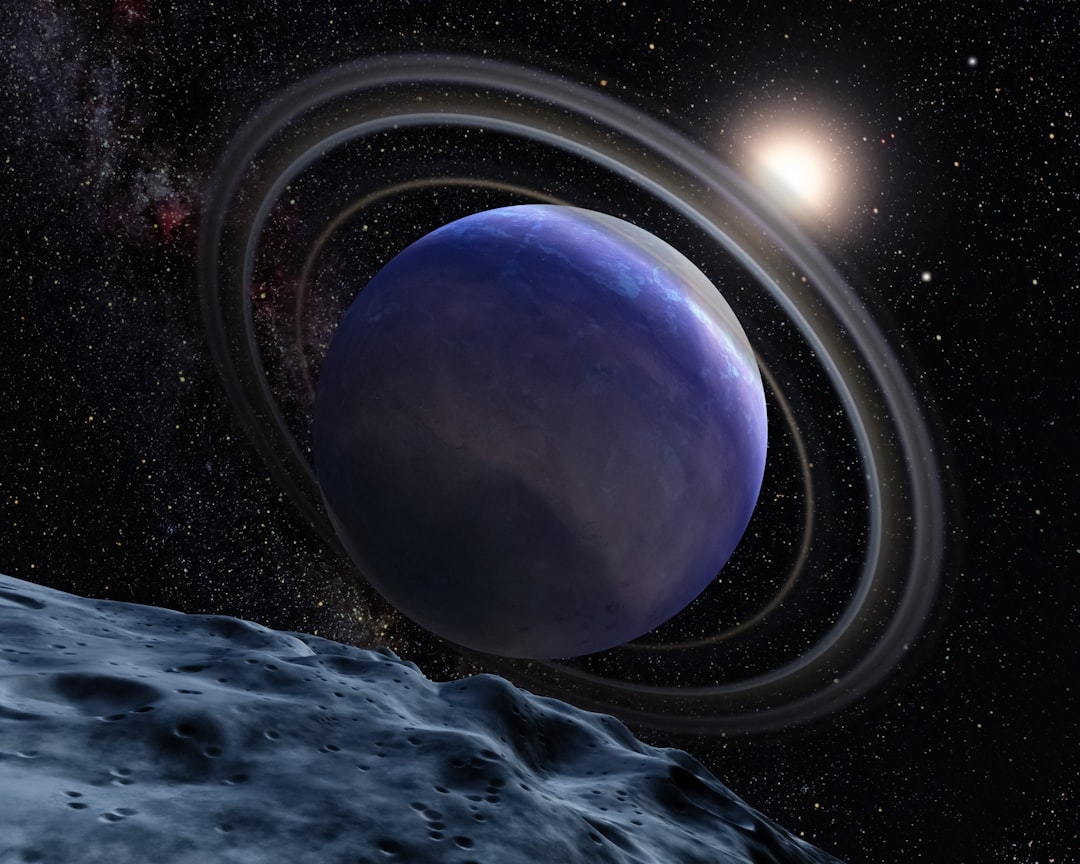
Yet, remarkably, this is not necessarily the end of the story for planetary systems. When astronomers survey the cosmos, they frequently discover debris disks surrounding white dwarfs — rings of dust and gas composed of the shattered, vaporized remnants of once-living worlds. These disks are the graveyards of planetary systems, and they raise a profoundly intriguing question: can planets form again from this wreckage? The concept of second-generation planets orbiting white dwarfs has been the subject of serious scientific speculation for years. While the odds of life arising on such worlds are almost vanishingly small, the sheer scale of the Universe — with its hundreds of billions of galaxies, each containing hundreds of billions of stars — means the possibility cannot be entirely dismissed.
Understanding these debris disks is therefore not merely an exercise in morbid stellar astronomy. It is a window into the ultimate fate of planetary systems like our own, and perhaps a clue to one of the universe's most enduring questions: how common, and how resilient, is the architecture of worlds?
A New Discovery: A White Dwarf With Two Debris Rings
Against this backdrop, an international team of astronomers has made a striking discovery: a white dwarf surrounded by not one, but two concentric debris disks — separated by a distinct gap. The system, designated WD J132800.85–145019.95 (referred to more conveniently as WD J1328–1450), provides an unprecedented look at the complex, chaotic aftermath of planetary system death.
These findings are presented in research titled "A double debris disc around a white dwarf sculpted by two planetary bodies," published in the prestigious journal Nature Astronomy. The lead author is Nicola Gentile Fusillo, an astronomer at the Università degli Studi di Trieste and the INAF-Astronomical Observatory of Trieste in Italy, working alongside co-author Felipe Lagos-Vilches of the University of Warwick, UK, and collaborators.
"The system is a rare glimpse of the violent, chaotic process by which a planetary system meets its end, and it hints that dead stars can have disc structures far more complex than previously realised." — Nicola Gentile Fusillo, Università degli Studi di Trieste
Reading the Light: How Astronomers Detect These Disks
Detecting debris disks around white dwarfs requires sophisticated observational techniques. Astronomers rely on spectroscopy — the analysis of light split into its component wavelengths — to identify these structures. Gas orbiting a white dwarf in a rotating disk produces characteristic emission line profiles. Gas moving toward Earth appears blue-shifted (its light compressed to shorter wavelengths), while gas moving away appears red-shifted (its light stretched to longer wavelengths). In a standard, single rotating disk, this creates a characteristic double-peaked emission line, with one peak for the approaching side and one for the receding side.
Gaseous debris disks are, in fact, relatively rare among white dwarfs. While dusty circumstellar disks are identified with some regularity, gas has been detected in only 21 known systems prior to this discovery. As the researchers note in their paper, "all of the 21 known gas discs exhibit double-peaked line profiles characteristic of a rotating flat disc." The mechanism by which this gas is generated is still debated within the scientific community, but the leading hypothesis involves planetesimals — small, solid bodies, the building blocks of planets — embedded within the dust disk. As a planetesimal moves through the disk at high velocity, it collides with dust particles and vaporizes them, generating gas in a process somewhat analogous to a bullet vaporizing material it strikes. This collisional vaporization model is the most widely supported explanation, though alternatives such as Poynting-Robertson drag and sublimation driven by stellar irradiation have also been proposed.
What makes WD J1328–1450 so extraordinary is that its emission lines are not double-peaked, but quadruple-peaked. This unprecedented spectral signature points unmistakably to the presence of two separate, concentric gaseous rings, each rotating at a different speed and therefore producing its own pair of blue- and red-shifted emission peaks. The two rings extend across distinct radial distances from the white dwarf:
- Inner ring (Disc A): Extending from approximately 0.14 R☉ to 0.34 R☉ (solar radii) from the white dwarf — an extraordinarily close distance, well within what would be the interior of our own Sun.
- Outer ring (Disc B): Extending from approximately 0.54 R☉ to 1.93 R☉ from the white dwarf — farther out, but still within a region that would be deep inside our Sun's interior.
- A distinct gap separating the two rings, which is itself a crucial piece of evidence suggesting the gravitational influence of orbiting bodies.
"The structure we see in this system is particularly intriguing because the two gaseous rings are remarkably stable and remain separated by a gap." — Felipe Lagos-Vilches, University of Warwick
Two Planetary Sculptors: The Bodies Shaping the Disks
The most compelling interpretation of this double-disk architecture is that it is being actively sculpted by two distinct planetary-mass or sub-planetary-mass bodies, each orbiting the white dwarf on its own trajectory and gravitationally clearing the gap between the disks — much as Jupiter and Saturn shape the structure of our Solar System's asteroid belt, or as shepherd moons define the edges of Saturn's rings. This process, known as orbital resonance and gravitational shepherding, is a well-established mechanism in planetary science, and observing it in a post-stellar-death environment is scientifically remarkable.
Based on the modeling of the disk structure, the two inferred planetary bodies are strikingly different in size:
- The inner body is estimated to be not much larger than a substantial asteroid, perhaps only a few kilometers in diameter — yet its gravitational influence, combined with the dynamics of the disk, is sufficient to maintain the gap.
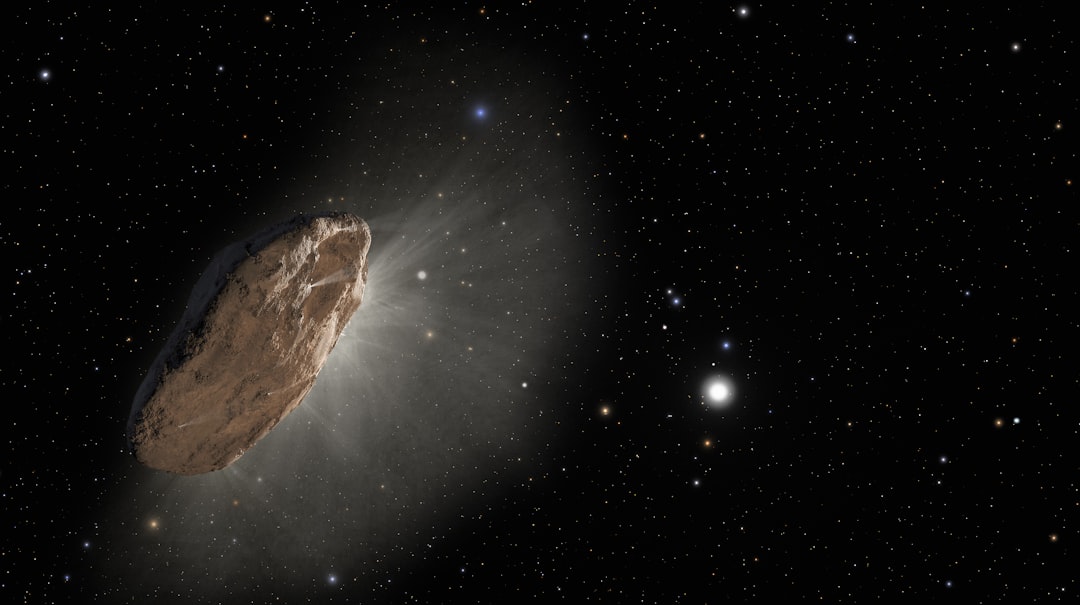
- The outer body is significantly larger, estimated to be roughly comparable in size to Pluto, or potentially as large as Earth's Moon — placing it firmly in the category of a dwarf planet or large planetesimal.
For these bodies to survive so close to the intense gravitational field of the white dwarf without being torn apart by tidal forces — a process called tidal disruption, where differential gravity across an object's diameter exceeds its internal cohesive forces — they must possess remarkable physical properties. The researchers calculate that if these bodies were held together solely by their own gravity (as rubble pile asteroids are), the inner planetesimal would require a density exceeding 3,600 g cm⁻³ at its inner edge — a figure orders of magnitude beyond any known material. For context, osmium, the densest naturally occurring element, has a density of approximately 22.6 g cm⁻³. Even the densest known exoplanet falls far short of what would be required.
This leads the researchers to a firm conclusion: these planetesimals must be held together not by gravity alone, but by material strength — the internal chemical and structural bonds of solid rock. They are, in essence, solid, coherent bodies rather than loose aggregates, surviving through sheer structural integrity in an environment of extreme tidal stress. As the authors state directly:
"Therefore, we conclude that any planetesimals surviving within the discs must possess some degree of internal strength."
Compositional Clues: Two Worlds, Two Chemical Histories
Adding a further layer of scientific intrigue is the apparent compositional difference between the two rings. Spectroscopic analysis suggests that the inner ring appears to be enriched in magnesium, while the outer ring appears depleted of it. This chemical asymmetry is a significant clue about the origins of the disk material — and potentially about the nature of the planets that were destroyed to create it.
Two principal hypotheses have been put forward to explain this compositional gradient:
- Each debris ring may represent the remnants of a distinct, separately destroyed planet, each with its own unique bulk composition — analogous to how Earth is richer in iron and magnesium silicates than, say, a carbon-rich asteroid.
- Alternatively, both rings may originate from the same destroyed planet, with the inner ring representing iron- and magnesium-rich core material, and the outer ring representing the lighter, magnesium-depleted crustal or mantle material — a scenario reminiscent of a planetary differentiation process playing out in reverse.
This kind of chemical forensics applied to white dwarf debris disks has become a powerful tool in planetary science. Because white dwarfs are composed almost entirely of hydrogen or helium — heavy elements sink rapidly under the intense surface gravity — any metals detected in their atmospheres must have been recently accreted from surrounding planetary debris. This technique, known as white dwarf spectral pollution, has already revealed that many white dwarfs have consumed rocky, Earth-like bodies rich in oxygen, magnesium, silicon, and iron. You can learn more about this research area through resources from NASA's Solar System Exploration and the ESA's Gaia mission, which has dramatically expanded the catalog of known white dwarfs.
Challenging Existing Models
The discovery of WD J1328–1450's stable double-disk structure poses significant challenges to current theoretical frameworks for debris disk formation and evolution. Astronomers have been aware of dusty and gaseous circumstellar disks around white dwarfs for roughly two decades, since the landmark discovery of the first dust disk around G29-38 in 1987 by Bradford Zuckerman and Eric Becklin. The field has grown substantially since then, with detailed studies of systems like SDSS J1228+1040 — considered the archetypal white dwarf with a gaseous disk — providing reference benchmarks.
However, existing models generally assume a single, relatively simple disk architecture. The existence of two stable, concentric rings maintained over long timescales — without the two disks merging, collapsing, or dissipating — is not readily explained by current theoretical tools. As the authors candidly state:
"The detection of this stable double-disc presents a new challenge for the current models of debris disc formation and evolution... The discovery of a stable double debris disc around WD J1328–1450 provides additional observational constraints for the development of physically more detailed models for these discs."
Future observations, particularly with instruments such as the James Webb Space Telescope (JWST), may shed further light on the detailed composition, temperature structure, and dynamics of systems like WD J1328–1450. JWST's extraordinary infrared sensitivity makes it ideally suited to probing the warm dust and gas in white dwarf debris disks. Similarly, large ground-based spectroscopic surveys conducted with facilities such as the Very Large Telescope (VLT) at the European Southern Observatory will continue to expand the sample of known disk systems, allowing astronomers to understand how common complex, multi-ring architectures truly are.
A Mirror to Our Own Future
Perhaps the most sobering dimension of this discovery is what it implies about our own Solar System's distant future. In approximately 5 billion years, the Sun will exhaust its hydrogen fuel and begin its transformation into a red giant, engulfing and vaporizing Mercury, Venus, and almost certainly Earth. What remains — the outer planets, the